The AFL is facing fresh scrutiny over its management of player brain injuries after WorkSafe Victoria launched an investigation into whether the league adequately protected footballers from repeated head impacts during training.
The investigation comes amid growing concern about chronic traumatic encephalopathy (CTE), with recent revelations that 33 Australian Rules footballers have been diagnosed with the degenerative brain disease after death.
WorkSafe is examining whether the AFL complied with its obligations under the Occupational Health and Safety Act, focusing specifically on contact training and collision load tracking from November 2022 onwards.
The regulator has confirmed it will provide an update on its investigation by July 28.
The probe follows mounting criticism of the AFL’s concussion policies and renewed debate over whether the game’s current safeguards adequately protect players from the cumulative effects of repeated head impacts.
Recent ABC investigations revealed that 33 Australian Rules footballers, including 19 professional and semi-professional players, have been diagnosed with CTE after death, exposing what experts described as the scale of the code’s brain injury crisis.
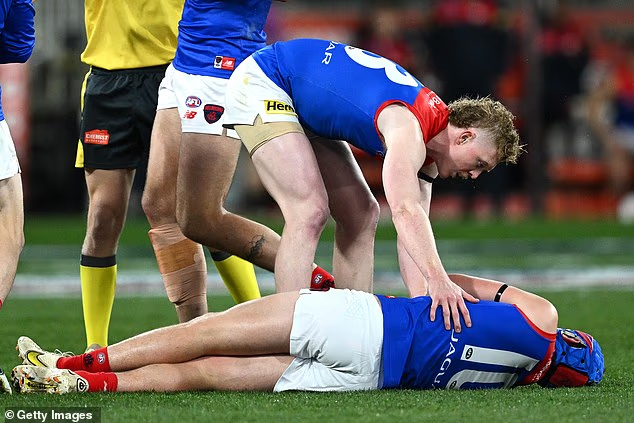
Angus Brayshaw (pictured on the ground) remains central to growing discussion after concussion forced retirement

WorkSafe probe has intensified pressure on AFL concussion policies nationwide this month

Former Geelong star Max Rooke is leading a concussion class action against the AFL over alleged lifelong injuries sustained
CTE has been linked to repeated head impacts sustained over a playing career and has been associated with symptoms including depression, memory loss, poor impulse control and suicidal thoughts.
Professor Alan Pearce said the disease remained preventable.
‘CTE is a preventable environmental disease.’
‘The evidence that I’m seeing from these tragic deaths, talking to players in my research program and the almost lack of concern, and some of the deflection of CTE says to me that the AFL does have blood on its hands.’
Associate Professor Michael Buckland from the Australian Sports Brain Bank also warned the findings demanded urgent attention.
‘It tells all of us that there’s a problem that playing a lot of contact or collision sports leads you to have a … risk of CTE later in life.’
‘It’s a problem that needs to be urgently addressed.’
News Corp has now revealed WorkSafe had begun investigating whether the AFL failed to appropriately safeguard players from repeat brain impacts during training over the past four years, with the inquiry concentrating on contact training practices and collision monitoring.

WorkSafe investigation intensified scrutiny after Justin Koschitzke shared lasting effects from devastating concussion ordeal

Former Brisbane Lions star and current West Coast Eagle Brandon Starcevich admitted repeated concussions left him worried about his future health prospects
The investigation has intensified pressure on the AFL’s concussion policies, particularly its 12-day return-to-play protocol.
Former AFL concussion adviser Paul McCrory previously resigned from the league’s concussion group after opposing the protocol, arguing it did ‘not reflect the current and evolving science’ and insisting that ‘recovery takes longer than the time frame’ proposed.
Former Victorian coroner John Cain also recommended the AFL introduce limits on contact training following his inquest into the death of former Richmond player Shane Tuck.
The AFL has since committed to introducing contact training restrictions from the start of the 2027 pre-season as part of its Brain Health Initiative.
Earlier this year, Zurich Insurance confirmed AFL footballers would lose total and permanent disability insurance cover for claims relating to traumatic brain injury, concussion, CTE, post-concussion syndrome and neurological impairment made after May 1.
The insurer said there remained ‘continued widespread uncertainty about the long-term health impacts and risks associated with concussion events from playing high-contact sports, including the subsequent development of Chronic Traumatic Encephalopathy (CTE).’
Lawyer Michel Margalit, who is leading a concussion class action involving more than 100 former AFL players, said the current support system was falling short.
‘The support system intended to support injured footballers continues to erode and fail those left with life-altering concussion-related injuries.

Nathan Murphy retired early as concussion concerns continued shaping football’s brain injury debate

Former Richmond star Shane Tuck’s tragic death continues driving calls for stronger concussion protections across football
‘How can we sit back and allow these hardworking members of society, our footballers, to be left without adequate compensation arrangements? Footy is big business. It’s ‘work’.
‘The AFLPA Hardship Fund, while improved, is a far cry from a statutory compensation scheme and the funding available is wholly inadequate and inferior to WorkCover.’
AFL executive Laura Kane said the league remained committed to expanding its research into brain health.
‘We’re committed to a long-term study that includes brain donation and we will make sure that we deliver that research program … that’s all being contemplated right now as part of our Brain Health Initiative.’
She said players were educated annually about concussion and its long-term risks.
‘Every year our chief medical officer will educate our players on everything from the reporting of symptoms, the management of concussions, the long-term risks, and there’s education and training that’s conducted annually.’
The AFL also said its Brain Health Initiative was progressing.
‘From a research perspective, the Brain Health Initiative is where we house both research but also innovation.
‘So innovation with equipment, whether it be mouth guards … brain scans and other medical overlays that we can apply through the research, all the way through to protective equipment and learning here at the AFL about what the options are to help us reduce head trauma.’