
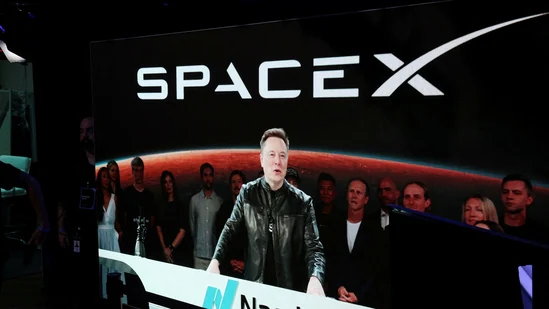
SpaceX officially joins the Nasdaq-100 index today. This is a big milestone for the company because the Nasdaq-100 is one of the world’s most important stock market indexes. SpaceX listed its shares on the Nasdaq exchange through its IPO on June 12. After becoming a public company, SpaceX became eligible to join major stock market indexes.
The Nasdaq-100 tracks the 100 largest non-financial companies listed on the Nasdaq exchange. The index mainly includes fast-growing technology companies.
Why is SpaceX joining the Nasdaq-100?
Nasdaq changed its rules earlier this year to allow newly listed companies to enter the index much faster. Earlier, companies had to wait at least three months after an IPO before joining the Nasdaq-100. Under the new rules, companies can now become eligible just 15 days after their IPO.
“All the different index providers needed to look at their rules and make sure they were fit for purpose, taking into consideration that SpaceX is the largest IPO in history,” said Peter Haynes, head of index and market structure research at TD Securities, as quoted by CNN.
Why does this matter for investors?
Joining the Nasdaq-100 means billions of dollars could automatically flow into SpaceX shares. This is because many investment funds copy the Nasdaq-100 exactly. These funds must buy every company that joins the index to match its performance. More than 200 investment products track the Nasdaq-100.
Together, these funds manage around $800 billion in assets. As these funds buy SpaceX shares, demand for the stock could increase. Many investors believe this extra demand could support SpaceX’s share price, according to Investopedia. Investors who already own Nasdaq-100 ETFs will now automatically own some SpaceX shares as well.
Also read: SpaceX plans to launch Starlink mobile service, challenging Verizon and AT&T
How much influence will SpaceX have?
Even though SpaceX is worth more than $2 trillion, it will not immediately become one of the biggest companies in the index. That is because Nasdaq also looks at how many shares are freely available for trading. SpaceX sold less than 5% of its shares to the public during its IPO.
Since only a small number of shares are available, its starting weight in the Nasdaq-100 will also be small. If an investor owns $100 worth of a Nasdaq-100 fund, only about $1 will currently be invested in SpaceX, according to CNN. Over time, SpaceX’s weight in the index could increase as more shares become available for trading.
Chris Beauchamp, chief market analyst at IG Group said to Reuters, nasda”We knew this was going to happen, so the impact is fairly limited”.
Beauchamp added, “You can expect the ripples of this to be felt throughout the index. You’ve seen in the Nasdaq model itself over the past month, where the index has struggled to match any further all-time highs that we saw at the beginning of the month.”
How has the stock performed?
SpaceX shares opened at $150 on their first trading day. The stock quickly climbed to a high of around $225 after the IPO. Since then, the share price has fallen from those highs. Before joining the Nasdaq-100, the stock was trading at a little over $160. That is still around 7% higher than its IPO opening price. However, the stock remains well below its post-IPO peak.
What happens next?
Investors are now waiting for SpaceX’s first earnings report as a public company. The earnings report is expected in late July or early August. After the earnings release, some early investors and company insiders could be allowed to sell their shares as lock-up periods expire.
A lock-up period prevents insiders from selling shares immediately after an IPO. The end of the lock-up does not mean everyone will sell, but it increases the number of shares that could enter the market, according to Investopedia. More shares becoming available could increase price volatility.
What are analysts saying?
Wall Street analysts are slowly starting to cover SpaceX. Wedbush recently gave the stock an “Outperform” rating. Wedbush also set a price target of $190 per share. Many other major banks have not yet started research coverage on the company, according to Investopedia.
Goldman Sachs told Reuters, SpaceX is in a strong position to grow its businesses in space, connectivity and AI. “We see the company as well-positioned to scale its differentiated advantages across space, connectivity, and AI,” Goldman analysts added.
Deutsche Bank analysts said, “SpaceX has a clear advantage in deploying AI infrastructure on the ground and eventually in orbit, positioning it as the leading ‘haloscaler,’ ultimately able to deliver compute at the lowest cost”, via Reuters.
Can SpaceX join the S&P 500?
SpaceX will not be eligible to join the S&P 500 for at least one year because S&P’s rules were not changed. To qualify later, SpaceX will also need to report four consecutive quarters of profits. Tesla took around 10 years after becoming public before it entered the S&P 500.
How can investors avoid SpaceX?
Some investors may not want exposure to SpaceX because of concerns about CEO Elon Musk or the company’s valuation. One way to avoid SpaceX is by investing in an S&P 500 index fund, since SpaceX is not part of that index yet, according to CNN.
Investors can also choose the Dow Jones Industrial Average, which currently includes neither SpaceX nor Tesla. International stock index funds are another option for investors who want less exposure to US technology companies.
What should investors watch going forward?
Investors will closely watch SpaceX’s earnings, future forecasts and financial performance. They will also monitor how many new shares enter the market after lock-up periods end. If more shares become available, SpaceX’s weight in the Nasdaq-100 could increase over time.
A larger weight would give SpaceX a bigger influence on the performance of the Nasdaq-100 index, according to CNN. Analysts expect the stock to remain volatile over the coming months as the market reacts to earnings, new share sales and investor demand, according to multiple news reports.