
As artificial intelligence rapidly becomes a standard tool for businesses aiming to increase profits and minimize expenditures, employees have valid concerns.
A study conducted by McKinsey and Company in 2024 reveals that 78% of organizations incorporate AI into at least one aspect of their operations. It is reasonable to question whether this technology will enhance the value of workers’ skills or render them obsolete.
Cuban Calls for higher wages, emphasizing AI’s role in job creation
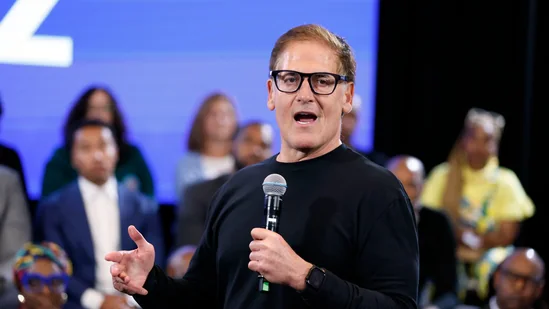
Billionaire entrepreneur Mark Cuban strongly advocates for the former perspective. Rather than perceiving AI as a substitute for human labor, he likens it to groundbreaking innovations such as personal computers and the internet. He believes that the most successful people will be those who embrace the opportunity to learn how to utilize AI effectively, thereby working more efficiently and providing greater value.
Also Read: Who is Mitch McConnell’s daughter? Senator’s eldest daughter deactivates her X account amid ‘brain dead’ rumors
In a post on X, Cuban said that increasing hourly rates is a necessary advancement that has been delayed for too long.
This comes as employees in some US states earn a mere $5.15 for every hour spent diligently bussing tables, restocking store shelves, and cooking burgers.
While several companies report unprecedented profits and achieve trillion-dollar market valuations, millions of Americans who are living below the poverty threshold are left wondering if they will ever share in this prosperity.
“I’ve said before I think raising the federal minimum wage to $20 is smart,” Cuban stated on X in a post last month.
Federal minimum wage should be raised from 7.25 to $20 per hour
The current federal minimum wage is set at $7.25 per hour. This amounts to an annual income of $15,080, calculated on the basis of a typical 40-hour workweek—significantly less than one-third of the average American salary, which is approximately $60,000 per year. As the cost of living continues to rise, more than 40 million Americans are compelled to rely on food stamps to survive.
The Shark Tank investor stated that it is shameful not to provide workers with a livable wage; he is dedicated to attracting talent and creating new opportunities for wealth.
“When I heard people who worked for a company I invested in (but didn’t run) needed government assistance, I made sure they all got raises,” Cuban continued in social media post. “It was embarrassing to me that we didn’t pay enough. I’ve made, or helped make, at least a thousand millionaires. And I’ll keep working to increase that number.”
Cuban’s advocacy for increased wages and wealth accumulation for employees is part of his comprehensive approach to addressing issues related to billionaire founder wealth, income taxation, and the “eat the rich” discourse. The entrepreneur, who has a net worth of $6 billion, contended that founders assume considerable risks when establishing businesses, and as they accumulate wealth, these enterprises subsequently create job opportunities for other individuals. While he opposes the anti-wealth sentiment, he emphasizes the necessity of enhancing the financial circumstances of ordinary workers.
“I am a believer in trickle up,” Cuban remarked. “Where we do all we can get to get appreciable assets and higher wages into the hands of people who have to live paycheck to paycheck.”
Small businesses that are just beginning may lack the means to provide million-dollar salaries. However, once they become established, Cuban asserts that they should offer a living wage.