
Nigeria has given football, and the FIFA series, some of the most thrilling players ever to grace a digital pitch. Long before terms like “meta” and “sweaty” dominated the FIFA discourse, Nigerian players were quietly becoming the most coveted cards in Ultimate Team packs.
Whether you were tearing through opponents with a pace monster striker or marshalling midfield with an engine that never stopped running, the Super Eagles have produced cards that genuinely shaped how an entire generation played the game.
The Emenike Phenomenon
Ask anyone who was playing FIFA 12 or 13 on a Saturday morning and the name Emmanuel Emenike will get an immediate reaction. The Spartak Moscow and Fenerbahce striker arrived in Ultimate Team with an explosive combination of pace, physicality and raw power that made defenders genuinely helpless in that particular meta. His base card was already effective, but his In Form versions were the kind of pull that made players scream at their screens.
The cultural moment that sealed Emenike’s legacy arrived through KSI. The UK-based YouTuber was at the height of his early pack opening era around 2012 and 2013, and his reactions to Nigerian players, Emenike chief among them, turned these cards into genuine internet lore. That cycle of hype, where a YouTube video made you want the card, which made the card more expensive, which made the pull more satisfying, defined early FIFA content culture in a way that still echoes today.
The Original Pace Monster
Before Emenike, there was Obafemi Martins. If you were playing FIFA 08, 09 or 10, Martins had the kind of pace rating that felt almost unfair. His real-world speed was extraordinary, and EA captured it faithfully. The former Inter Milan and Newcastle striker regularly clocked pace stats in the low-to-mid nineties, making him one of the most devastating attackers in those early Ultimate Team years. His backflip celebration became as recognisable as his sprint, and his cards represented the beginning of Nigeria’s reputation as a nation of footballers who broke the game.
Related: Iwobi: Fulham Players Yet To Learn Identity Of Next Manager
The Leicester Surge
The FIFA 16 and 17 cycle coincided with Leicester City’s fairytale Premier League title, and Ahmed Musa arrived at the King Power Stadium riding enormous goodwill. His FIFA cards reflected the raw materials that made him exciting in real life: explosive acceleration, sharp dribbling and the ability to produce moments of brilliance in tight spaces. His two-goal display against Argentina at the 2018 World Cup only added to his card’s appeal in retrospect, cementing him as one of those players whose numbers always felt like a slight understatement.
Nigeria’s Midfield Machines
Not every Nigerian legend in FIFA history was built for spectacular attacking numbers. Wilfred Ndidi became the defensive midfielder that FIFA players genuinely chased from FIFA 17 onwards, with interception and physicality stats that made him an almost essential midfield anchor in budget squads. John Obi Mikel served a similar role in earlier generations, a composed, intelligent midfielder whose card rewarded patient, structured play over raw athleticism.
For fans who love following Super Eagles players in real football as much as they love packing their cards in Ultimate Team, an online soccer betting site, no agent required takes that same excitement from the console straight to matchday in a simple, fuss-free way.
The New Nigerian Gold Standard
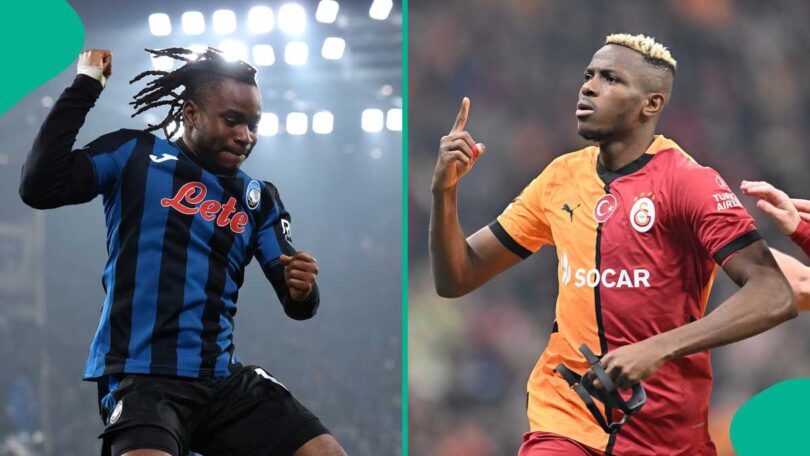
Victor Osimhen changed what a Nigerian FIFA card could look like at the very top end of the market. His Napoli years produced special cards that competed with the absolute elite of Ultimate Team, with pace and finishing numbers that justified enormous in-game coin prices. His Team of the Week and special editions during the FIFA 23 and 24 cycles were legitimately meta-defining, not just for Nigerian players but across the entire game. Where Emenike was a budget hero and Martins a pace exploit, Osimhen became a card you built an entire team around. That evolution, from cult favourite to genuine star, mirrors Nigeria’s growing stature in world football and ensures the Super Eagles keep producing Ultimate Team gold for years to come.