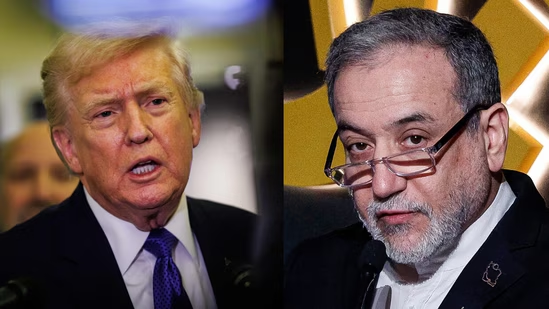
Pakistan said the United States and Iran had reached an agreement to end the war and reopen the Strait of Hormuz, raising hopes of relief for the global economy more than three months after the conflict began.
Details of the agreement were not immediately available. A formal signing ceremony is scheduled for Friday (June 19) in Switzerland, though it remains unclear how quickly the strategic waterway will reopen to all shipping.
Follow here for live updates
US-Iran peace deal reached
Washington had previously indicated it would ease its blockade of Iranian ports as traffic resumes through the strait and relax sanctions to allow Tehran to boost oil exports and shore up its battered economy.
US President Donald Trump confirmed that a deal had been reached with Iran and said he had authorized an end to the US naval blockade of Iranian ports in the Strait of Hormuz.
“Congratulations to all!” he wrote on social media, without providing details. He added, “Ships of the World, start your engines. Let the oil flow!”
Also Read | Trump pushes to save US-Iran deal as Iran warns US and Israel of consequences
War stopped, meeting this week
Iranian state media carried Pakistan’s announcement after a day in which Israel, excluded from the negotiations, struck Beirut’s southern suburbs, threatening to derail talks that were nearing completion.
“Both sides have declared the immediate and permanent termination of military operations on all fronts, including in Lebanon,” Pakistan said, adding that mediators would facilitate meetings this week to “lay the foundation for the technical talks.”
The agreement largely restores the status quo that existed before the war, albeit after a conflict that left thousands dead and gave Iran a new source of leverage through its ability to influence transit through the Strait of Hormuz.
The waterway is vital for global shipments of oil, natural gas and related products such as fertilizer, and its effective closure sent shockwaves through the world economy.
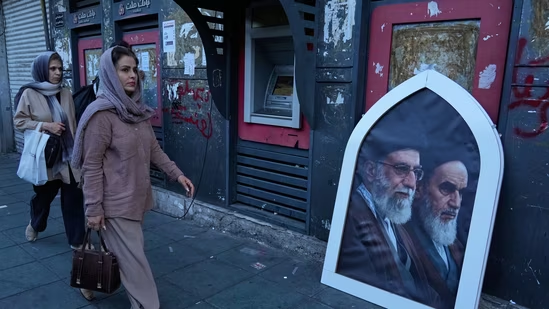
Despite the objectives declared by the United States and Israel when they launched the war on February 28 with strikes that killed Iran’s supreme leader, Ayatollah Ali Khamenei, Tehran still retains its missile programme, support for regional armed groups such as Hezbollah in Lebanon, and a stockpile of highly enriched uranium linked to its nuclear programme.