The Strait of Hormuz could begin reopening in the coming days following the newly announced US-Iran deal on Sunday, June 14. However, a full return to normal maritime traffic is likely to take longer, Axios reported.
The development comes after Pakistani Prime Minister Shehbaz Sharif announced that Washington and Tehran had reached a deal to end hostilities and extend a ceasefire, with a formal signing ceremony expected in Switzerland later this week.
If the deal is carried out in its entirety, it would be the biggest diplomatic victory since the crisis started 107 days ago. One of the most significant energy routes, the Strait of Hormuz, is intended to be navigable again with the peace deal in place.
Approximately 20% of the world’s oil shipments and a sizeable portion of the exports of liquefied natural gas are typically handled by the waterway.
Read more: US-Iran deal signed? Trump, White House give clear signal ahead of UFC night – Watch
When could ships return to the Strait of Hormuz?
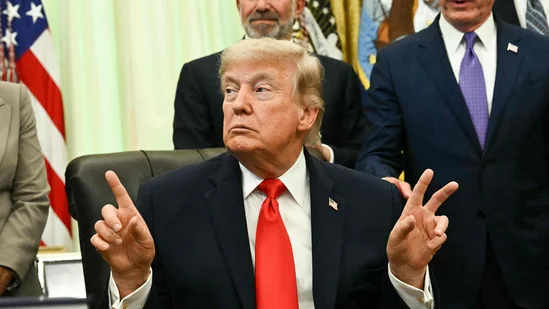
President Donald Trump confirmed the development in a post on Truth Social.
“The Deal with the Islamic Republic of Iran is now complete. Congratulations to all! I hereby fully authorize the toll-free opening of the Strait of Hormuz, and, simultaneously herewith, authorize the immediate removal of the United States Naval blockade. Ships of the World, start your engines,” Trump wrote.
Six weeks into the conflict, in mid-April, Trump issued the order for the blockade while Iran continued to effectively close the vital Strait of Hormuz.
Even though Trump declared on Sunday that he was approving the “toll-free opening of the Strait of Hormuz,” the waterway’s commerce will not instantly return to prewar levels. Iran has continued to impose its own limitations, and according to US authorities, Tehran has also planted mines.
Axios reported that mine-clearing operations, infrastructure repairs and security guarantees may be required before commercial traffic fully resumes.
Sharif and Trump have announced the peace deal; Iran, however, has not publicly confirmed that the agreement is already in force at the time of publication.
Read more: Pakistan says US and Iran reach deal to end war, reopen Strait of Hormuz | What is happening?
What does the US-Iran deal include?
According to Axios, the peace deal between the US and Iran is set to extend the ceasefire for 60 days and create a framework for negotiations over Iran’s nuclear program.
The agreement calls for discussions on uranium enrichment, monitoring mechanisms and the disposal of highly enriched uranium stockpiles.
The deal also seeks to halt strikes between Israel and Hezbollah in Lebanon. Tensions remained high over the weekend after Israeli strikes reportedly targeted Hezbollah positions in Beirut, leading to Iranian threats that it could abandon negotiations.
Sharif said Pakistan and Qatar helped mediate the agreement and would facilitate additional meetings in the coming days. In an X post, Sharif wrote, “The official signing ceremony will be on Friday, 19 June in Switzerland.”