Passengers rescued from the rat virus cruise ship MV Hondius will be quarantined in a military-grade isolation unit in Madrid to prevent the spread of hantavirus
Passengers evacuated from the hantavirus-stricken cruise ship are being taken to a high-security hospital ward designed to deal with victims of radioactive leaks.
Three people have died and more left ill after the rare rat-borne illness tore through the MV Hondius, a luxury cruise ship that set off from Argentina around a month ago and is currently anchored near Cape Verde, off Africa’s west coast. Evacuations from the ship have already begun, with one British man among the three taken to the Netherlands last night for treatment, while escorted by workers in hazmat suits.
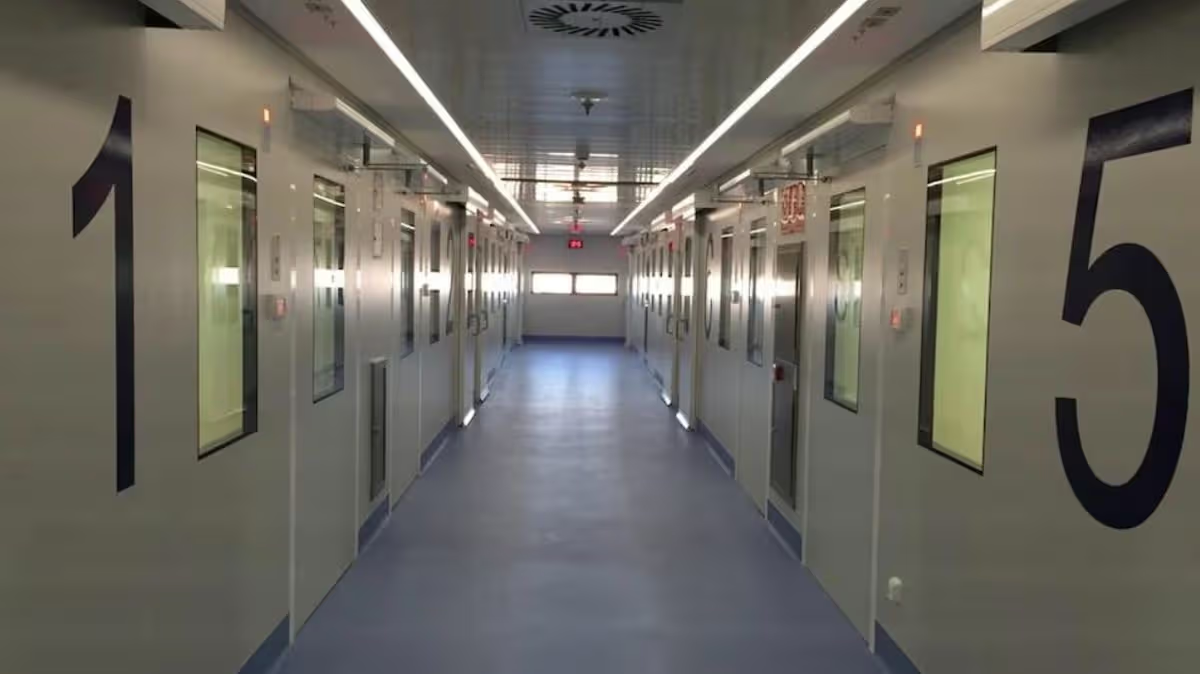
Spain has meanwhile announced that its 14 citizens on board the ship will be transferred to the High-Level Isolation Unit (UAAN) at the Gómez Ulla Central Defence Hospital in Madrid, should they show any symptoms.
READ MORE: Hantavirus spread fears as plane passenger NOT on Hondius ship infected after flight with patientREAD MORE: Contact tracing race after Swiss hantavirus case confirmed in person who had already got off cruise
The military-level facility is designed to contain outbreaks of tropical and rare diseases, such as haemorrhagic fevers, emerging respiratory illnesses, and incidents involving highly dangerous biological or radioactive agents. The operation will begin after the passengers leave the ship at the port of Granadilla de Abona in Tenerife, where they will be given initial medical evaluation before being evacuated by military aircraft to the Torrejón de Ardoz air base.
From there, they will be transferred to the UAAN, located on the 22nd floor of the Madrid hospital. The isolation unit has seven inpatient beds and a BSL-3 biosafety level laboratory, which keep patients in strict isolation from the rest of the hospital.
Access is separate to the public entrances to the hospital, and comes via a dedicated bed lift. The rooms are equipped as ICU bays and included a vacuum pressure system, toilets with hyperchlorinated water, and hydrogen peroxide disinfectant.
Each is connected to an airlock system and decontamination zones, with separate corridors for personnel, clean equipment, and contaminated materials. Before leaving the isolation areas, healthcare staff must pass through decontamination stations that include specific procedures for the safe removal of PPE.
Colonel Antonio Fé Marques, head of the unit, said it was set up in the wake of the 2014 Ebola epidemic, which spread across West Africa and put health officials around the world on high alert. Spain’s Minister of Health, Mónica García, said patients showing symptoms will be admitted directly to isolation units, while asymptomatic passengers who were on board will be kept in separate areas within the same hospital complex.
Defence Minister Margarita Robles said that quarantine will be “voluntary” and that citizens “must sign an informed consent form,” since it is “a measure that deprives individuals of their liberty”.
A total of 19 British passengers and four crew are listed in the ship’s log. Two British nationals who left the ship in late April will be asked to self-isolate for 45 days, the UK Health Security Agency (UKHSA) has said.