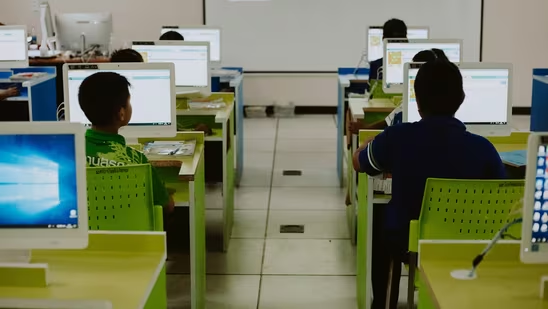
A LinkedIn post detailing the cultural and educational hurdles faced by US-born children after moving to India has sparked an online discussion about the educational styles of the two countries. A professional shared how his friend’s children, who recently relocated from the United States to join an Indian high school, were performing exceptionally well academically. However, during a parent-teacher meeting, the educators advised the parents that the children needed to “tone down a bit” because their habit of questioning and debating was being perceived as aggressive.
“A friend of mine recently moved back to India after spending several years in the United States. His children, who were born and raised in the US, have now joined high school in India,” a US-based man wrote.
Also Read: NRI in US explains why returning to India after earning crores is ‘next to impossible’
He claimed, “At a recent parent-teacher meeting, the feedback was interesting. The teachers mentioned that the kids were coping very well academically with the transition. However, they also suggested that the children needed to ‘tone down a bit’ and ‘appear more respectful’ when asking questions or debating topics in the classroom. Their style of questioning was perceived as somewhat aggressive in the Indian classroom setting.”
The man shared how this made him think about the difference in educational cultures between the US and India. He noted, “In many US schools, students are actively encouraged to ask questions, challenge ideas respectfully, and engage in discussions. Curiosity, critical thinking, and debate are often seen as signs of engagement and independent thought.”
The man further added, “In contrast, in many Indian classrooms (though certainly not all), questioning teachers or openly debating viewpoints may sometimes be interpreted differently, occasionally being viewed as confrontational or disrespectful rather than inquisitive.”
“It is fascinating how something as simple as asking ‘Why?’ can carry such different meanings depending on where you are,” he wrote and concluded the post.
How did social media react?
An individual wrote, “Very well said. Unfortunately, Indian education and work culture are deeply rooted in hierarchy and authority in the name of ‘respect’. So different standards when you ask why? It is perceived as challenging their authority.”
Another expressed, “Speaking from deep personal experience of 12 years, school teachers in India are under significant pressure to ‘complete portions’ and get students ready for tests and exams. They don’t have the luxury of time (and sometimes even the skills or willingness) to engage in debate or help students develop critical thinking skills.”
Also Read: ‘No workout, no family time’: Indian man says working US hours comes at a health cost
While a majority of social media users agreed with the observation, some on the internet argued that the situation was being misinterpreted. Just like this LinkedIn user, who posted, “No, Indian schools always encourage participation, but it seems you are taking the words ‘more respectful’ and ‘tone down’ in the wrong sense. These words show aggressiveness and a high level of temper while speaking. So this is not something that we promote anywhere. So, views are always welcome but not instead of teachers’ and mates’ respect.”
(Disclaimer: This report is based on user-generated content from social media. Hindustantimes.com has not independently verified the claims and does not endorse them.)