“DID YOU watch the Eurovision Song Contest last night?” asked the barber in a Jerusalem back street, razor in hand. Confessing that he had unaccountably failed to tune in, your columnist knew why the question was asked. Protest politics intruded on this year’s Eurovision—a contest cherished by fans for terrible songs, corny lyrics and bad-taste costumes—after Israel made it to the finals. Citing Israel’s iron-fisted military occupation of Gaza, five European countries boycotted the competition. Mingled boos and cheers greeted Israel’s second-place finish.
Israel’s isolation is not a frivolous matter. Increasingly its scientists report unexplained refusals when international research grants come up for renewal. Parents worry about youngsters being ostracised if they enrol at foreign universities, especially after completing national service in the Israel Defence Forces (IDF).
Boycotts do not intimidate Israel, though. Five days of interviews with serving and retired military officers, government officials and elected politicians reveal a country that still sees itself as fighting for survival in a dangerous neighbourhood. Such a nation can endure solitude. With a world-weary pride, an official quotes a Bible verse from the Book of Numbers, calling the Jews “a people that dwells alone; not reckoned among the nations”. Moreover, Israel is less alone than critics and enemies hope.
Israel’s image has taken a battering since the Gaza war killed over 70,000 Palestinians, mainly civilians, women and children. In Israel, global criticism is called unfair and dismissive of Israel’s right to self-defence after the surprise attack by Hamas terrorists on October 7th 2023, which saw 1,200 people murdered, mostly civilians, women and children. Led by the prime minister, Binyamin Netanyahu, many Israelis accuse critics of antisemitism.
Israel can ignore bad-faith attacks, defenders say, because relations with America have reached new heights under President Donald Trump. There is talk of unprecedented military co-operation with American and Israeli officers working “shoulder to shoulder” in Israeli operations rooms. Some predict that the country will become a “fortress” for American troops and hardware in the Middle East, long after the war with Iran. American officials call their collaboration with Israel a model for working with partners such as Japan in a conflict with China over Taiwan, this columnist heard.
Israel’s defenders make an angrier claim, too. Many governments condemned Israel for using disproportionate violence in Gaza and for tolerating violent attacks by Jewish settlers in the West Bank. This year several have deplored what they call indiscriminate Israeli air strikes on Lebanon, aimed at Hizbullah, the Iran-backed Shia militia. Foreign leaders have rebuked America and Israel for launching an ill-judged war against Iran. But some finger-wagging governments, notably in Europe and in the Gulf, take a different line in private, it is said. They admire Israel’s toughness and ask to buy its defence kit.
Israel’s closest Arab partner, the United Arab Emirates (UAE), has “crossed the Rubicon” and made an irreversible decision to align with Israel, whose air-defence systems are now shielding the UAE from attacks by Iran. Jordan is called a close partner, as is India, whose prime minister, Narendra Modi, made public his country’s deep ties to Israel when he visited the country in 2017.
For all its criticisms of Mr Netanyahu, Europe remains Israel’s largest trade partner. Led by Germany, there are vast two-way flows of air-defence systems, submarines and the like. Greece and Italy dream of being connected to energy pipelines running through the Holy Land. Israel, then, is not all alone. Yet shared interests are not the same as trust or admiration. As a result, some high-ranking Israelis say their country is dangerously lonely.
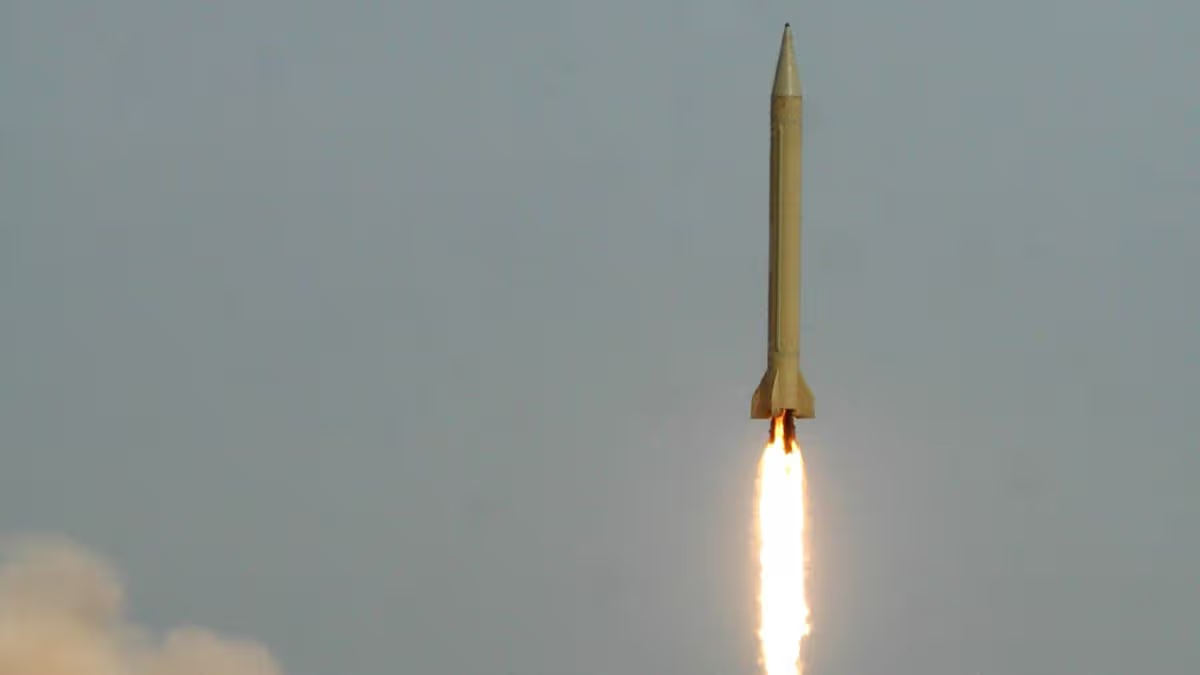
Many ordinary Israelis revere Mr Trump as their country’s stalwart friend. Insiders are less confident. Members of the security establishment express fears that Israel dazzled Mr Trump with plans to kill Iran’s supreme leader and top aides in one strike. That primed Mr Trump to expect a swift regime change. Instead, Iran remains defiant. On May 18th Mr Trump halted planned strikes following pleas from anxious Arab rulers. Mr Trump’s vanity will stop him from admitting that he was led into an unwinnable war, says one source. But senior figures worry that evermore elected Democrats and Republicans will blame Israel for dragging America into disaster. They know that America cares more about opening the Strait of Hormuz than Israel does. They dread a skittish Mr Trump making a deal with Iran that fails to eliminate its nuclear programme, Israel’s priority. Already, Israel is a partisan issue in America, with Democrats far less supportive than Republicans.
Security is an illusion, if people have no hope
Some in Israel argue that foreign relations will reset if elections this autumn end Mr Netanyahu’s long reign. Others see a need for larger changes. Ami Ayalon is a former naval commando, head of Israel’s navy, director of Shin Bet, its security service, and government minister for the Labor Party. Leaders cannot safely ignore public opinion, he counsels. Egypt’s president and Jordan’s king may wish to preserve ties with Israel. But if Israel cannot offer Palestinians a state of their own, “we won’t be able to preserve peace with Egypt and Jordan”. The old warrior compares terrorism to water rising from a spring, rather than a target that can be bombed. Any child of 12 or 14 who sees his father killed may “take up a knife and be ready to die”. Most of the international community “believes in Israel, alongside a Palestinian state” he says. “They don’t hate us, but they will if we don’t change our policy.”
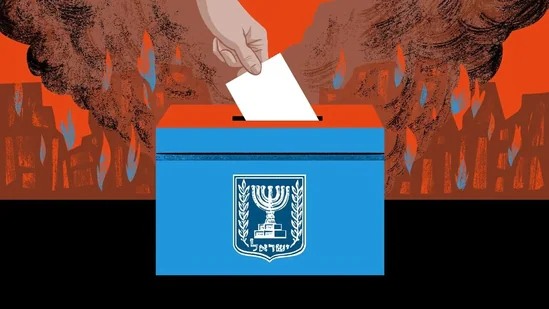
Israel, an embattled and divided country, is not about to grant statehood to Palestinians. On the Palestinian side, there is no sign of a negotiating partner of vision and authority. Until the world sees grounds for hope, Israel will be an ever lonelier place.