Evolve or be left behind is the mantra ingrained at Mikel Arteta’s Arsenal.
From their commercial operation to recruitment, the champions are hellbent on revamping whatever they can to capitalise on a first Premier League title in 22 years and cement their place in Europe’s elite.
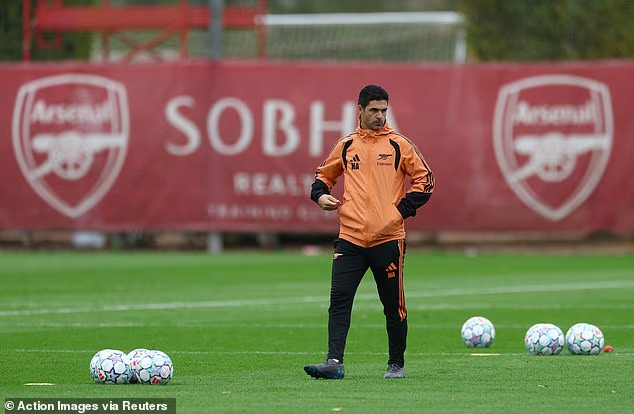
Next in their sights is their London Colney training base. Sources say there is an acceptance that Arsenal’s training facilities lag behind some of their Big Six rivals, which the club are focused on rectifying.
In February 2024, Arsenal made Dubai-based real estate developers Sobha Realty their first training ground sponsor. The club said the relationship would also help them explore development opportunities at the site, which are now kicking into gear with Sobha involved in the plans. But since that deal, the rest of the Big Six have left Arsenal behind.
Manchester United spent £50million on their Carrington redevelopment in August 2025, with improved gym and rehabilitation areas, nutrition facilities, an altitude-training room, sleep pods and dry-floating recovery equipment.
Chelsea are exploring further redevelopment of their facilities, while Liverpool’s AXA base remains state of the art after opening six years ago. Spurs began further upgrades to the first-team gym at their Hotspur Way training ground in July this year.
Arsenal are desperate to stay at the top of English and European football – and next in their sights to achieve that is revamping their Sobha Realty training ground

Tottenham’s Hotspur Way facilities are some of the best in the world, and are regularly used by England for training camps
It’s understood Arsenal have undergone a refurbishment of their first-team gym and treatment amenities and also been granted planning permission for a temporary women’s gym, which will kickstart the wider revamp.
Longer term, Arsenal are understood to be assessing whether they can build a new state-of-the-art men’s hub which would put their facilities among the best in Europe.
The women’s team would be able to train in the temporary gym for a maximum of three years and then – if a brand new men’s hub is built – move into the facility that the men’s team currently use.
It is understood that last season Arsenal were considering plans to erect stands around a pitch at Colney, to in effect create a mini-stadium for the Under 21s and Under 19s. It is believed the club had an informal talk with the local council before deciding not to pursue planning permission.
The Under 21s play at Meadow Park, the home of National League leaders Boreham Wood FC. The new stadium would have ended those journeys to Boreham Wood for youth-team players and their parents.
The pivot towards focusing on the training ground comes after resolving their more pressing matter of the Emirates Stadium, built in 2006. At the time, it was widely regarded as one of the most advanced football arenas in Britain, a benchmark for modern stadium design.
Since then, competitors have built or redeveloped stadiums with increasingly sophisticated hospitality, entertainment, retail and non-matchday offerings – none more so than their north London rivals Tottenham.
As reported by Daily Mail Sport in November 2024, options to expand the Emirates were keenly explored with architects from Populous – the firm which designed Arsenal’s stadium – consulted on the options available. Yet, earlier this month, Arsenal confirmed they had decided to pursue a ‘continued evolution’ of the stadium rather than an expansion.

Arsenal’s Under 21s currently play at Boreham Wood FC, but plans were in the works to build a mini-stadium for them at Colney

Arsene Wenger oversaw the project to build London Colney back in 1999 and then the major upgrades from 2015 to 2017
Attention has instead turned to Colney. Built on a 143-acre site back in 1999 in a project overseen by Arsene Wenger and largely financed by the £25m sale of Nicolas Anelka to Real Madrid, the previous major upgrades began in 2015 and were completed ahead of the 2017-18 season.
This included a new player performance centre, which brought together fitness, medical, rehabilitation and player-support facilities for the women’s and academy teams. Recovery technology such as ice baths and a cryotherapy chamber were brought in, as were a 40-metre running track and dedicated analysis and scouting suites.
For Arsenal, the latest plans underline a growing recognition that staying competitive off the pitch is just as important as the results on it.
With rivals continuing to invest in their infrastructure, the challenge for Arteta and the club’s hierarchy is to ensure London Colney can keep up with their title-chasing ambitions.