Iranian Foreign Minister Abbas Araghchi says Iran has proved itself “a tough and invincible power” by resisting the US and Israel, as collapsing shipping traffic through the Strait of Hormuz pushes oil prices higher.
“I have heard this many times from foreign ministers and officials from other countries: ‘You Iranians created a miracle; you surprised the whole world,’” Araghchi told a televised news conference covered by the semi-official Tasnim news agency on Tuesday.
“No one thought that Iran could resist America like this,” he said, noting that Washington entered the war with Israeli, western and other international support.
“The US president wrote two words [on social media] at the beginning of the war: ‘Unconditional surrender’,” Araghchi said.
“That was what they wanted from us and, 20 days later, the same enemy was begging for negotiations.”
Araghchi’s bullish comments were tempered by Anwar Gargash, diplomatic adviser to UAE President Mohammed bin Zayed Al Nahyan, who warned on Tuesday that the Middle East could not remain trapped between “neither war nor peace”.
“The goal is to transition to sustainable stability governed by clear and shared rules,” Gargash wrote on X.
The veteran Emirati official said the next phase of an agreement between Iran and the US could not rest on “shaky foundations or arrangements detached from international law”.
Gargash called for a regional settlement based on “peaceful coexistence, respect for sovereignty, and the logic of peace”, as US-Iranian talks remain stalled and both sides warn that fighting could resume.
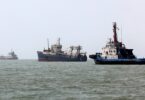
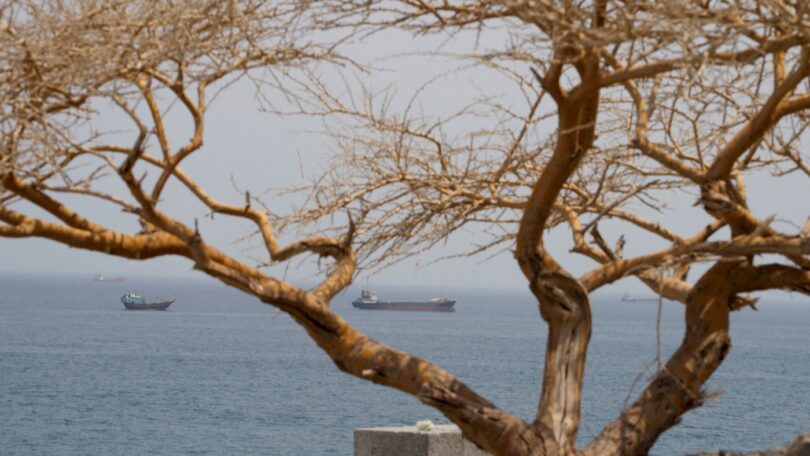
The war on Iran also continues to choke the Strait of Hormuz, one of the world’s most important trade routes.

Only six vessels crossed the Strait of Hormuz on Monday, according to Kpler data cited by Reuters, down from a 10-day average of about 11. Before the war, between 130 and 140 ships used the waterway each day.
Iranian business leader Majid Reza Hariri warned that Tehran could not simply adapt to the US maritime blockade.
“Whether through negotiations, requests, threats, or even using force and starting a war again, this maritime blockade must end,” he told Khabar Online.
‘Whether through negotiations, requests, threats, or even using force and starting a war again, this maritime blockade must end’
– Majid Reza Hariri, Iranian business leader
Hariri said replacing sea routes with overland transport could add $18bn annually to Iran’s import bill. Shipping a container from China costs about $3,000 by sea but $12,000 by land, he said.
“The worst thing that could happen today is to think we can bypass the maritime blockade and try to run the country despite it,” Hariri said. “We must not allow our economy – or the enemy – to get used to the maritime blockade.”
Brent crude rose to almost $90 a barrel on Tuesday, while US crude broke past $84.
US Senate Minority Leader Chuck Schumer accused Trump of launching an illegal war without an exit strategy.
“Donald Trump got us into an illegal war, is losing his illegal war, and has no way out of his illegal war,” Schumer wrote on X.
“His lack of strategy, discipline, and any ability to seriously negotiate is endangering our troops and raising prices for everyday Americans,” he said.
Israel intensifies attacks on Lebanon
Israel has meanwhile sharply escalated attacks on southern Lebanon despite a US-mediated ceasefire framework agreed on 26 June.

The resurrection of Hezbollah
Read More »
Lebanon’s National News Agency reported a “concentrated artillery bombardment” on the Ali al-Taher hills near Nabatieh.
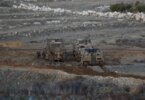
Israeli earthmovers also demolished homes in Zawtar el-Charqiyeh and Zawtar al-Gharbiyeh on Monday as tanks advanced.
Unifil, the UN’s force in Lebanon, recorded 455 Israeli projectiles and 97 breaches of Lebanese airspace between Friday and Sunday, the heaviest bombardment in months. It described Saturday’s 229 projectiles as “the highest single-day total since 21 June”.
Iranian Foreign Ministry spokesperson Esmaeil Baghaei “strongly condemned the brutal attacks”, which killed and wounded civilians and destroyed homes and infrastructure.
The escalation followed the seventh round of Lebanese-Israeli talks in Rome, exposing the gulf between US-sponsored diplomacy and Israel’s continuing military attacks.