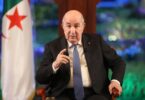
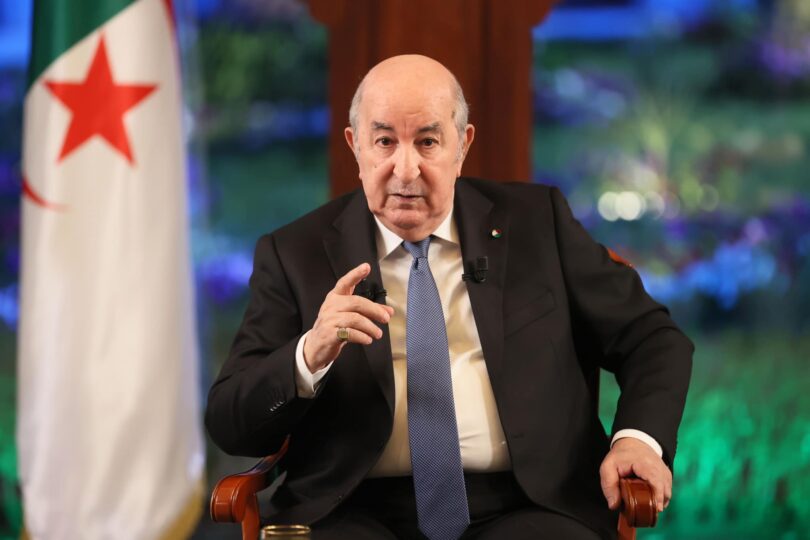
Algerian President Abdelmadjid Tebboune has vowed to defend Tunisia against “any threat”, in an explosive interview where he accused unnamed actors of trying to isolate Tunis from Algiers before “taking it down”.
During a televised interview on Monday, Tebboune said Algeria was a peaceful country that did not wish harm on any state, but would not remain passive in the face of threats against Tunisia.
“Whoever brings terrorism to Tunisia or near Tunisia, we will leave him in his parents’ tent,” Tebboune said in colloquial Algerian Arabic, using a local expression meaning his country would respond forcefully to any such threat.
“An attack on Tunisia is an attack on us,” he added, arguing that some actors were seeking to target Tunisia because of its close ties with Algeria.
While he did not identify those he believed posed a threat, the remarks came as he renewed accusations that the United Arab Emirates was working to destabilise Algeria.
CLICK FOLLOW: TO FOLLOW US
Sign up to get the latest insights and analysis on
Israel-Palestine, alongside Turkey Unpacked and other eSPORTY
The comments come as Tunisia faces one of its worst electricity crises in years, with prolonged power cuts affecting large parts of the country during the height of the summer heat.
Power outages have disrupted homes, businesses and public services, prompting widespread anger and renewed scrutiny of the government’s handling of state affairs.
The blackouts have also come on the fifth anniversary of Saied’s 25 July 2021 power grab, when he suspended parliament, dismissed the government and began ruling by decree.
The night Tunisia changed
Read More »
Since then, dozens of politicians, lawyers, judges, journalists and activists have been arrested or prosecuted in what international rights organisations have described as an unprecedented assault on political freedoms.
Saied has repeatedly denied persecuting political opponents, insisting Tunisia has an independent judiciary and that those facing trial are being prosecuted for ordinary criminal offences rather than their political views.
Algeria, which initially urged a return to constitutional order after Saied’s seizure of power, has since emerged as his most important regional supporter, providing political backing as Tunisia has faced growing isolation from many Western partners over its democratic backsliding.
The relationship between the two presidents has steadily deepened, with both governments placing increasing emphasis on what they describe as a strategic partnership rooted in shared security interests.
Last year, Algeria and Tunisia signed a new defence cooperation agreement covering military training, intelligence sharing, border security and joint exercises. Although officials have released only limited details, the accord prompted criticism in Tunisia over the lack of transparency surrounding its provisions.
Opposition figures accused the government of concealing the agreement’s contents, while speculation over a leaked version of the treaty fuelled accusations that Tunisia was sacrificing part of its sovereignty in favour of its larger neighbour.
Growing ties
The strengthening alliance has also reignited debate inside Tunisia over the country’s growing dependence on Algeria.
The two countries already cooperate closely on border security, counterterrorism and energy, while Algeria has become an increasingly important economic partner.
Critics, however, argue the relationship has become increasingly asymmetric since Saied consolidated power, with the Tunisian president aligning more closely with Algerian regional positions.
In 2022, he hosted Polisario Front leader Brahim Ghali in Tunis, abandoning decades of Tunisian neutrality over Western Sahara and triggering a diplomatic spat with Morocco.
Human rights organisations have also criticised growing judicial cooperation between the two governments, including the extradition earlier this year of Tunisian opposition figure Seif Eddine Makhlouf from Algeria, despite objections from international rights groups.