
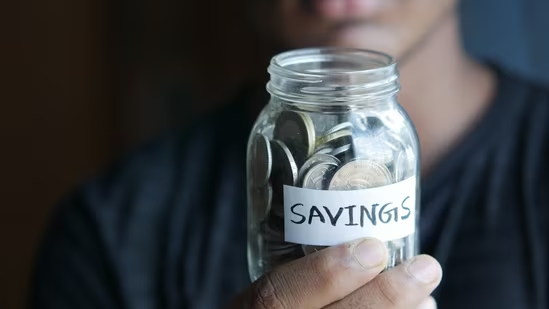
Trump Accounts: A new federal savings initiative for children in the United States is set to launch on July 4, introducing a government-backed investment account system aimed at helping families build long-term wealth for minors. The program, called “Trump Accounts,” is designed to encourage early investing through structured, tax-advantaged savings that can grow over time.
Officials have positioned the initiative as a way to promote financial literacy and long-term planning from childhood, with contributions coming from both private and public sources.
The accounts are expected to function as investment vehicles tied to market growth, with funds accessible later in life for key milestones such as education, housing and entrepreneurship.
Here are five key things parents need to know about the program.
1. What are Trump Accounts?
Trump Accounts are tax-deferred savings accounts officially known as 530A accounts, created as a government-backed investment tool for children in the United States.
According to the Treasury Department, the funds deposited into these accounts will be invested in low-cost US equity index funds, allowing savings to potentially grow over the long term. The structure is designed to shift focus from traditional savings to long-term market-based wealth building.
Also Read: ‘We manage expenses with gold, FDs, rentals’: Indian couple shares how they retired early to travel
2. Who is eligible to open an account?
The accounts are available to US citizens under 18 years of age who hold a valid Social Security number.
Parents or legal guardians are responsible for opening, managing and overseeing the accounts until the child becomes an adult. Contributions can be made not only by parents but also by relatives, employers and other eligible donors.
While older children can still be enrolled in the program, they will not qualify for the federal seed contribution attached to the scheme.
3. What is the government contribution?
A key feature of the program is a one-time $1,000 federal deposit for children born between January 1, 2025, and December 31, 2028.
The Treasury Department has said this amount will be invested in US equity index funds upon deposit, allowing it to grow over time. However, children outside the eligibility window can still open accounts and receive private contributions, but will not benefit from this initial government-funded seed amount.
Also Read: Reddit user’s post on returning to India after US MS degree, job search sparks buzz: ‘Lost my motivation and…’
4. What are the contribution limits?
Individuals are allowed to contribute up to $5,000 per child per year under the program.
This cap is expected to be adjusted for inflation starting in 2028. Employers are also permitted to contribute to employees’ children’s accounts, and certain charitable or government contributions will not be counted toward the annual limit, making the structure flexible for both private and institutional participation.
5. How can the money be used later in life?
Funds in Trump Accounts grow on a tax-deferred basis, meaning investment gains are not taxed while they remain in the account.
Once beneficiaries turn 18, they can withdraw funds for specific approved purposes such as:
- Higher education expenses
- Buying a first home
- Starting a business
Withdrawals for non-qualified uses may be subject to taxes and penalties. Any remaining balance can continue to stay invested, allowing long-term compounding, including potential use for retirement planning.
The Treasury Department has appointed Bank of New York Mellon as the administrator for the program. Families will be able to open and manage accounts through an official app or website. Officials have also cautioned users to rely only on verified government platforms, warning that fraudulent websites or scams may attempt to exploit public interest in the new scheme.