This week’s episode of Point Blank paints a picture of a war in the Middle East that has slipped far beyond its declared objectives, turning into a systemic confrontation over leverage, prestige and control of a critical maritime chokepoint—the Strait of Hormuz. What began, in Washington’s telling, as a campaign to “emasculate nuclear Iran” is now centered on a narrow waterway barely 22 miles wide at one point, through which a large portion of the world’s energy supplies must pass.
From nuclear Iran to the Strait of Hormuz
According to Executive Editor Shishir Gupta, the military objective when this war began on 28 February was clear: neutralize Iran’s nuclear capabilities. That aim, he argues, has effectively disappeared from the table, replaced by an immediate fight over freedom of navigation through Hormuz.
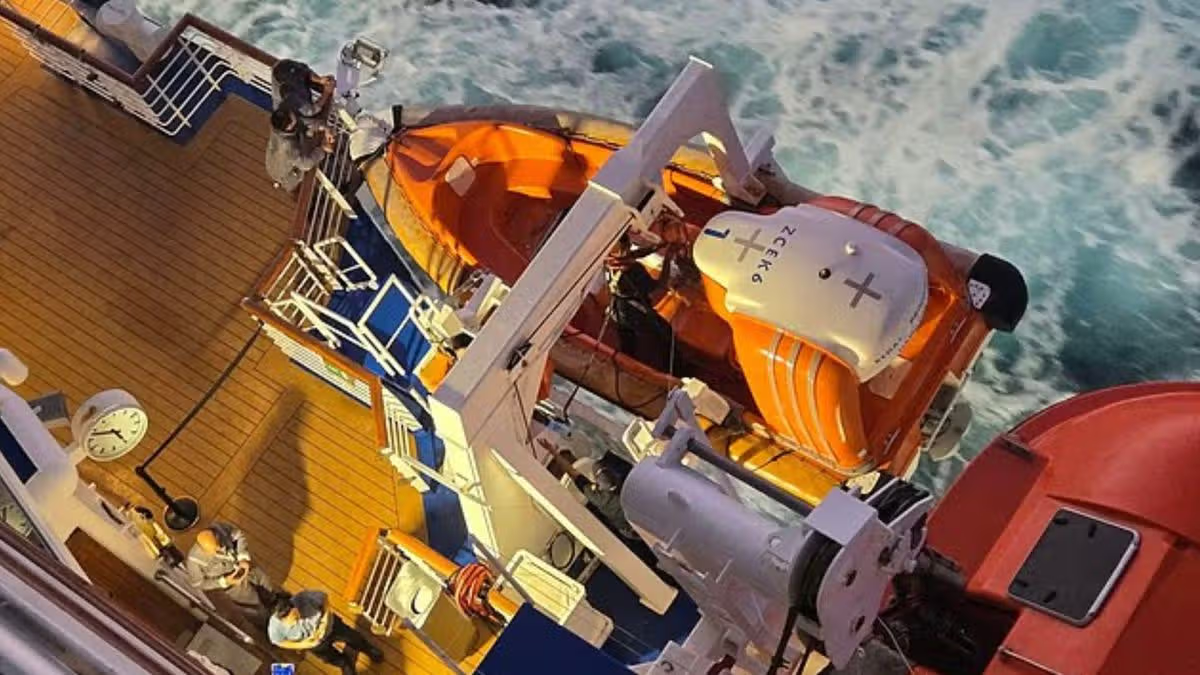
For decades, Hormuz functioned as an open international waterway, with unimpeded passage for global shipping. Gupta’s reading is that Iran identified a structural weakness in US political will under President Donald Trump-limited patience as midterm elections approach-and chose to stretch negotiations without conceding anything on its fundamental goals vis-à-vis the US or Israel. In that vacuum, Tehran has turned Hormuz itself into a weapon: targeting ships in the southern corridor and pushing all traffic into a northern channel where vessels receive calls demanding a “toll” to pass.
By monetizing and militarizing a global chokepoint, Iran has created a leverage mechanism that pressures not just Washington and the Gulf, but the wider international system, because each fresh disruption feeds into a mounting global energy crisis and rising oil prices.
Washington’s realization and the US strikes
Gupta suggests a belated realization in Washington that the US was being “strung along”—not only by Iran, but also by mediators like Pakistan and Qatar seeking side deals and self-interest rather than a genuine settlement. The result has been four major US strikes on Iran’s port cities and infrastructure, targeting air defence, drone systems and broader military capability.
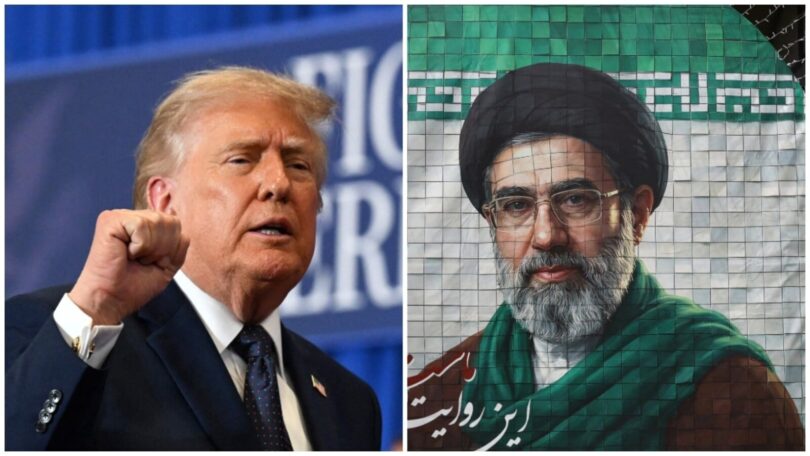
For Trump, this is not only about the strategic balance; it is also about domestic political optics. If the US appears weak in the Middle East, Gupta argues, allies and adversaries alike will discount American power, and even Trump’s own supporters would see him as a weak president—an outcome he cannot afford. Hence “election or no election,” retaliation becomes imperative, with US strikes framed as an attempt to hurt Iran enough to force it to back off from its Hormuz leverage.
Yet Washington’s dilemma is structural. Iran’s hardline regime has entrenched hostility towards the US, Israel and their allies over 47 years. Gupta emphasizes that whether one speaks of figures like Mojtaba Khomeini or supposed moderates, the system’s orientation is unchanged, making incremental diplomatic deals largely cosmetic.
A radicalized Iran and the politics of martyrdom
The killing of Iran’s supreme leader Ali Khamenei in joint US-Israel strikes on 28 February forms a central axis of this narrative. Unlike the Obama administration’s handling of Osama bin Laden—where US forces on the ground retrieved and then buried the body at sea—Trump’s operation relied on bunker-busting strikes without troops, leaving no remains to recover.
Gupta notes that Iran then deliberately took whatever remains it could symbolically gather and drove a massive funeral procession across the country. For Tehran, this was a political instrument: a way to incite passion, radicalize the domestic audience further and frame the US and Israel as enemies who murdered their supreme leader, making “revenge” a moral obligation.
The regime has reinforced this narrative by publicly listing foreign leaders it seeks to target, including European heads of government and President Trump himself, with Israeli intelligence reportedly picking up indications of assassination plots against the US president. In Gupta’s view, this fits squarely within the framework of “political Islam” as articulated by Iran’s leadership, rooted in sacrifice and resistance against a superpower.
This domestic framing gives Tehran what he calls “time on its side.” Autocratic regimes, he notes, can afford long wars of attrition; the Iran–Iraq war dragged on for eight years, after which Iran was widely seen as having emerged on top. For Trump, facing midterms, time is the one thing he does not have.
Gulf states in the line of fire and the question of deterrence
While the headline confrontation is US–Iran, the battlefield is the broader Gulf. Gupta estimates that Iran has already fired around 50 ballistic missiles and multiple drones against bases and targets in Bahrain, Kuwait, the UAE, Jordan and, to a lesser extent, Saudi Arabia. These countries, many hosting US military facilities, have been struck and humiliated, constrained by their concern for the wider Islamic Ummah and a reluctance to retaliate openly.
Their instinct now is to hedge: avoiding an overtly antagonistic posture toward Iran while not alienating the US security umbrella they rely on. The exception, in Gupta’s assessment, is the UAE, which has positioned itself firmly under US security, distanced itself from OPEC, and built visible ties with Israel, including participating prominently in US celebrations.
He argues it is “time” for Gulf states to stop taking Iranian strikes lying down and consider formal defence arrangements or alliances within the GCC to build enough deterrence that Iran thinks several times before attacking them. Currently, he describes the situation as a “one-way street” where Iran strikes and Gulf states absorb blows without symmetrical response; only once they retaliate will Tehran be forced to reassess the cost-benefit of continued escalation.
On speculation that India might supply BrahMos or Akashteer systems to the UAE, Gupta is categorical: he does not believe that topic is on the table at this stage.
A ceasefire that collapsed and mediators without leverage
The interim ceasefire and Trump–Iran understanding, according to Gupta, was built on a basic trade-off: Washington would release funds and allow Iranian oil exports in return for concrete Iranian commitments. One of the key conditions was freedom of navigation in the Strait of Hormuz. Iran’s insistence on controlling routing and imposing tolls is, in his view, a direct violation of that first condition, undermining the US’s image as a security guarantor for Gulf allies
Simultaneously, Iran has used the funeral of Khamenei to inflame public anger against the US and Israel, naming leaders and placing bounties on their heads, reinforcing the perception in Washington that it was being “made a fool of.” In practical terms, Trump’s decision to call off the ceasefire reflects the realization that while Iran’s regime enjoyed a win–win environment—able to keep negotiating, keep striking and keep its narrative alive—the US was in a lose–lose situation, its power projection questioned in Europe, Asia and most damagingly in the Gulf itself.
As for mediators like Pakistan and Qatar, Gupta is scathing. Qatar, he says, is known mainly as a “moneybag,” while Pakistan behaves as a busybody without real clout, despite Trump’s personal rapport with army chief Asim Munir. He argues they bring little substantive leverage: mediation only works when both sides genuinely want an agreement, whereas Iran is talking openly about killing Trump. In this context, mediators have almost no role; both sides have chosen military engagement, and the US has decided it must “really hurt” Iran.
Where does the war go from here?
Looking ahead, Gupta believes the conflict over Strait of Hormuz will continue at a level largely confined to the Middle East, with Iran unwilling to give up its claim to regional leadership and its domestic narrative of resistance. Tehran will keep targeting ships, and the trajectory will resemble a sinusoidal curve: spikes of attacks, phases of negotiation, then renewed escalation.
The real hinge, in his telling, lies in Washington’s choices. If the US allows Iran to dictate terms in Hormuz, the reputational damage will be profound-not just among Gulf allies, but across the globe, undercutting Trump’s repeated claims about commanding the “greatest military force.” Hence, the US has “no options” but to continue degrading Iranian military capabilities and, crucially, restore genuine freedom of navigation in the Strait. Without that, the global ramifications for US military credibility are severe; without nuclear emasculation of Iran, the original strategic objective remains unmet.
All of this, Gupta concludes, ultimately turns on regime change in Tehran. Unless the hardline dispensation born of the 1979 revolution is fundamentally altered, neither the nuclear question nor the Hormuz standoff will truly resolve. In that scenario, Iran could emerge from this crisis perceived as a regional hegemon that stood up to a superpower, while Trump risks being remembered as the president under whom US military prestige was tested-and found wanting-on the waters of Hormuz.