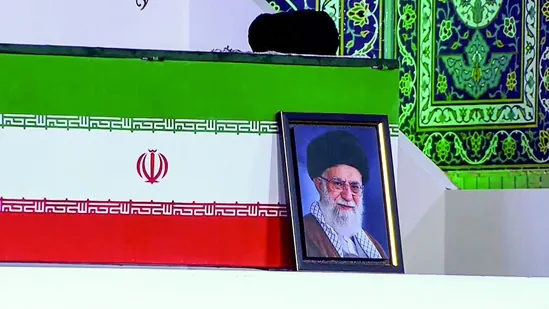
Over a hundred days have passed – 125 to be precise – since Iran’s Supreme Leader, Ayatollah Ali Khamenei, was assassinated in US-Israel strikes on February 28. The funeral ceremony of the slain leader only began on Friday and will span across multiple cities in Iran and neighbouring Iraq, before his burial in Mashhad on July 9. Track live updates on Khamenei’s funeral
Khamenei’s last rites were delayed multiple times, mostly on account of security and safety issues created by the Iran-US war which ended after an interim peace deal signed last month.
As the funeral was put on hold, it may have raised some questions – one, what caused the delay? Two, how was Khamenei’s dead body preserved for over four months?
Also read: Death toll climbs as rising temperatures keep Europe boiling, no relief in sight
Iran did not officially say anything on where and how Khamenei’s mortal remains were kept during these months. But an Iranian official said that “the bodies were protected with utmost respect and in compliance with religious and legal standards.”
“The bodies have been preserved with the utmost respect and care, in accordance with Islamic and legal standards. They have neither been buried nor placed in safekeeping (as a trust) anywhere,” Iman Attarzadeh, spokesperson for the Special Headquarters for the Funeral and Burial of Ali Khamenei, was quoted as saying by Euro News.
Cold storage, no chemical embalming?
While Islamic rule calls for immediate burial, experts say that Khamenei’s dead body may have been kept in a cold storage.
“The mechanism is almost certainly refrigerated cold storage, not embalming, as Islam bars chemical embalming,” counterterrorism expert Dr Omar Mohammed was quoted as saying by Fox News Digital.
“Shia law allows delayed burial and preservation by cold in exceptional cases, and a clerical exemption for a Supreme Leader is easy to get,” he said further.
Also read: ‘India’s position on Indus Waters Treaty consistent’: MEA responds to Pakistan’s ‘warnings’
Khamenei was killed on February 28 in an US-Israel strike, alongwith some of his family members, including his toddler granddaughter, whose small coffin rested with Khamenei and others at Tehran’s Grand Mosallah on Friday. Others from Khamenei family killed in the strikes included the slain leader’s daughter, son-in-law, and daughter-in-law (wife of his son Mojtaba Khamenei).
Khamenei’s funeral in Tehran
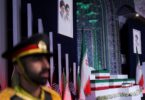
Khamenei’s coffin was unveiled late on Thursday to a throng of sobbing supporters, swaying and beating their heads in time to a sung lament as flowers were thrown from the bier into the crowd, Reuters reported. On Friday the Khamenei family’s coffins were laid in state in the great prayer hall built to honour his predecessor, Ayatollah Ruhollah Khomeini.
While teary-eyed Iranian leaders paid their respects to Khamenei, his son and Iran’s new Supreme Leader, was nowhere to be seen as he hasn’t made a public appearance ever since the war broke out. Some reports suggest that he suffered serious injuries in the strikes that killed most of his family.