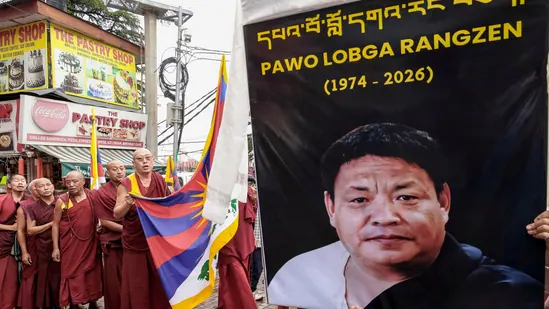
Human life is precious and must be preserved, Sikyong Penpa Tsering, president of the Central Tibetan Administration, said on Friday as he expressed sadness over a Tibetan man’s death by self-immolation outside the United Nations headquarters in New York. Tsering said the man had made it clear in a video message that this ‘ultimate sacrifice was undertaken for the Tibetan national cause.’
“While we honor his devotion, human life is precious and must be preserved to serve the long-term struggle for Tibet. On behalf of the Central Tibetan Administration (CTA), I earnestly urge all fellow Tibetans to cherish your lives,” Tsering said in a statement, as he also flagged an ‘unfolding genocide in Tibet and the enforcement of the draconian “Ethnic Unity and Progress Law”.
He alleged that these were the reasons begind Lobga Rangzen’s self-immolation outside UN headquarters. “He joins at least 157 Tibetans inside Tibet who have offered their lives to draw global attention to the brutal repression endured under Chinese rule,” Tsering said, as he called upon Tibetans in exile, world governments, and international human rights institutions to recognize Tibet’s ‘severe crisis’.
‘Rangzen was enraged by Chinese govt’s atrocities’
On Thursday, a New York City Police Department spokesperson told Reuters that police had found the man badly burned and was taken to Bellevue Hospital where he was pronounced dead.
Rangzen was an Uber driver and went to the scene with a Tibetan flag, local news site amNewYork reported. The website quoted fellow Uber driver Lobsang Paljor as saying he knew Rangzen from gatherings in the Tibetan community.
Paljor told the news website that Rangzen “was enraged by the restrictions the Chinese government had placed on his countrymen.”
China’s ethnic unity law has drawn criticism from the United States and the European Union as the law gives Beijing the legal basis to take action against people outside its borders.
The law creates a “shared” national identity among the country’s 55 ethnic minority groups, including Tibetans and Uyghurs, some of whom chafe under Chinese governance, Reuters reported.
Tibetans have also previously committed acts of self-immolation in protest against Beijing’s policies in Tibet and nearby regions with large Tibetan populations.
On the latest self-immolation case, Chinese foreign ministry spokesperson Guo Jiakun said Tibet has been an inalienable part of the country’s territory since ancient times and Beijing believes “relevant countries will handle the matter in accordance with domestic laws.”
International human rights groups and exiles, however, have routinely condemned what they call China’s oppressive rule in Tibetan areas. China rejects such assessments.