Physicians and health professionals in Gaza marked 1,000 days of genocide on Thursday with a plea for international pressure to lift Israel’s nearly two-decade blockade, as well as its ban on critical medical supplies for Palestinians that even include chlorine bleach to disinfect hospitals.
In a virtual call hosted by the global non-profit Doctors Against Genocide, a slate of experts described conditions that can barely sustain the healthiest residents of Gaza, let alone those who are elderly, disabled, or with illnesses that predate the 7 October 2023 Hamas-led attacks on southern Israel, and the subsequent genocide in Gaza.
Israel’s assault has so far killed 1,700 medical workers, wholly or partly destroyed 38 hospitals, and hit nearly 200 ambulances in the enclave, the Gaza Health Ministry has said.
Women with breast cancer are undergoing immediate mastectomies because it’s the fastest way to save their lives when there are no deeper diagnostic tools or cancer drugs, Dr Ahmed Shatat, director general of International Cooperation and Planning in Gaza, said on the call.
Previously, we were holding seven MRI machines. Now we have not even one MRI machine – zero – in the Gaza Strip,” he added.
CLICK FOLLOW: TO FOLLOW US
Sign up to get the latest insights and analysis on
Israel-Palestine, alongside Turkey Unpacked and other eSPORTY
“Out of the cardiac catheterisation machines, we were handling seven. Now we are just working in one old machine… with no availability of a stent for catheterisation.”
A catheter inserted into a blood vessel and guided to the heart can help diagnose a myriad of fairly common diseases, such as blockages that could lead to heart attacks and death.
But prevention, the best form of medicine, is no longer an option in a place that had prided itself on its medical infrastructure and its medical graduates, even through nearly two decades of Israeli siege.
Vaccination rates across Gaza have dropped from 96 to 80 percent, doctors said.
Cases of scabies, gastroenteritis, and Hepatitis A, among other infectious conditions, have risen dramatically, and without a sustained source of clean water, personal hygiene becomes greatly compromised.
Dr Munir al-Barsh, head of the water and environment sector in Gaza, said water well production has dropped to one-third of pre-7 October 2023 levels, but even that amount can be contaminated by waste and pollution that has seeped into the earth.
Desalination projects are largely out of service for drinking water, and fuel shortages are contributing to the inability to run machinery for these basic services.
Even chlorine, a crucial disinfectant, is prohibited from entering Gaza, Barsh said.
Israel maintains that between 600 and 800 trucks have clearance to enter Gaza with goods each day.
But the non-profit Refugees International has said that most of these trucks are carrying commercial goods brought in by private traders, not humanitarian supplies.
Invisible traumas
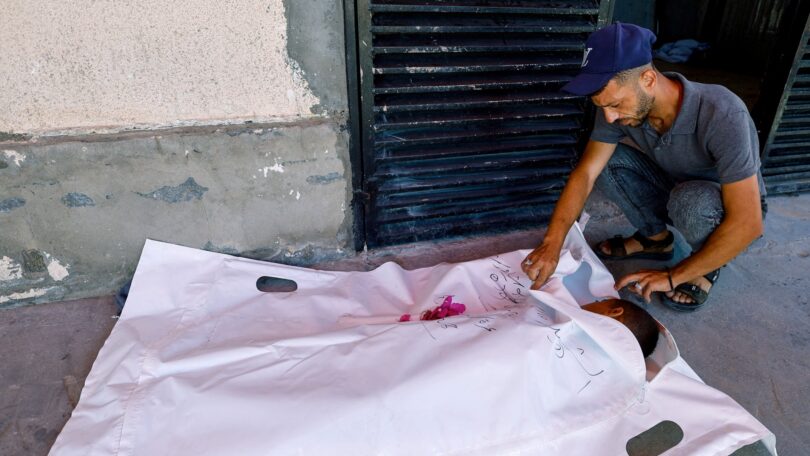
At least 73,066 Palestinians have been killed so far in the genocide, according to the Gaza health ministry – more than a thousand of them since the US declaration of the 10 October ceasefire.
“The total number of people killed or injured so far is quarter of a million. That is 12.5 percent of the population,” Dr Mustafa Barghouti, president of the Palestinian Medical Relief Society, said on the call.
“Apply that number to the United States of America, and you will be talking about no less than 36 million people killed or injured. You can imagine what the United States would have done if one million Americans were injured or killed.”
Among the invisible traumas are mental health conditions that now far exceed the capabilities of doctors and social workers in the enclave, most of whom have lost at least one person in their family to Israeli fire, Abdullah el-Jamal, a psychiatric consultant in Gaza, said.
In Gaza, life flickers as power cuts shatter livelihoods and healthcare
Read More »
“One day, I sent a case. She was a female, 32 years old, in severe depression and PTSD signs and symptoms, to one of my psychologists,” he recounted. “She told me, Dr Abdullah, do you forget that I lost my son? Why you send me this case, [a] person like me?”
“We don’t know how to deal with this situation,” he added. “We need a lot of support.”
Some two million people in Gaza are now displaced, and close to half a million buildings are deemed uninhabitable.
But Barghouhi insists there is hope.
“We are steadfast,” he said.
“Although we lost maybe almost 22,000 children in Gaza killed by the genocide… [there are now] 82,000 newborn children… These are signs of the resistance of the Palestinian people.”