A hallmark of President Trump’s style is that his candor eventually betrays his political motives. And so it has been this week as Mr. Trump explained why he cut a deal with the Iranian regime he once hoped to overthrow.
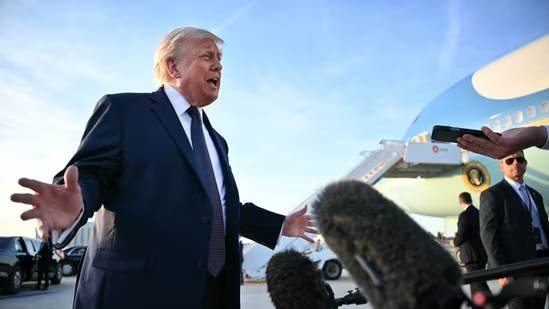
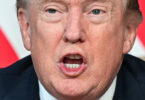
President Trump in Paris on Thursday.
“These fools who think I haven’t been tough enough on Iran, when the Stock Market Just Hit A RECORD HIGH, and Oil prices are ‘tumbling’ down, are either jealous, bad people, or stupid,” he wrote on Truth Social on Thursday.
Without the deal, “the alternative would be a world-wide depression,” Mr. Trump said at his Wednesday news conference. In so many words the President said the Iranians had him over a barrel—of oil. If he had fought on, the market “would go down at levels that nobody ever saw before, maybe except for 1929,” he said. “The one President I did not want to be was the late, great Herbert Hoover.”
There you have it: Mr. Trump was driven by fear of high oil prices and a falling stock market going into the midterm elections.
Warning that “we run out of [oil] reserves in about four weeks,” Mr. Trump insisted he had no other way to get the Strait of Hormuz open. “If we didn’t do this deal, we could’ve dropped more bombs for another three weeks, two weeks, four weeks, two years—you would never have the Hormuz Strait open.”
All of this strongly suggests the memorandum of understanding was reached from a position of U.S. weakness, not strength. From the deal’s substantial up-front sanctions relief and paucity of corresponding Iranian nuclear commitments, it shows.
The President also battles a straw man. His alternative wasn’t to bomb away at Tehran but to let the U.S. Navy force open the Strait. Or to continue sneaking increasing numbers of oil tankers out at night, breaking Iran’s blockade while America’s persisted.
The U.S. had options but Mr. Trump blinked at the risk. Instead, after two months of cease-fire weakness while the public soured and oil reserves declined, the President acknowledges he gave in to Iran’s economic pressure.
After hearing that, why wouldn’t the Iranians threaten to toll or close the Strait 60 days from now unless the U.S. extends negotiations and concedes even more? This was always the problem with relying on a deal—in essence paying a ransom—to reopen the Strait. Especially when the deal provides for more negotiations rather than Iranian action to dismantle its nuclear program.
The President’s comments are a gift to the regime, and not the only one. “They love their country,” he said Wednesday of Iran’s new leaders, many of whom were involved in January’s massacre of thousands of protesters. He called them “far less radicalized,” while Vice President JD Vance now speaks of helping “pragmatists” win the argument against “hard-liners,” much as Barack Obama did.
As Sen. Roger Wicker (R., Miss.) reminded the White House on Thursday, “The Iranian regime has not renounced its ultimate goal—‘Death to America, Death to Israel.’ The regime will invest every penny it receives to further that aim.”
The more hope Messrs. Trump and Vance express in the Iranian regime’s transformation, the more desperate they sound. How else to read their sudden defense of Iran’s missile program, after stopping it had been a declared U.S. war aim? Wishful thinking can’t cover up this deal’s origins in White House fears. As the President himself admits.