The American push to quickly begin high-stakes talks with Iran hit a snag on Friday, just days after the signing of an agreement that opens a two-month window for negotiations on Tehran’s nuclear programme and returning oil traffic through the Strait of Hormuz to prewar levels.
Iranian officials did not travel as planned to Switzerland, insisting that Israel strikes on Iranian-backed Hezbollah militants Lebanon must stop before the talks can take place, according to three regional officials and a person familiar with the matter.
They were not authorised to publicly discuss the ongoing mediation to try to get the talks rescheduled and spoke on condition of anonymity.
The situation was fluid as Israel and Lebanon agreed on Friday to renew their ceasefire, according to a US official and regional officials.
It remains to be seen whether that could help put the US-Iran talks back on track.
In Washington, President Donald Trump lashed out once again in the midst of the intensified fighting in Lebanon and the stalled nuclear talks.
“We didn’t meet out of desperation, Iran did,” Mr Trump wrote in a social media post. “They are finished. We’ll play out the 60 days. They get no money, not ten cents!”
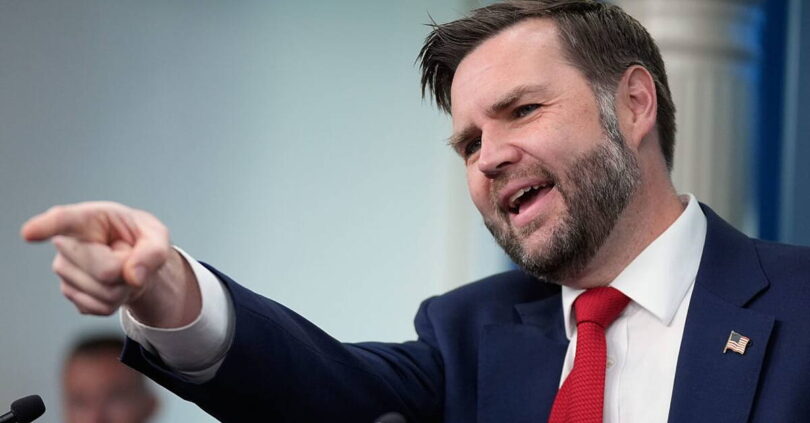
Trump’s vice president, JD Vance, had been prepared to make an overnight flight to meet with his Iranian counterparts at a mountainside resort in the tiny Swiss village of Obburgen and begin the technical talks.
Mr Vance’s staff and a small group of journalists had gathered at Joint Base Andrews outside Washington in anticipation of the trip.
Dozens of White House officials, advance staffers and more media were already in Switzerland.
https://x.com/WhiteHouse/status/2067967032981684647?ref_src=twsrc%5Etfw
Then the trip was called off — abruptly and for the time being.
A White House statement said Mr Vance, tapped by Mr Trump to lead the negotiations, decided to postpone his travel. It made no mention of the escalating violence in Lebanon.
“The logistics of these negotiations have never been simple or predictable,” the statement said.
But, according to officials, the Iranians made clear to the White House that they had baulked at starting the talks with Mr Vance because of the Israeli action in Lebanon.
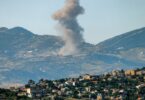
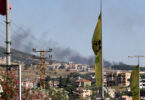
The fighting had intensified with at least 18 killed by Israeli airstrikes, while four Israeli soldiers were killed in southern Lebanon, officials said.
Israeli prime minister Benjamin Netanyahu said on Thursday that Israel’s military would stay in a “security zone” of southern Lebanon as long as “Israel’s security needs require it”.
Israel and Hezbollah are not parties to the US-Iran agreement.
Iran insists Israel must withdraw from the large swath of southern Lebanon it is occupying, but the wording of the interim deal does not explicitly require that and only ensures Lebanon’s “territorial integrity”.
Hours before postponing his trip, Mr Vance gave some indication of the state of flux when he told reporters at a White House briefing that he was uncertain if the talks were going to happen this weekend.
“We think these technical negotiations start sometime this weekend,” Mr Vance said. “That’s still the plan. But that could change.”
Soon after Mr Vance spoke to reporters, Iran’s supreme leader, Ayatollah Mojtaba Khamenei, endorsed direct negotiations with the United States.
His terse statement, read by state media, appeared to signal to the Islamic Republic’s leadership that it could move forward with a first round of talks.
“It is obvious that the face-to-face negotiations that will be held in the future will not mean accepting the enemy’s opinion,” Mr Khamenei said.
The messaging seemed to give Mr Khamenei, who was badly wounded in the US strike on February 28 that killed his father, some leeway.
Hard-liners in the Iranian government, including Mr Khamenei’s father, long opposed direct talks with the White House, especially after Mr Trump, during his first term, pulled out of the 2015 nuclear deal negotiated by Democratic president Barack Obama’s administration.
Mr Vance was initially expected to go to Switzerland to sign the agreement at a formal ceremony. Instead, Mr Trump signed the document on Wednesday during a glitzy dinner at the Palace of Versailles with French president Emmanuel Macron.
Iran’s president, Masoud Pezeshkian, separately signed the agreement.
It says Iran’s stockpile of highly enriched uranium, which is believed to be buried under rubble left by US military strikes last year targeting Tehran’s key nuclear sites, must at minimum be diluted under international supervision.
It also says Iran shall not procure or develop nuclear weapons — a commitment Tehran has made previously. Other commitments remain to be worked out.