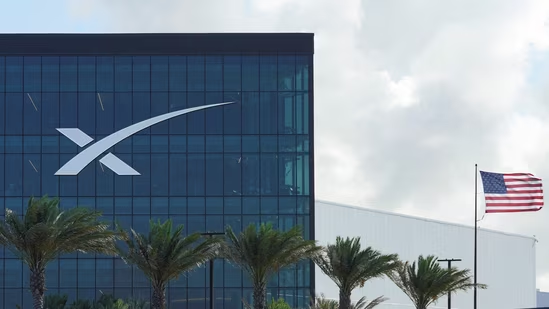
SpaceX is expected to go public for the first time on June 12, and its shares are likely to attract huge attention from investors. The IPO price is set at $135 per share for about 555.5 million shares, valuing the company at around $1.75 trillion. At this valuation, SpaceX would become the biggest IPO in history, far bigger than Alibaba’s $22 billion IPO in 2014.
SpaceX IPO size and value
The company is still making heavy losses, including about $4.9 billion in 2025 and $4.3 billion in just the first three months of 2026. SpaceX will be listed on the Nasdaq exchange under the ticker symbol “SPCX.” The stock is expected to be quickly added to major indexes like the Nasdaq-100 and Russell 1000, which forces index funds to buy it.
Impact on 401(k) and IRAs savings
These index funds are often linked to retirement accounts like 401(k)s and IRAs, so SpaceX may indirectly enter many people’s retirement savings. Experts say investors should not panic because the real impact depends on something called “free float,” which is only the shares available for public trading, as reported by USA Today,
Financial expert Alex Michalka explained that free float matters more than total valuation because it decides how much weight a company has in an index, via USA Today. Dina Ting from Franklin Templeton said to USA Today, even big companies can enter indexes with only a small impact at the beginning.
Also read: SpaceX IPO nears launch: What regular investors need to know before buying
Early estimates show SpaceX may have only about a 0.11% weight in the Russell 1000 index, which is very small for most portfolios, as reported by USA Today. Advisers say this means SpaceX is unlikely to drastically change or harm diversified 401(k) and IRA investments in the short term. However, experts warn that newly listed companies can be very volatile, especially when index funds are forced to buy shares quickly.
Risk, volatility and investor advice
Some analysts say the stock may rise during early demand but could fall later when early investors and insiders are allowed to sell their shares. Financial expert Armando Pantoja said long-term investors who accept risk may still see strong potential, but short-term swings are likely.
Adviser Steve Azoury said retirement investors may even get better pricing because large fund managers buy in bulk instead of individuals chasing shares. Overall, experts say diversification is key, and SpaceX should not take up a large part of any retirement portfolio even if excitement is high. Azoury added that Elon Musk has a strong track record, and many investors may choose to “go along for the ride,” despite risks, as per the report by USA Today.