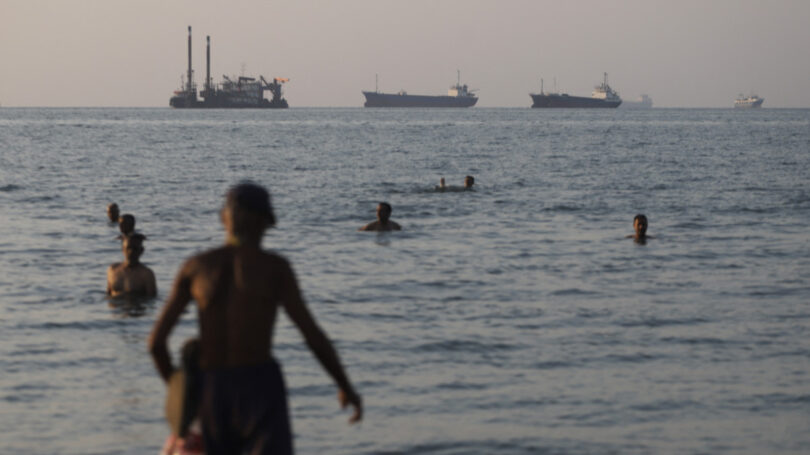
The US Navy is escorting dozens of vessels through the Strait of Hormuz each night, carrying millions of barrels of oil, senior US officials said on Friday.
US Energy Secretary Chris Wright said vessels under US protection were carrying about seven million barrels of oil per day through the Strait of Hormuz – a substantial amount, roughly half of what was transiting the waterway before the US-Israeli war on Iran began on 28 February.
“Flows today are approaching half of the gap, and they’re rising,” Wright told the Bloomberg Energy Security Executive Briefing in Houston, Texas.
US Interior Secretary Doug Burgum also said on Friday that the US was escorting as many as 20 vessels per night out of the Strait of Hormuz.
“Some nights, more than 20 ships [are] coming out,” Burgum told CNBC on Friday, adding that “substantial amounts of oil have come out of the strait”.
CLICK FOLLOW: TO FOLLOW US
Sign up to get the latest insights and analysis on
Israel-Palestine, alongside Turkey Unpacked and other eSPORTY
“I think the markets figured that out before some of the tabloid press did, because you’re starting to see a softening of oil prices,” he said.
US President Donald Trump claimed earlier this week that the US was secretly escorting vessels out of the Gulf. He said that more than 200 commercial ships and 100 million barrels of oil escaped Iran’s blockade of the Strait of Hormuz.
It’s unclear whether the operation has had a nod of approval from Iran against the backdrop of ceasefire negotiations. An Apache attack helicopter was shot down in the waterway this week, which US media said was involved in the escorts. Iran downplayed the incident.
Markets
Oil jumped to $112 per barrel in the weeks after the US and Israel attacked Iran. Energy experts have said that the “ticker price” does not reflect the price buyers are paying for physical barrels, particularly in regions like Asia, which are heavily dependent on Gulf volumes.
US top diplomat picks Bahrain as first wartime Gulf visit, sources say
Read More »
However, many experts expected prices to jump even higher after Iran wrested control of the Strait of Hormuz and blockaded Gulf states’ energy shipments.
The US then imposed a competing blockade that took sanctioned Iranian barrels off the market.
Markets were tamed by the release of 400 million barrels of emergency reserves by western countries and China’s decision to massively slash imports.
China imported around three million fewer barrels of oil per day in May than it did last year.
Burgum and Wright did not provide an exact timeline for the escorts, but oil prices have been trending down this month.
Brent, the international benchmark, is down roughly 20 percent over the last 30 days. It was trading down 3.5 percent at $87.17 per barrel on Friday, as Iran and the US signalled that a new ceasefire deal was close.