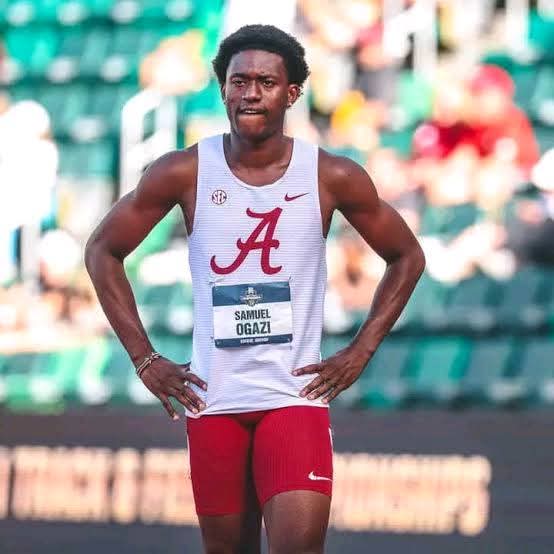
The recently concluded NCAA Outdoor Athletics Championships once again underscored the strength of the American collegiate sports system, a model widely regarded as one of the world’s most successful talent development pathways.
READ ALSO: President Federation Cup 2026: Sokoto United Shock Defending Champions Kwara United as Rivers United, Enyimba Advance
From record-breaking performances to qualification standards achieved for major international events, Nigerian and African athletes competing in the United States continued to showcase the benefits of combining education with structured sports development.
However, amid the success stories, experts have raised concerns about the state of university sports in Nigeria, arguing that poor administration, corruption, inadequate infrastructure, and weak institutional support continue to hinder the growth of student-athletes.
One of the most vocal critics is respected athletics coach Mutiu Oluwa, who believes Nigerian universities have failed to harness the vast potential within tertiary institution sports.
According to him, corruption remains one of the biggest obstacles to progress.
“Our academicians are too fraudulent. They steal at any given opportunity,” Oluwa stated.
He cited the organization of recent Nigerian University Games Association (NUGA) competitions as an example, alleging that facilities were left unfinished despite significant investments.
“The last NUGA was held with uncompleted facilities. Before Jos, it was UNILAG. The contractors are often the same professors, and many university projects end up abandoned,” he claimed.
Oluwa also lamented what he described as a culture that discourages sporting excellence within many public universities.
“Jealousy and resentment are everywhere. Lecturers often envy successful athletes even when they struggle financially. It’s a sad situation,” he said.
His concerns were echoed by Olabanji Oyebusi, Chief Executive Officer of Dynamic Athletics Hub, who argued that meaningful reforms are urgently needed across Nigeria’s education and sports sectors.
“Coach Mutiu speaks from experience as a university coach. Nigeria’s university system requires a comprehensive overhaul,” Oyebusi noted.
Drawing comparisons with institutions in other African countries, he highlighted better student welfare and sports infrastructure in nations such as Ghana and Botswana.
“In Ghana, many university hostels have modern facilities, while sports infrastructure is taken seriously. At the University of Botswana, the campus is located next to the national stadium and also possesses world-class sporting facilities of its own,” he said.
Oyebusi believes the quality of educational environments directly influences national development and sporting success.
“When students study in unconducive environments, many graduate focused solely on escaping poverty rather than contributing to collective growth. Better facilities and support systems would encourage collaboration, innovation, and sporting excellence.”
Veteran sports journalist Ben Efe also emphasized the stark contrast between the American and Nigerian systems.
“School sports is big business in the United States. In Nigeria, we’re yet to fully embrace that reality,” Efe observed.
Despite his criticism, Oluwa pointed to examples of success within Nigeria, recalling periods when institutions such as Obafemi Awolowo University and Ahmadu Bello University maintained strong sporting traditions through scholarships and athlete-support programmes.
He argued that effective management, rather than huge budgets, is often the deciding factor.
“The last NUGA champion won with just 22 scholarship athletes. They travelled by air, competed, and returned. That shows sports management in universities doesn’t have to be complicated,” he said.
Oluwa contrasted this with practices at some public institutions, where large contingents travel to competitions under poor conditions while athletes receive minimal support.
“Some universities take hundreds of students to competitions, lodge them in uncomfortable environments, and pay athletes far less than what is officially approved. Investigative journalism is needed to expose these practices.”
As the NCAA continues to produce world-class athletes and provide opportunities for Nigerians abroad, stakeholders insist that the country must develop a sustainable university sports structure of its own.
They argue that the achievements of Nigerian athletes overseas demonstrate what is possible when talent is nurtured through quality facilities, transparent administration, scholarship opportunities, and genuine institutional commitment.
The challenge for Nigeria now is whether its universities can create similar conditions at home and transform tertiary institutions into genuine centres of sporting and academic excellence.