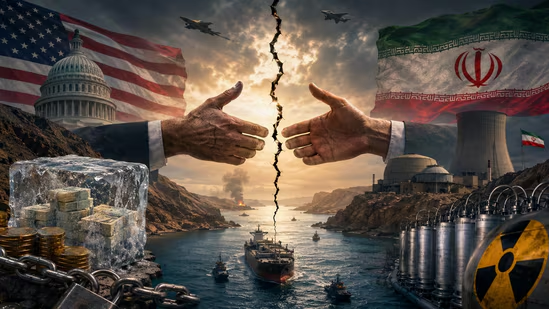
After weeks of diplomacy and claims about a breakthrough, the US-Iran peace deal remains deadlocked. US President Donald Trump says a framework has been “largely negotiated”, and discussions are underway with countries including Saudi Arabia, Qatar, United Arab Emirates and Pakistan.
The proposed memorandum of understanding (MoU) is expected to reopen the Strait of Hormuz, extend the ceasefire to 60 days and ease tensions across the Gulf and begin talks on Iran’s nuclear programme.
FOLLOW LIVE UPDATES HERE
Iran says several major disputes are unresolved. Tehran insists it will not surrender control over Hormuz and has not accepted US demands on uranium enrichment. Tehran also wants sanctions relief and access to frozen assets before making major concessions.
The deal is also complicated by Israeli PM Benjamin Netanyahu’s interference, disagreements over Lebanon, and uncertainty over how any ceasefire would actually work on the ground.
While both sides say progress has been made, officials also admit they remain “very close and very far” from an agreement.
Trump said talks are “proceeding in an orderly and constructive manner”, but also said negotiators should “not rush into a deal”. Iran’s foreign ministry spokesperson Esmaeil Baghaei said, “The trend this week has been towards a reduction in disputes, but there are still issues that need to be discussed through mediators.”
Why the US-Iran peace deal is stuck
1. Disagreement over the Strait of Hormuz – The US wants free movement of ships without restrictions, while Iran wants to keep control and oversight of the waterway. Tehran, though, wants the naval blockade removed.
2. Conflict over Iran’s nuclear programme – The US and Israel want Iran to stop uranium enrichment and give up highly enriched uranium, but Iran refuses to make those commitments now.
3. Sanctions relief dispute – Iran wants US sanctions eased and frozen Iranian funds released immediately, while Washington says relief will come only after Iran fulfils conditions.
4. No final agreement yet – The current proposal is only a framework or memorandum of understanding (MoU). Most difficult issues are being delayed for future negotiations.
5. Israel’s opposition and security concerns – Benjamin Netanyahu wants Iran’s nuclear capabilities fully dismantled, which Tehran rejects.
6. Lebanon and regional conflicts remain unresolved – Iran wants the deal to include an end to fighting across the region, including Lebanon; Israel still wants freedom to strike Hezbollah targets.
7. Lack of trust between both sides – Iran said they do not trust the US after Donald Trump withdrew from the 2015 nuclear deal during his first term.
8. Disagreements on who will blink first – Iran wants sanctions lifted first, while the US says Tehran must first reopen the Strait of Hormuz and meet nuclear conditions.
9. Security concerns after the war – Sea mines, attacks on ships and the US blockade of Iranian ports have created safety and economic concerns that are slowing talks.
10. Political pressure on both governments – Hardliners in both the US and Iran oppose compromises.
Strait of Hormuz is the biggest dispute
The Strait of Hormuz is the biggest sticking point in the US-Iran peace talks. It is a key global oil route carrying about one-fifth of the world’s oil and LNG.
Trump says “the Strait of Hormuz will be opened” under the deal, but Iran rejects this, saying it will stay under Iranian supervision and that US claims are “inconsistent with reality”. The US wants free navigation without tolls, while Iran wants control and possible transit fees.
Tensions during the war, including ship restrictions and reported sea mines, mean shipping may not return to normal quickly even after any deal. The International Energy Agency says it could take weeks to clear and months to restore operations.
Iran also wants the US naval blockade lifted quickly, but Trump says it will remain “in full force and effect until an agreement is reached, certified, and signed”.
Sanctions come next in line
Sanctions and frozen assets are another major obstacle. Iran wants immediate release of billions in blocked funds and early sanctions relief, saying there can be “no agreement” without it.
The US insists sanctions easing will come only after the Strait of Hormuz is fully reopened. Iran says lifting oil sanctions could bring nearly $10 billion in 60 days.
Israeli interference in US-Iran peace talks
Israeli PM Netanyahu insists any final deal must fully eliminate Iran’s nuclear capabilities. This includes “dismantling Iran’s uranium enrichment facilities and removing enriched nuclear material from its territory,” he said.
Nuclear issues remain
The US and Israel want Iran to stop enrichment and give up its highly enriched uranium, saying it must “never possess a nuclear weapon”. Iran refuses, saying it has made “no commitment” to hand over uranium or shut facilities, and insists its programme is peaceful.
Tehran says nuclear issues are not part of the first-stage deal. Iran has over 440 kg of uranium enriched up to 60%, while Trump continues to insist Iran “must understand” it cannot develop nuclear weapons.
Iran expert Trita Parsi told Al Jazeera that progress in peace talks show a willingness “to move towards a broader deal” and could become “a bigger deal than the Obama agreement in 2015” if sanctions and nuclear issues are resolved.
(With inputs from AFP, AP and Reuters)