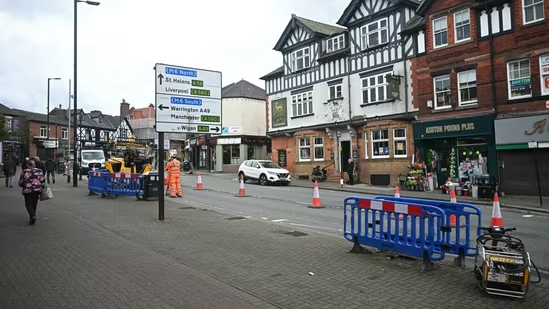
ASHTON-IN-MAKERFIELD, England—This red-brick northern market town isn’t exactly famed as a British political bellwether. For nearly a century, the working-class population here, sandwiched between suburbs of Liverpool and Manchester, loyally voted for the Labour Party and flew firmly under the national radar.
“Nobody had ever really heard of this place,” said Steve Jones, a plasterer who works on the local council. “Until now.”
Thanks to an unusual twist in Britain’s increasingly madcap politics, next month Makerfield will play kingmaker in a vote that will likely determine Britain’s next prime minister and the country’s political course for the next few years. It will also test whether the country’s traditional political parties like Labour and the Conservatives can blunt the rise of Reform UK, the anti-immigration party under Nigel Farage that is upending politics and leads in national polls.
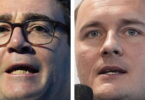
Andy Burnham, the mayor of Greater Manchester and former Labour Party minister, wants to unseat the unpopular Prime Minister Keir Starmer, who is currently hanging on to power by a thread after disastrous local election results. Polls show that Burnham, a politician who has advocated sweeping nationalizations and tax increases, is more popular with voters than Starmer, and many Labour lawmakers want a fresh face in Downing Street.
But to launch a leadership challenge, Burnham first needs to win a seat in Britain’s parliament. That means winning a special district election in Makerfield on June 18. Given that Labour has slumped in the polls, the economy is struggling and there is growing local support for Reform, Burnham’s success is far from assured.
On a recent day, Burnham, 56, walked around town in the rain, talking up his local roots with voters. Dressed in jeans and fashionable sneakers, Burnham, who lives a few miles away, listened as Peter Cain, a local butcher, told him his Labour Party had become “a little bit complacent.”
Burnham agreed. “I won’t make false promises,” he said, buying a £30 sirloin steak.
Standing next to the parking lot, which frames the town center, Burnham outlined a national vision for a more interventionist state, while lauding socialist New York Mayor Zohran Mamdani and criticizing President Trump’s war in Iran.
The Labour Party “needs to change to get back as a party that is solidly on the side of working-class people,” Burnham said. “I think in the U.S., you’ve seen the same with the Democrats, you know, where there’s a perception that that touch has been lost,” he said.
In Makerfield, Burnham’s pitch is unusual: Vote for Labour to get rid of the Labour prime minister. Oddsmakers give an 83% chance that Starmer will be forced out of Downing Street this year, with Burnham the favorite to replace him. Polling by More In Common shows that with Burnham at the helm, Labour would leapfrog ahead of Reform UK to lead in national elections.
Financial markets, though, are getting nervous. U.K. government borrowing costs rose last week as investors braced for yet more turbulence in Britain’s politics and potentially a sixth prime minister in seven years. Burnham has said he would respect the government’s fiscal rules on spending, but investors predict an increase in government borrowing and higher taxes if a left-wing leader were to ramp up state spending.
The election will cement Makerfield’s political legacy as either Burnham’s springboard to power or the ultimate political banana peel.
This former coal-mining and industrial area is a petri dish for Britain’s political future, as voters weigh old political alliances against an increasing frustration that the country’s traditional parties have failed to tackle rising bills and immigration. As in much of Britain, voters here are drifting away from Labour and the Conservatives to other parties, especially Reform. In local council elections last month, Reform won half the votes—nearly double Labour’s tally.
Sipping pints in the local pub The Sir Thomas Gerard (known locally as “The Tom and Jerry”), a father and son said they didn’t want Labour or the Conservatives, who have governed Britain since the 1920s, in power anymore.
“I’m sick of the way it’s been for the past 20 or 30 years. More taxes, less opportunity, more immigration,” said Mike Yale, a 49-year-old who works at a local pill factory. His dad, Ken, 74, voted Labour his entire life until recently, when he went for Reform.
Reform, which has put up a local plumber as candidate, is painting Burnham as a shape-shifting establishment politician who is using the town to further his own career. Before becoming Manchester mayor, Burnham served under former Labour prime ministers Tony Blair and Gordon Brown. Burnham has previously said he wants to undo Brexit and rejoin the European Union. That struck a nerve in Makerfield, where 65% of the population voted to quit the EU back in 2016. Burnham has since clarified that now isn’t the time to rejoin the trade bloc.
On a recent day, many of the voters in Makerfield wanted to know what Burnham was going to do about illegal immigration. Both legal and illegal immigration soared in recent years to record levels. The government has managed to cut legal immigration sharply in the past two years, but illegal crossings remain close to historic levels.
Setting up a luncheon in the Salvation Army church, Renee Palmer said she thought Burnham, who sent his children to school in the area, was a good man with a good chance of winning. But Palmer, 83, a former machinist who always voted Labour, is worried about asylum seekers crossing on inflatable dinghies from France and claiming benefits in the U.K., such as subsidized housing.
“It’s all right being loving and caring, but you’ve got to care for your own,” she said.
Out in the street, a business consultant who recently voted for the left-wing populist Green Party, also worried about illegal migrants, as did a painter who was busy refurbishing Cain’s butcher’s shop. Outside many houses, British flags fluttered in the breeze.
Burnham doesn’t focus on immigration. His pitch is that by nationalizing public services and other measures, the state can lower people’s bills and take the heat out of the immigration debate. “I think by putting cost of living front and center, that’s a unifying agenda. Everyone’s impacted by the cost of living, and it gets us away from some of this divisive politics,” he said, citing Mamdani’s success in New York.
Even if Burnham wins the election, he must clear other hurdles before becoming prime minister. To formally trigger a leadership challenge, 81 of Labour’s 403 lawmakers will have to endorse him. If Starmer or another candidate stands against him, then the Labour Party’s 300,000 members must choose the winner, a process that could take months to play out.
“I hope he does win, just to get Starmer out,” said Mark Molyneux, who runs a shop selling pet food. But if Burnham doesn’t then fix illegal migration by the time of the next general election in 2029, “buckle up, because Farage is coming in.”
Write to Max Colchester at Max.Colchester@wsj.com and David Luhnow at david.luhnow@wsj.com