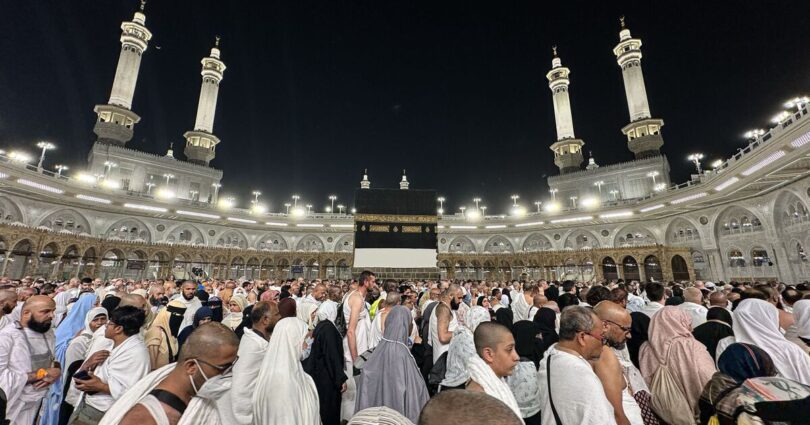
Muslims are preparing for the sacred annual Hajj pilgrimage (Image: Getty)
Nearly two million Muslims are getting ready to embark on the sacred annual Hajj pilgrimage to Mecca, Saudi Arabia, one of the most significant acts of worship in Islam. Undertaking Hajj is a spiritual duty in Islam, bringing together the largest annual gathering of Muslims from across the globe.
It is also the fifth and final pillar of the Islamic faith. Every adult Muslim who is physically and financially able is expected to perform Hajj at least once in their lifetime, it can also be completed multiple times. The once in a lifetime journey for many symbolises unity and devotion as well as giving Muslims the chance to renew their faith. In this explainer, we will go through why and when Hajj is observed as well as the key rituals and preparations undertaken.
Read more: When Eid al-Adha will start after Saudi Arabia Dhul Hijjah moon sighting
Read more: When is Eid Al-Adha 2026 as Saudi Arabia prepares for Dhul Hijjah moon sighting

Hajj is one of the Five Pillars of Islam (Image: Getty)
What is Hajj?
Hajj, a core act of worship for Muslims, is the annual Islamic pilgrimage to Mecca and is one of the Five Pillars of Islam.
The religious duty is something that every adult Muslim must perform at least once in their lifetime, provided they are physically and financially able.
It provides pilgrims the opportunity to seek forgiveness, reflect, and strengthen their faith.

Hajj occurs in the month of Dhu al-Hijjah (Image: Getty)
When does Hajj take place?
Hajj occurs in the month of Dhu al-Hijjah, the 12th and final month of the Islamic year. It is performed between the 8th and 12th (or 13th) of Dhul-Hijjah. When the new crescent moon is sighted, Eid al-Adha begins, which lasts for four days.
Saudi Arabia officially confirmed the sighting of the Dhul Hijjah crescent moon on Sunday.
This meant the final month of the Islamic lunar calendar began on Monday, and Eid al-Adha will be observed today. If no crescent moon is sighted, Islamic authorities may decide to complete another full day of the lunar month before Eid begins.
This process is followed in many countries and is part of the traditional method used to determine important Islamic dates.
Hajj will take place between May 25th to May 27, but many pilgrims arrive in Saudi Arabia weeks before to prepare for the journey.
Why is it not always on the same day?
The Islamic calendar is lunar, meaning it follows the cycles of the moon of around 354 days. This means Hajj moves about 10–11 days earlier each year.

A number of rituals are observed in Hajj (Image: Getty)
How is Hajj performed?
Hajj is performed through a number of rituals carried out over five to six days in and around Mecca. The steps are:
Ihram
Pilgrims begin by entering Ihram, a spiritual state of purity. Here men wear two simple white, unstitched cloths whilst women usually wear loose fitting clothing. They observe strict rules of conduct and declare their intention (niyyah) to perform Hajj.
Tawaf (Circling the Kaaba)
Pilgrims go to the Kaaba and walk around it seven times in worship and devotion. This shared rhythm symbolises unity in the worship of the One God.
Sa’i (Walking between Safa and Marwah)
Here the pilgrims walk back and forth between the hills of Safa and Marwah. The ritual remembers Hagar’s search for water.
Day of Arafat
This is the most important day where pilgrims gather at Mount Arafat for prayer, reflection, and ask for forgiveness.

Muslim pilgrims throw stones at pillars as part of the ritual symbolising the stoning of the devil (Image: Getty)
Muzdalifah
The overnight stay in Muzdalifah sees pilgrims spend the night under the open sky and collect pebbles for the next ritual. They then begin walking back to Mina.
When in Mina, they throw seven pebbles at the largest of three stone pillars, which symbolises stoning the devil. Often, an animal sacrifice is offered in remembrance of Abraham’s willingness to sacrifice his son in obedience to God.
Cutting or shaving hair
Men shave or trim their hair whilst women cut a small portion of their hair. This symbolises spiritual renewal.
Main tawaf
Pilgrims return to Mecca to perform ṭawāf, circling the Kaaba, and then complete sa’i by walking seven times between the hills of Safa and Marwa.