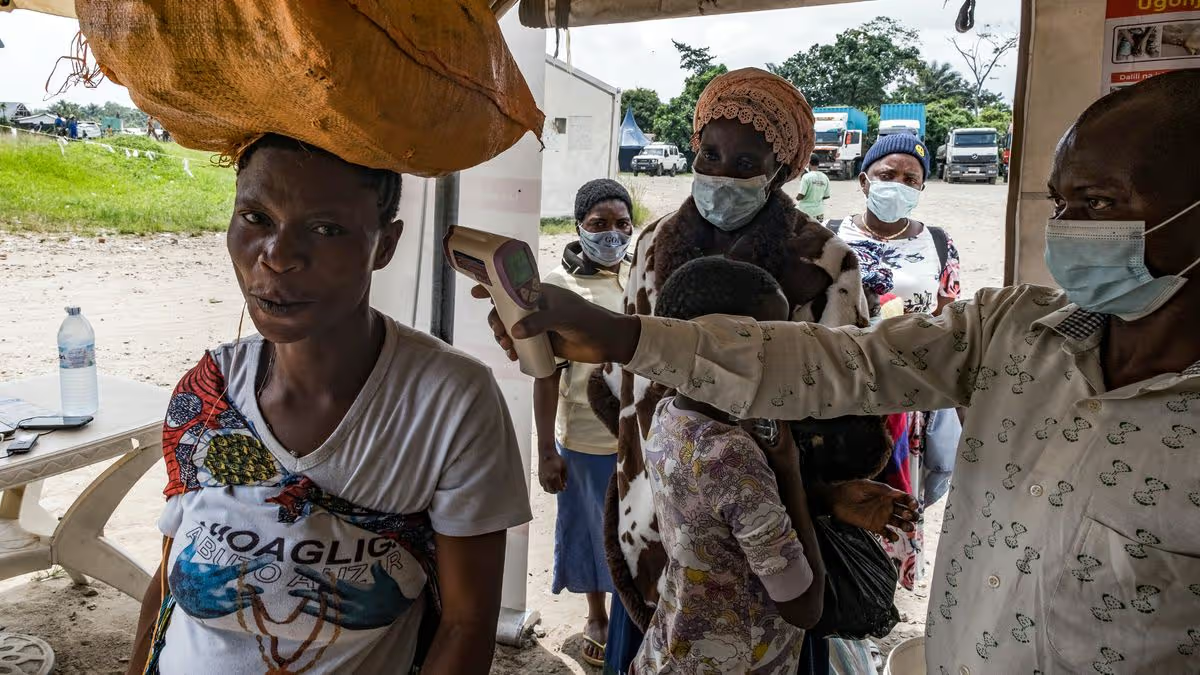
A humanitarian leader in the Democratic Republic of Congo revealed the situation on the ground as hospitals are ‘overwhelmed’ with the recent outbreak of Ebola
An expert has revealed what crucial change could be made to help curb the spread of Ebola as the Democratic Republic of Congo battles its 17th outbreak.
The World Health Organisation has reported 600 suspected cases and 139 suspected deaths so far in the latest outbreak of the deadly virus. 51 cases have now been confirmed in the DRC – where the first case was reported – and two in neighbouring Uganda, WHO chief Dr Tedros Adhanom Ghebreyesus said today.
A humanitarian leader in the DRC told the Mirror why this crisis was different to the recent outbreaks and how one change could help stop the spread.
READ MORE: Ebola-hit DR Congo gripped by terror as officials fear deadly virus spread undetectedREAD MORE: Ebola outbreak began months before detection, WHO admits after Rubio criticism
The heart of the outbreak has been in the north of the DRC, in the Ituri province. Despite being the 17th Ebola outbreak faced, this one is different as the WHO confirmed these cases are of the rare Bundibugyo species of Ebola. There is no approved vaccine for this strain of the virus and no drugs that target it, with WHO chief Ghebreyesus admitting a jab could be months away.
Dr Yakubu Mohammed Sanni, the Country Director of ActionAid DRC, told the Mirror that hospitals are “overwhelmed” in the impacted areas but revealed how the lack of a dedicated Ebola treatment centre in worst affected areas could be “dangerous”.
The humanitarian leader said: “The hospitals are overwhelmed and there are limited supplies in terms of control of infection… We want to see how best we are able to use the limited resources we have to be able to respond to this situation.”
The first known case of the latest Ebola virus was a nurse who and died on 24 April, in Ituri’s provincial capital Bunia. Dr Yakubu told the Mirror the area lacked a dedicated centre and revealed the changes general hospitals have had to make to accommodate virus-stricken patients, sometimes at the expense of others seeking care.
He said: “The critical issue we have for Bunia now is that most of the cases are actually referred to the health facilities or the general hospital in Bunia, which is quite dangerous. The processes are ongoing to establish an Ebola treatment centre in Bunia so that at least it makes referral quite easy.”
Dr Yakubu added: “There is no Ebola treatment centre… that is why the establishment of a centre is quite critical, because isolation and distancing is quite difficult.”
On the work hospitals are currently doing, the expert said: “At that level they try as much to respect that isolation, to keep them far from the other patients. They have to designate some particular wards for Ebola at the expense of regular patients.”
He added: “Let’s have an Ebola treatment centre that will be able to take care of these people even at the zonal level to avoid transporting people.”
The World Health Organisation has said the risk of global spread of the Ebola virus in the Democratic Republic of Congo and Uganda is high at national and regional levels, but low at global level.
The DRC said the first person died from the virus on April 24 in Bunia, but the confirmation did not come for weeks. The body was repatriated to the Mongbwalu health zone, a mining area with a large population. The country’s health minister Samuel Roger Kamba said: “That caused the Ebola outbreak to escalate.”
Dr Anne Ancia, the head of the WHO team in the DRC, said authorities still have not identified “patient zero”. There was a long road ahead, she said, adding that cuts in funding had “a marked detrimental effect on humanitarian actors”.