There are wars that dominate the global imagination – and others that quietly fall out of it. Sudan has become the latter.
For more than three years, Sudan has been living through a catastrophe that would dominate global headlines under different circumstances.
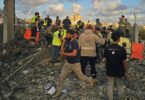
The country has been collapsing in slow motion. More than 14 million people have been displaced. Entire cities have emptied. Markets barely function. Hospitals have shut down or operate without electricity, medicine or staff.
None of this is new. What is new is when Sudan suddenly reappears in international headlines – and why.
That is exactly what happened in March, when the US Department of State announced plans to designate the Sudanese Muslim Brotherhood as a foreign terrorist organisation.
CLICK FOLLOW: TO FOLLOW US
Sign up to get the latest insights and analysis on
Israel-Palestine, alongside Turkey Unpacked and other eSPORTY
The justification was explicit: Washington accused the group of receiving support from Iran’s Islamic Revolutionary Guard Corps.
That moment was revealing. Sudan did not return to global attention because of famine warnings, or because civilians were being killed in markets and displacement camps. It returned because it could be inserted into the larger geopolitical confrontation centred on Iran.
This was not a coincidence. It highlighted how attention works. Sudan is not invisible; it is conditionally visible.
Balance of power
The war in Sudan is still, at its core, a domestic conflict. It is rooted in a failed political transition, a militarised state, and competing armed forces fighting for control over power and resources.
Yet it has been deliberately accelerated and rendered far more lethal by the opportunistic involvement of outside players, who see Sudan’s fragmentation not as a tragedy to be resolved, but as a theatre to be exploited.
None of that changed in 2026. What changed was the lens through which the war is viewed.
This is not just neglect. It is a form of distortion. Sudan is being seen, but not on its own terms
As tensions escalated between the United States and Israel on one side, and Iran on the other, Sudan was increasingly reframed: not as a country in crisis, but as a space within a broader confrontation.
Armed groups were no longer just local actors, but extensions of regional influence. Military developments – especially the use of drones – were read as signals of alignment in a wider conflict.
But this reframing distorts more than it explains. Sudanese actors are not proxies in the simple sense. They operate within their own political logic, shaped by years of internal fragmentation. External support may shift the balance of power, but it does not define the war itself.
And yet, once Sudan is absorbed into a larger geopolitical narrative, the priorities shift. The question is no longer how to end the war. It is how to manage its implications.
That shift has consequences, because a war that is managed is rarely a war that is resolved.
Economic chaos
If the geopolitical reframing of Sudan is one layer of the crisis, the economic consequences are another – and they are accelerating.
The Iran war has triggered a global energy shock. Oil prices have surged past $100 per barrel, driven by disruptions along key shipping routes, particularly the Strait of Hormuz, through which a significant portion of the world’s oil supply passes.
For fragile economies, this is not a distant problem. It is immediate. Sudan, heavily dependent on imported fuel, has been hit hard.
Fuel prices in the country have surged dramatically. On the parallel market, the price of gasoline jumped from around 18,000 Sudanese pounds ($30) per gallon to nearly 30,000 in less than a week. This is not a marginal increase; it is a shock that ripples through every sector of daily life.
Fuel drives transport. Transport drives food supply. Food supply determines survival. When transportation costs rise, food prices follow. Entire supply chains slow down or collapse. In Sudan, where the margin between survival and hunger is already thin, these pressures are devastating.
In cities like Omdurman and Wad Madani, some traders have suspended sales altogether, unable to price goods in a market where costs are changing daily. A 50kg sack of sugar increased by thousands of pounds within days, while construction materials have surged by more than 50 percent.
This is how economic crises unfold in war zones – not as single events, but as cascading failures.
Inflation in Sudan was already severe. Official figures placed it above 56 percent in early 2026, even before the latest shocks. Now, with rising fuel prices and disrupted imports, the real cost of living is climbing far faster than official statistics can capture.
And fuel is only part of the story. Global disruptions linked to the Iran war have also affected fertilisers, shipping and supply chains. Medication is becoming harder to access as pharmacies struggle to restock. For civilians, this means a simple infection or chronic condition can become life-threatening.
Pushed to the margins
There is a paradox at the heart of Sudan’s current situation. The country has become more geopolitically relevant – and less humanly visible.
It is overshadowed by larger conflicts, particularly the escalation involving Iran. At the same time, within discussions about Sudan itself, civilians are pushed to the margins, replaced by narratives about security, alliances and strategic positioning.
This is not just neglect. It is a form of distortion. Sudan is being seen, but not on its own terms.
The consequences are already visible. Humanitarian needs continue to outpace funding. The country’s economic collapse is deepening. Armed actors are consolidating power in the absence of a credible political process.

Why Sudan’s war risks becoming a permanent political system in 2026
Read More »
And yet, international responses remain fragmented – reactive rather than strategic, shaped more by external concerns than internal realities.
The longer this continues, the harder it becomes to reverse. Conflicts like Sudan’s do not remain contained. They reshape regions, drive displacement across borders, and entrench systems of violence that outlast any single war.
Ignoring this does not stabilise the situation. It merely delays the moment when the costs become unavoidable.
Sudan’s tragedy today is not only the scale of its suffering, but the way that suffering is interpreted. The war is no longer understood primarily as a Sudanese crisis. It is filtered through external conflicts, particularly the Iran war.
In that process, the reality on the ground is distorted. And this is the danger: because a crisis that is ignored can still be rediscovered, but a crisis that is misunderstood is addressed in the wrong way from the beginning.
Sudan does not need to be inserted into someone else’s war to matter. It already does. The question is whether the world is willing to see that – before the consequences extend far beyond Sudan itself.
The views expressed in this article belong to the author and do not necessarily reflect the editorial policy of Middle East Eye.