KYIV—It was the middle of January when the cold and lack of electricity forced Olha Kosova and her baby to flee their Kyiv apartment to her parents’ place in the suburbs.
Now, spring is here, the electricity is working and Kosova and 1-year-old Lisa are back home in their sun-drenched apartment.
“I don’t even remember this winter,” Kosova said. “It fades from the memory so quickly as if it never happened.”
Kyiv and its residents are bouncing back from the darkest winter of the war. Russia struck Ukraine’s energy infrastructure more than 1,400 times with missiles and drones dating to last July, according to an official Ukrainian tally. The attacks plunged cities into darkness and cut heat, leaving Kyiv residents such as Kosova and others in her apartment block on Tychyna Avenue freezing and miserable.
Residents survived by wrapping up indoors, turning their balconies into refrigerators and, when possible, staying with relatives.
The arrival of warmer spring weather has brought a dash of optimism back to Kyiv. Repairs have brought electricity back, and shops have stored away their diesel-powered generators. Bar terraces are buzzing with activity into late evenings again as people try to soak in every bit of sun after the long winter. Kyiv residents are flocking to parks and riverside beaches for picnics even before the summer heat has time to set in.
Camping gear used for cooking is packed up, with electric stoves back in action. Menus also are changing accordingly, as households plan ahead with reliable electricity powering their fridges. Lisa now toddles around in a summer dress. The elevator is working again to carry her stroller to the fourth floor. A hot shower is no longer a luxury: Boilers are working again, saving residents the trouble of warming up pots of water before bathing.
The situation on the front lines has also improved, with Russian assaults largely repelled in most areas. Troops are now readying for the challenges that the scorching summer might bring, but any worries over their families without heat and light in civilian cities have dissipated.
One thing hasn’t changed, though: Russian air raids launched with missiles and explosive drones that menace Kyiv’s residents.
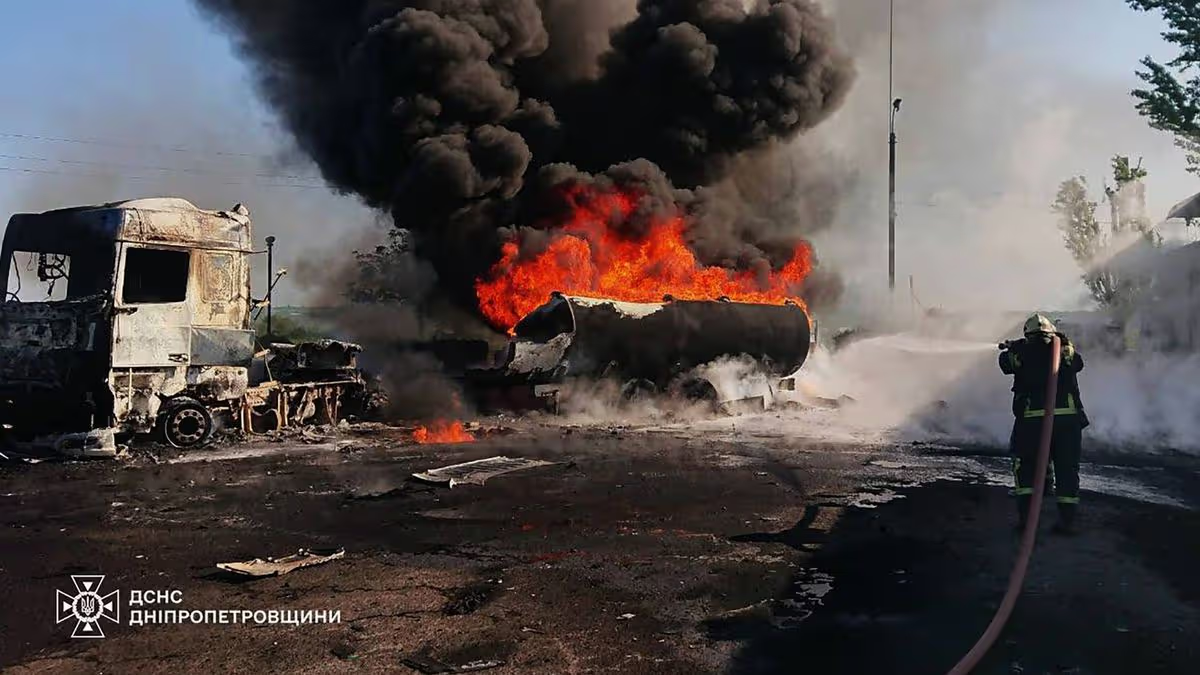
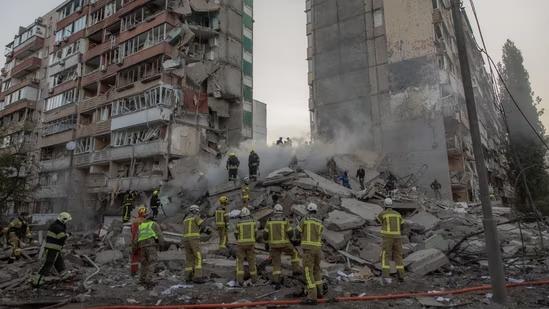
After a brief cease-fire that coincided with Victory Day in Russia, Moscow struck energy infrastructure again last week. Over 24 hours that began Wednesday morning, Russia launched 1,428 drones and 56 missiles in one of the largest attacks of the four-year-old war.
The assault killed 24 people, including three children, when a missile struck an apartment building in the capital, Ukrainian authorities said. It also damaged gas production and energy infrastructure, temporarily cutting power to some residents in almost half of Ukraine, the energy ministry said.
Kosova’s 80-year-old neighbor on Tychyna Avenue, Nila Molchaniuk, said her family puts up with such threats in the knowledge that things are much tougher on the front line.
“If stuff was not flying over our heads, it would be fine,” she said, sitting at the bench by her apartment building, which was struck by a drone last year.
Ukrainian President Volodymyr Zelensky said Ukraine needs more missile interceptors to protect its cities. Continued supplies will be crucial in shielding the repair work of energy workers around the country from additional Russian assaults in months to come.
Serhiy Motsak, a shift director at one of Ukraine’s thermal-power plants, spent this past winter knocking ice from the equipment and сarrying around torches to heat it.
“Every time there is a hit, it is a fraction of your work that is destroyed. The part you contributed into the restoration has evaporated in a day. It all adds up, and it really hit hard this winter,” he said. “But in spite of it all, we get back up on our feet.”
DTEK, Ukraine’s largest private energy company and the plant’s owner, plans to carry out nearly $350 million of repairs across its facilities ahead of next winter.
On the second Monday in May, Motsak’s shift ended with a sunrise as he restarted one of the pieces of equipment at 5 a.m. To him, longer spring days “mean we have more time, that we can do more.”
Ahead of next winter, more work is needed to improve the coordination between central and local governments and to scale up the process of obtaining spare parts and systems, energy executives and analysts said.
“We have six months to prevent next winter from becoming even harder,” said Olena Pavlenko, who leads Kyiv-based think tank DiXi Group, which specializes in energy issues. “We need to mobilize more human resources, because we cannot prepare for winter with just a few dozen enthusiasts.”
For now, 80-year-old Molchaniuk from Tychyna Avenue is grateful that spring finally arrived and holds the promise of a new sowing season at her dacha’s vegetable patch.
“The tomatoes are begging me to go, it’s time,” she laughed, planning to leave Kyiv at the weekend. But the summer home’s location next to a thermal plant attacked by Russia won’t make for a relaxing getaway from the air raids.
When drones fly overhead, her husband looks on from the outside, while she sticks to the terrace.
“We live on hope,” she said.
Write to Anastasiia Malenko at anastasiia.malenko@wsj.com