
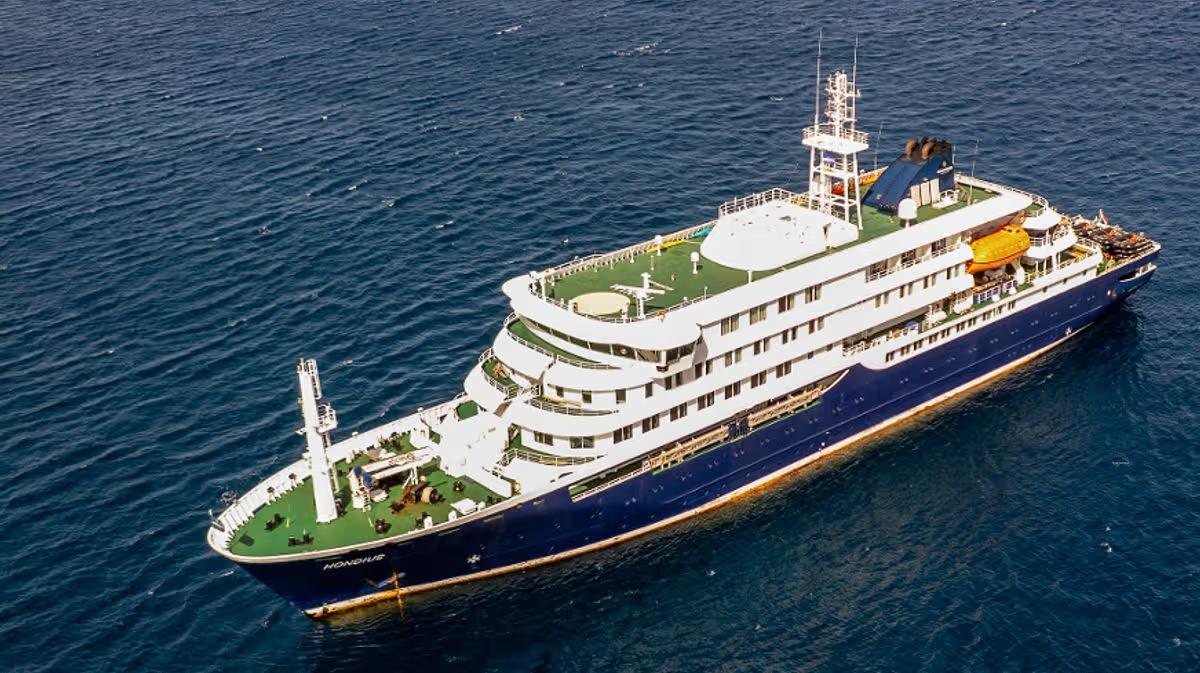
It is believed they died due to a hantavirus infection, a severe, often fatal disease spread primarily through inhaling airborne particles from rodent urine, droppings, or saliva
Three people have died following a suspected virus outbreak on a cruise ship caused by rodent droppings.
One British national who was aboard the MV Hondius is in intensive care and at least three other passengers are ill, the World Health Organisation said.
The cruise ship, operated by Dutch tour company Oceanwide Expeditions, was travelling from Argentina to Cape Verde. According to the company’s published itinerary, the ship departed Ushuaia, Argentina, on 20 March and was due to arrive in Cape Verde on 4 May.
READ MORE: Hantavirus symptoms: Very first sign of deadly rodent disease with no cure after 3 die on cruise ship
According to the South African health authorities, a 70-year-old man and his 69-year-old wife have died after falling ill.
They say the 70-year-old died on board and his body transferred to the island of Saint Helena. Meanwhile his wife also became ill and was evacuated to South Africa, where she later died in a Johannesburg hospital. Details of the third death have yet to be reported.
A 69-year-old British man was also evacuated to Johannesburg and is currently receiving treatment in intensive care.
A spokesperson for the South African Department of Health said he became ill on the ship and was taken to a private health facility. “His laboratory test results came back positive for Hantavirus,” they said.
A spokesperson for the UK’s Foreign Office added: “We are closely monitoring reports of a potential hantavirus outbreak on the cruise ship Hondius and stand ready to support British nationals if needed. We are in touch with the cruise company and local authorities.”
The WHO said it is assisting with coordination between member states and the ship’s operator, including the medical evacuation of two symptomatic passengers, a full public health risk assessment, and support for those still on board.
According to Oceanwide Expeditions, the ship measures 107.6m (353ft) in length and can carry up to 170 passengers across 80 cabins.