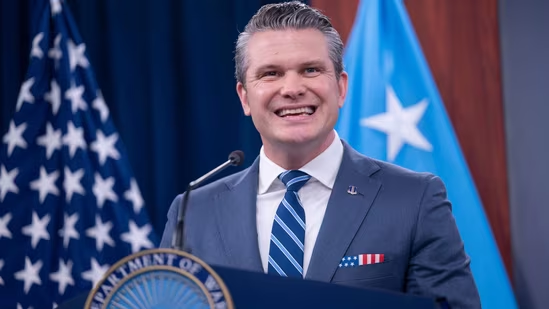
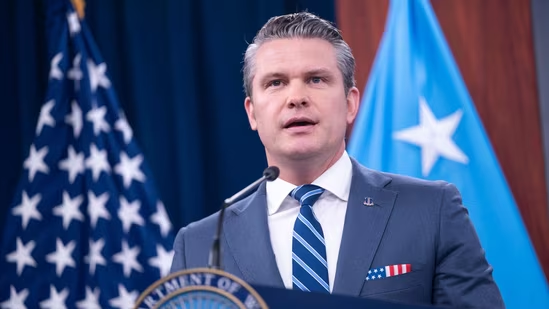
US Defense Secretary Pete Hegseth is facing backlash after quoting what appeared to be a Bible verse during a Pentagon prayer service; only for it to closely match a line from Pulp Fiction delivered by Samuel L Jackson.
According to Variety, Hegseth recited the passage while referring to a combat search-and-rescue mission in Iran, suggesting it was linked to Ezekiel 25:17.
What did Hegseth say?
During the prayer, Hegseth asked the audience to join him before reciting a passage about a “downed aviator” navigating “the inequities of the selfish and the tyranny of evil men.”
He said the lines were associated with a military call sign, adding: “They call it CSAR 25:17, which I think is meant to reflect Ezekiel 25:17,” as reported by Variety.
Also Read: ‘As long as it takes’: US Pentagon chief Pete Hegseth warns of sustained blockade on Iran ports
However, the wording closely resembled the famous monologue delivered by Jackson’s character Jules Winnfield in Pulp Fiction: itself a stylised and fictionalised version of the biblical verse.
How does it differ from the Bible?
The actual passage from Ezekiel 25:17 in the Bible is significantly shorter and differs in tone and phrasing. As noted by Metro UK, the original verse reads: “And I will execute great vengeance upon them with furious rebukes; and they shall know that I am the Lord…”
In contrast, the version recited by Hegseth included extended lines about guiding others “through the valley of darkness” and striking down enemies: elements popularised by the Tarantino film rather than scripture.
The incident has drawn criticism online, with observers questioning the use of a fictional movie quote in a formal religious setting.
Also Read: Pete Hegseth hit with impeachment articles: 5 things to know amid scandalous accusations
Hegseth has also faced scrutiny for invoking religious imagery in official contexts. At a press conference, he compared journalists to Pharisees, figures in the New Testament often portrayed as opposing Jesus. He accused the media of trying to “explain away the goodness” of US actions, according to Variety.
The controversy comes amid debates over the use of religion in political and military messaging. As Metro UK reported, Hegseth has previously framed the Iran conflict in moral and civilisational terms, urging critics to support US actions.
Hegseth has not yet publicly addressed the mix-up.