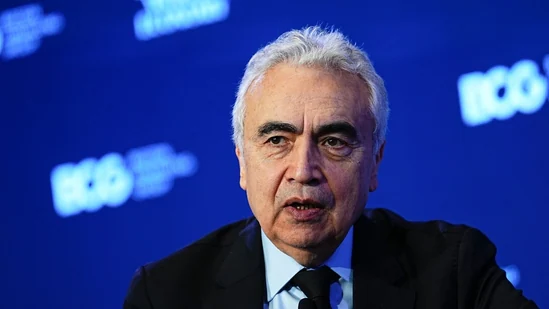
Europe has “maybe six weeks or so (of) jet fuel left”, International Energy Agency head said on Thursday, warning of what he called “the largest energy crisis we have ever faced.”
IEA executive director Fatih Birol said in an interview with Associated Press that flight cancellations could follow “soon” if oil supplies remain blocked amid the war between United States and Iran. “If we are not able to open the Strait of Hormuz… I can tell you soon we will hear the news that some of the flights from city A to city B might be cancelled as a result of lack of jet fuel,” Birol, who has headed IEA since 2015, said.
Birol highlighted the repercussions on global energy supply and prices, owing to the squeeze in oil, gas and other vital supplies which transit through the Strait of Hormuz. The IEA chief told AP that the economic implications of the conflict would be worse if it continues.
Also Read | Weaponising energy supplies
“And the longer it goes, the worse it will be for the economic growth and inflation around the world,” Birol said.
‘It’s a dire strait’: IEA chief warns developing countries will suffer more
Birol, a Turkish economist, called the situation at present a “dire strait”, saying developing countries will suffer more in the aftermath.
“In the past there was a group called Dire Straits.’ It’s a dire strait now, and it is going to have major implications for the global economy,” the IEA executive director told AP.
The energy agency head further said that the economic pain would not be evenly distributed, adding that the “countries who will suffer the most will not be those whose voice are heard a lot.”
Also Read | $4.15 gas and the Hormuz blockade: How much higher will your local pump price go?
“It will be mainly the developing countries. Poorer countries in Asia, in Africa and in Latin America,” Birold said. However, he highlighted that while the consequences would be of different ranges, “everybody is going to suffer.”
“Some countries may be richer than the others. Some countries may have more energy than the others, but no country, no country is immune to this crisis,” the IEA chief asserted. He added that several government leaders had told him that if the Strait of Hormuz does not open by the end of May, countries would start facing “huge challenges.”
“…This will go from the high inflation numbers to coming close to slow growth or even to recession in some cases,” Birol said, according to AP.