
The money football generates has a commercial reach that extends well beyond clubs, agents, and kit deals. Player salaries at this level drive entertainment spending across multiple industries, and regulated gambling is one of them. Players in the region looking to understand what that regulated landscape looks like can find a breakdown of licensed operators on this page.
Football and casino gaming occupy different spaces, but they share an audience, and the numbers at the top of both industries reflect that overlap.
This piece breaks down the actual numbers, where they come from, and what they tell you about where the sport’s money is going.
Ronaldo at the Summit, and Why the Number Is Extraordinary
Ronaldo earns $230 million a year from Al Nassr alone. The extra $50 million comes from endorsements, anchored by his lifetime Nike deal worth approximately $1 billion over its full term, plus partnerships with Tag Heuer and Armani. He is 40. He recently signed a two-year extension. He has scored more than 934 official goals. At some point the numbers stop feeling real.
The distance from first to second is genuinely striking. Messi earns $130 million in total, with $70 million of that coming from off-field sources: Adidas, Lay’s, Mastercard, and others. His on-pitch salary at Inter Miami is $60 million — less than a third of Ronaldo’s club earnings alone. The two have been compared for two decades, but their financial structures are quite different. Ronaldo makes his money from his club; Messi makes most of his from brands. Both approaches have worked out reasonably well.
The Full Ranking: Highest Paid Footballers in the World
Cristiano Ronaldo earns $280 million for 2025-26: $230 million from Al Nassr, $50 million from endorsements anchored by a lifetime Nike deal reportedly worth around $1 billion in total. He is 40. He just signed a two-year extension. He has passed 934 official career goals. At some point you run out of context to give and just have to sit with the numbers for a second.
Lionel Messi earns $130 million in total, with $60 million from Inter Miami and $70 million from Adidas, Lay’s, Mastercard, and his Mas+ sports drink. His off-field income now exceeds his playing salary. That detail tends to get lost in the Ronaldo comparison, but it matters: Messi has quietly restructured himself into something closer to a holding company that also plays football. It has worked.
Karim Benzema pulls in $104 million at Al-Ittihad, almost entirely from his club contract. He is 37. The Saudi Pro League offered him a rate that made his remaining years in Europe financially irrelevant by comparison, and he left. Fair enough. Whether his output has justified the spend is a separate debate the Al-Ittihad board is probably having more often than they expected.
Kylian Mbappe earns $95 million: $80 million from Real Madrid, $15 million from Nike, Dior, and Hublot. He is 26, and his contract at the Bernabeu includes performance bonuses tied to trophies and individual awards. A Champions League win pushes this number meaningfully higher. He is one of very few players on this list still playing in Europe at or near their peak, which makes his trajectory the most interesting one to watch.
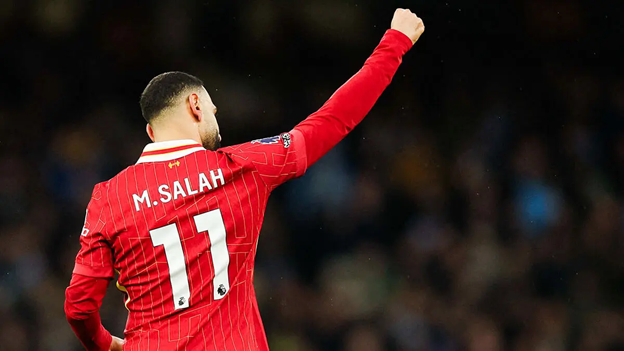
Mohamed Salah earns around $55 million. Liverpool extended him in 2025 at approximately $400,000 per week, and his off-field income of $20 million runs through Adidas, Pepsi, Vodafone, and several regional partnerships. Nearly 100 million social media followers. He is the most commercially active African footballer in European football, and the gap between him and whoever is second is not small.
Erling Haaland earns $60 million: $46 million from Manchester City, the rest from Nike. City locked him into a 9.5-year deal in February 2025, running until 2034. Nobody does contracts that long for football reasons. It is a financial defensive move against Saudi money, and given what Real Madrid, Bayern, and Liverpool have had to pay just to keep their own players, the logic is obvious.
Vinicius Junior earns $60 million, split $40 million on-field and $20 million through Nike, Hugo Boss, and Prada. He is 24. Real Madrid have reportedly valued him at around $830 million on the transfer market. That number is almost certainly not an honest valuation. It is a number designed to end conversations before they start.
Sadio Mane earns $54 million at Al Nassr alongside Ronaldo, pulling around $650,000 per week from the club. Off-field income sits at roughly $4 million, which feels low given his reach in West Africa and among the African diaspora. Brand deals follow data, and that particular audience has historically been undercounted. He is the highest paid Senegalese footballer in history.
Jude Bellingham earns $44 million: $29 million from Real Madrid, $15 million from Adidas, Lucozade, and brands drawn partly by his association with mental health campaigns. He is 21. The endorsement portfolio growing around him is not accidental — it reflects deliberate positioning. He is not at his earning ceiling yet, not even close.
Lamine Yamal closes the list at $43 million. Eighteen years old, 10-year contract with Barcelona signed in May 2025, first player his age on Forbes’ football list in its 22-year history. Adidas moved fast to sign him before the wider market fully understood what they were looking at. The $10 million in endorsements he earns now will look quaint in about three years.
UCL: Everyone In Madrid Believe We Can Do It — Arbeloa On Must Win Clash With Bayern
How the Saudi Pro League Rewrote the Salary Conversation
The Saudi Pro League made it a practical reality, fast. Benzema left Real Madrid — arguably the most decorated club career of his generation — for Al-Ittihad on a deal worth around $100 million a year. Mane left Bayern Munich for Al Nassr at $50 million annually. These were not players winding down. They were still competing at the highest level in Europe when they left.
The Saudi Pro League has not competed for the Champions League or produced players of that calibre from within. What it has done is set a salary benchmark that the biggest European clubs now negotiate against every time a top contract comes up. That is a genuine structural change.
African Players Among the World’s Highest Earners
Four African players currently sit in or near the global top ten for footballer earnings. That is not a token presence. The combined figure is over $198 million a year, and that number has real weight when you remember what the endorsement landscape looked like for African players even a decade ago.
Sadio Mane earns $54 million annually at Al Nassr, around $650,000 per week from the club alone. His off-field income is a modest $4 million by the standards of this list, which probably undersells him. Brand deals follow metrics, and Mane’s commercial pull in West Africa and among the Senegalese diaspora is not something a sponsorship spreadsheet captures cleanly. He is the highest paid Senegalese footballer in history. Given where Senegalese football is heading, that record may not last long.
Mohamed Salah earns around $55 million in total. Liverpool extended him in 2025, bringing his weekly wage to approximately $400,000, and he promptly went on to have another exceptional season. His $20 million in off-field earnings comes from Adidas, Pepsi, Vodafone, and several regional partnerships. He is closing in on 100 million social media followers. The honest answer to who the most commercially powerful African footballer in European football is: it is Salah, and it is not particularly close.
Riyad Mahrez earns around $52 million at Al Ahli. He is 34, contracted until 2027, and pulls almost all of that from his club salary with minimal endorsement income on top. Quietly one of the highest earning African footballers alive, rarely discussed in those terms.
The shift in how brands and clubs value African players did not happen because the industry had a change of heart. It happened because the audience numbers got too big and the commercial returns got too obvious to keep structuring contracts as if they did not exist. That is how these things actually change.

What the Gap Actually Tells You
The top ten combined will earn $945 million this season — slightly down from $983 million last year, mostly because Neymar fell off after leaving Al Hilal. The headline number is large enough to stop meaning much without context.
The more useful thing to look at is the gap between first and tenth. It is roughly $237 million. A decade ago that spread between the highest and tenth-highest paid footballer would have been a fraction of that size. What that gap reflects is that modern football rewards two things: on-pitch quality, which gets you a large club contract, and off-pitch brand infrastructure, which multiplies everything else. Players who have both — Ronaldo being the extreme example — earn at a scale that the rest of the top ten simply cannot reach regardless of how well they play. That is the real story inside the numbers.