On July 31, an Uber driver pulled up to a house in New York and opened the trunk of his SUV. It contained a suitcase that was empty except for two watches and a signed soccer cleat.
The package had been sent by Mohamed Coulibaly, a 23-year-old entrepreneur who had emigrated from Mali to Philadelphia before scaling his way toward high society. Social media posts showed him relaxing aboard private jets and rubbing shoulders with stars of sports and showbiz.
That day, Coulibaly was looking to borrow $75,000 from an investor. They were in business together and the contents of the suitcase were meant to serve as collateral. Barely 10 minutes after the driver arrived, however, he was sent on his way.
‘You can take all this stuff back now,’ the investor explained. The deal was off. Coulibaly had promised a Lamborghini truck. Instead, the driver had arrived in his own car. The suitcase, meanwhile, was supposed to contain two Rolexes and a cleat signed by Lionel Messi. It didn’t take long for the man to realize the watches were forgeries. As for the cleat? ‘Likely fake as well,’ he told the Daily Mail.
Coulibaly protested his innocence. ‘You can’t be serious,’ he asked. ‘Dead,’ the investor replied. ‘I will be,’ Coulibaly said. ‘Thanks.’ A few hours later, the 23-year-old’s body was found in a swimming pool in New Jersey. His death is under criminal investigation. Many questions linger about his life, too.
Coulibaly has been accused of running a multimillion-dollar scam, a Ponzi scheme that engulfed not only an investor in New York and a dermatology professional in Arizona but also stars from across the NFL. He has been called ‘brilliant’, ‘charismatic’, ‘charming’ and ‘impressive’; he has also been compared to notorious conman Bernie Madoff.
Mohamed Coulibaly was accused of running a multimillion-dollar scam involving NFL players

The entrepreneur posted images of himself hanging out with the likes of Jay-Z and Robert Kraft
Over recent weeks, the Daily Mail has spoken to several alleged victims in a bid to piece together how this young man talked himself into NFL locker rooms and how he supposedly robbed investors of more than $5 million.
Coulibaly was never charged with a crime but the FBI is reportedly looking into the alleged scheme. According to a complaint letter – sent to the authorities and seen by the Daily Mail – the entrepreneur’s business centered around investing in e-commerce stores. His Motion Venture ‘guaranteed’ investors their money after six months and touted remarkable returns; a Middle Eastern group was said to be ‘ready’ to buy the company for $215 million.
And among those Coulibaly claimed to have on board, according to a pitch deck shown to potential investors? Seven Super Bowl champions, an NBA champion, an NFL general manager, a rapper, a celebrity jeweler and a World Cup soccer star.
Unfortunately, the complaint letter argues, Coulibaly’s business empire was built on sand. And by late July his scheme had unraveled; investors’ attempts to recoup their money were met with excuses and obfuscation. Trust was so badly eroded that even news of his death was met with skepticism. ‘I called bulls***,’ one investor said. ‘I thought it was a hoax,’ said another. Several believed he had fled. ‘I still think there’s a 0.1 percent chance it’s not real,’ said one.
But there was also anger. ‘Coldheartedly, I didn’t give a s*** [he died],’ one investor said. ‘I wish he would have gotten arrested and had to spend time in jail to suffer a little.’
Instead, investors are now left to untangle the mess. One said that he and a couple of associates lost roughly $3 million. Ex-NFL player Tae Crowder said his life savings – around $500,000 – were wiped out.
‘I’ve had days I couldn’t eat. A lot of days,’ he told the Daily Mail. The ex-New York Giants linebacker eventually set up a GoFundMe page to help ‘rebuild’ his life. ‘I don’t have a place to live,’ Crowder continued.
But above all that? ‘I haven’t been able to help my mom for almost a year now, which hurts a lot,’ he said. ‘I always gave my mom extra money if she needed it, or paid her bills here and there, take her to dinner. Just do anything for my mom… and I haven’t been able to be there.’

The entrepreneur has been called ‘brilliant’, ‘charismatic’, ‘charming’ and ‘impressive’

Ex-New York Giants linebacker Crowder set up a GoFundMe page to help ‘rebuild’ his life
In recent months, according to authorities, the NFL has become a popular target for scammers. Travis Kelce was recently named as a victim in a $35 million Ponzi scheme. In August, Daejon Love was charged with defrauding dozens of women after posing as a San Francisco 49ers player. He has pleaded not guilty.
Coulibaly called himself an athlete, too. He claimed to have risen from poverty and homelessness to become a soccer star who played for, among others, Red Bull New York. Beyond one preseason camp with New York’s reserve team, however, those claims appear to have been fabricated.
He founded a fashion brand – Motion Apparelz – and one interview suggested Coulibaly became a millionaire while still a teenager by selling sneakers. But a college classmate told the Philadelphia Inquirer that Coulibaly’s shoe company – Heatkickcity – was a scam, with the entrepreneur swindling even his best friends.
Still, though, Coulibaly was able to curate enough evidence of the high life that doors swung open.
In February 2025, a TikTok video shows him boarding a private jet to New Orleans to see the Philadelphia Eagles win Super Bowl LIX. After the game, Coulibaly partied on stage with Nick Sirianni’s players, even dancing with the Lombardi Trophy.
Sports are full of hangers-on, people who want to mingle with athletes and taste the trappings of their world.
‘A lot of us are skeptical,’ admitted retired running back Matt Breida, who invested $250,000 in Motion Venture. ‘We do have to be a little bit more wary… not that we don’t necessarily trust people, but when you get to that level of status, the first thing is people will come bluntly and [ask]: “Can I have 1,000 bucks here? Can I have 10,000 bucks here? Can you invest in this?”‘
So how did Coulibaly manage to penetrate the NFL? ‘[Athletes] invite me around because they like the energy that I bring,’ Coulibaly told Barron’s earlier this year, adding that his ‘business portfolio’ helped, too. According to a source, his route into the Eagles locker room came via Torrin Lewis – aka DJ Toroc – who was behind the decks for Eagles practice, games and parties. The Daily Mail has reached out to Lewis for comment.

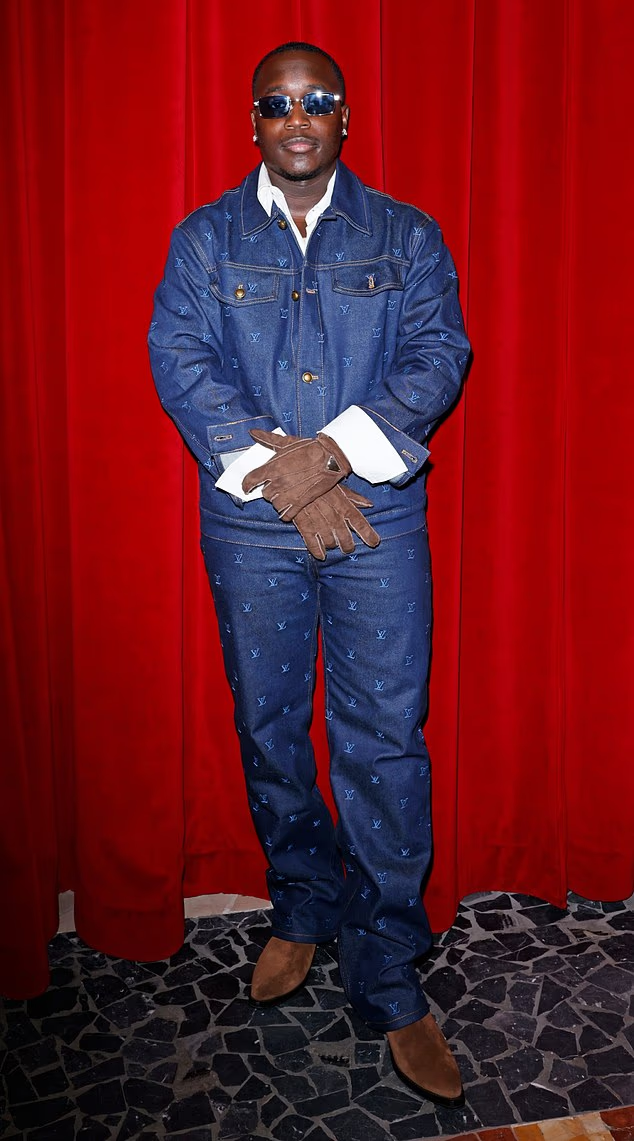
Coulibaly is pictured during an event at Milan Fashion Week in February

Reformed fraudster Barry Minkow is fighting on behalf of some of Coulibaly’s alleged victims
‘For him to get involved in those circles, he obviously had to prove himself to somebody,’ Breida said. ‘Because usually [when] you’re in a circle and you actually burn a bridge, word gets around pretty fast: “This guy’s a scammer, don’t be around him.”‘
According to Barry Minkow, the man fighting on behalf of some alleged victims, this case is an obvious example of ‘affinity fraud’ – schemes that exploit the bonds within tight-knit communities.
It is typically tied to religious and ethnic groups but Minkow – a reformed conman who spent time in prison for his own Ponzi scheme – wrote in his complaint letter that affinity fraud ‘thrives in professional sports leagues’ where ‘trust builds fast through locker-room bonds, shared agents, and peer endorsements.’
Minkow told the Daily Mail: ‘[Coulibaly] was a master at leveraging the credibility from one relationship to the next.’
Neither Breida nor Crowder met him through a teammate. But both were convinced to invest after speaking to fellow players who vouched for the entrepreneur.
‘It all made sense in that moment,’ Crowder said. ‘The people that he knew, the rooms he used to get in.’
Breida agreed. ‘The biggest thing that Mo had on his side was people that he was already giving money back to that we could call up… so it didn’t really raise any red flags,’ he explained.
‘He was able to get in and build that level of trust with certain people, and that’s how I think he was able to make his whole scheme go on for so long.’
Coulibaly also had Steve Keim, former general manager of the Arizona Cardinals. It’s claimed they met by chance at a dinner in Philadelphia in summer 2025.

Steve Keim insists he is a victim and has lost more than $700,000 from the scheme
Before long, however, Keim was listed as Motion Venture’s ‘chief operation/growth officer’ who – according to the company pitch deck – played a ‘critical role in guiding expansion strategy.’ In screenshots of text exchanges with one alleged victim, seen by the Daily Mail, Coulibaly refers to the 54-year-old as his ‘best friend,’ even ‘family.’ The Daily Mail has reached out to Keim’s lawyer for comment.
At least two investors said they were introduced to Motion Venture by Keim; everyone the Daily Mail spoke to said he gave the project valuable credibility.
As Breida put it: ‘Why would a guy of that stature get involved in a business with a guy and be his partner… and it be a scam?’
Keim insists he is a victim and has lost more than $700,000 from the scheme, telling The Wingo Network: ‘We were scammed… the problem is, [Coulibaly] used me to essentially legitimize his business.’
But other investors question if that was the true extent of his role. One suggests Keim was seduced by Coulibaly’s ‘flashy lifestyle’ and splashed out on luxuries including a $25,000 necklace, a $100,000 truck and a $80,000 vacation.
Crowder met Keim and Coulibaly during a trip to Las Vegas in fall 2025. ‘I thought I had made one of the best investments,’ he said. But as they hung out at the Marquee Dayclub at the Cosmopolitan, reality began to dawn on Crowder. ‘I could feel it in the air that there was just something fishy going on,’ he said. Crowder had just invested $200,000 in Motion Venture.

Former NFL running back Matt Breida invested $250,000 in Coulibaly’s Motion Venture
Crowder said Keim was happy to show off the football stars in his call log but appeared to be avoiding conversation about their investments. ‘He was scared to even look at me,’ he said.
For others, red flags appeared elsewhere. Minkow, for instance, noticed that the company’s primary address appeared to be a PO Box in the back of a Back Office Plus store.
He also spotted that the alleged letter of intent from the Dubai-based venture capital firm, outlining its proposed $215 million buyout, was dated August 14, 2024 – a month before Motion Venture appears to have come into existence.
Minkow detailed his findings in a complaint letter to the FBI, the US Securities and Exchange Commission and the Pennsylvania Department of Banking and Securities in February. By then, investors had seen profits dwindle and their attempts to withdraw money met with excuses and empty promises.
It wasn’t until mid-July that allegations against Coulibaly first appeared in the media. He vehemently denied to one investor that he was running a Ponzi scheme and told the New York Post he ‘strongly dispute[s] a number of the factual assertions and characterizations contained’ in media coverage.

In texts seen by the Daily Mail, Coulibaly denied to one investor he was running a Ponzi scheme
Two weeks later, Coulibaly’s body was found in a pool in Harrison Township, New Jersey. Only hours before his death, Coulibaly was still promising Crowder he would be repaid in a few days’ time.
‘I could tell in his voice… he was scared, he was panicking,’ Crowder said. ‘His voice was trembling a lot… he was calling me every five minutes.’
Three months on, the search for answers continues: What went through Coulibaly’s mind in those final hours? Where did all the money go? And what led him down this path in the first place?
His brother, Badra, did not respond to the Daily Mail’s request for an interview.
One alleged victim believes Coulibaly blew their investments gambling and funding his jet-setting lifestyle. Social media screenshots suggested the entrepreneur made around $800,000 through wagers in just 10 days. He told Barron’s he used credits rather than his ‘own cash.’
Breida, meanwhile, believes he was a ‘fantasist’ who began to believe his own lies and live in a warped version of reality.
‘I truly think if he had been around someone who could guide him in the right direction, he probably would have been a very good person.’ he said. ‘It’s sad that he had to resort to this… scamming people and hurting people.’
Crowder has another theory. ‘I think he was just fascinated with athletes and this life that athletes live,’ he said. ‘I think he wanted to be that or impersonate that and I think he wanted it so bad, he would do anything.’
Perhaps we will never have all the answers. ‘It’s like my heart broke for [Coulibaly] because I was him… I’ve been there,’ Minkow said. But for him and his clients, this story didn’t end in that swimming pool. ‘I need to get their money back,’ he added. ‘That’s all that matters.’