
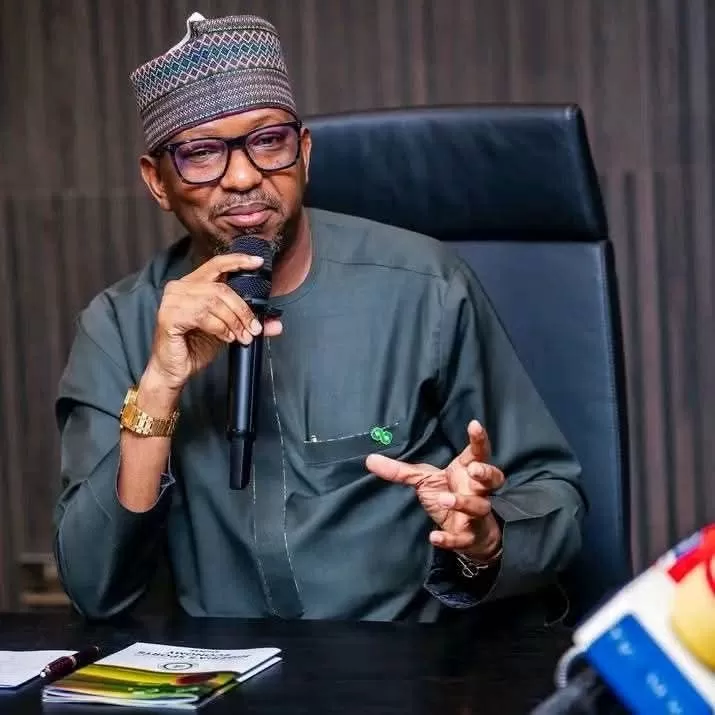
Chairman of the National Sports Commission (NSC), Mallam Shehu Dikko, has revealed that the idea of reforming the administration of Nigerian football had been under consideration for some time, insisting that the changes now being pursued are necessary to create a more effective and inclusive structure for the game.
Dikko recalled that he had raised the need for reforms during the NFF Congress in Bayelsa in March, where he urged football stakeholders to consider making significant changes to the way the sport is administered.
Read Also: Fuludu Welcomes Akwuegbu’s NFF Presidential Ambition, Backs Ex-Players for Leadership | Sports247 Nigeria
According to him, while some adjustments had previously been made, they were not sufficiently far-reaching to address the fundamental challenges confronting Nigerian football or create the space needed for wider participation.
“The idea to introduce reforms into our football has been pending. I already spoke about it at the NFF Congress in Bayelsa in March this year and urged the Congress to consider some changes.”
Dikko acknowledged that some reforms had been implemented over time, but maintained that they had failed to go deep enough to resolve the structural problems within the country’s football administration.
“Though some were carried out, it was not far-reaching enough to solve the problems and open up the country’s football space.”
The NSC chairman believes the recent resignation of the immediate past NFF board has now created an opportunity for the country to pursue a more comprehensive reform process without the constraints that previously existed.
He commended the former board for voluntarily stepping aside, describing the development as an important step towards creating a transition period through which the proposed reforms can be properly considered and implemented.
“I commend the immediate past board for resigning their positions. It has now given way for a transition period to initiate the much-needed reforms.”
Dikko’s comments come at a time when Nigerian football is undergoing significant administrative changes, with stakeholders calling for a review of the structures governing the sport and greater representation for groups that have traditionally had limited influence in football administration.
The NSC chairman has previously stressed the need for stakeholders to work together in addressing the challenges facing Nigerian football, while ensuring that any reforms are carried out within the appropriate framework.
The emerging transition is therefore expected to provide an opportunity to examine key areas of football administration, including representation, governance, development structures and the relationship between the various stakeholders.
For Dikko, the objective is not simply to change individuals but to create structures capable of producing better outcomes for Nigerian football.
With the old structure giving way to a transition period, Dikko believes Nigeria now has a rare opportunity to address the deeper problems in its football administration — and this time, the reforms must go far enough.