4 min read

Make us your Google favourite
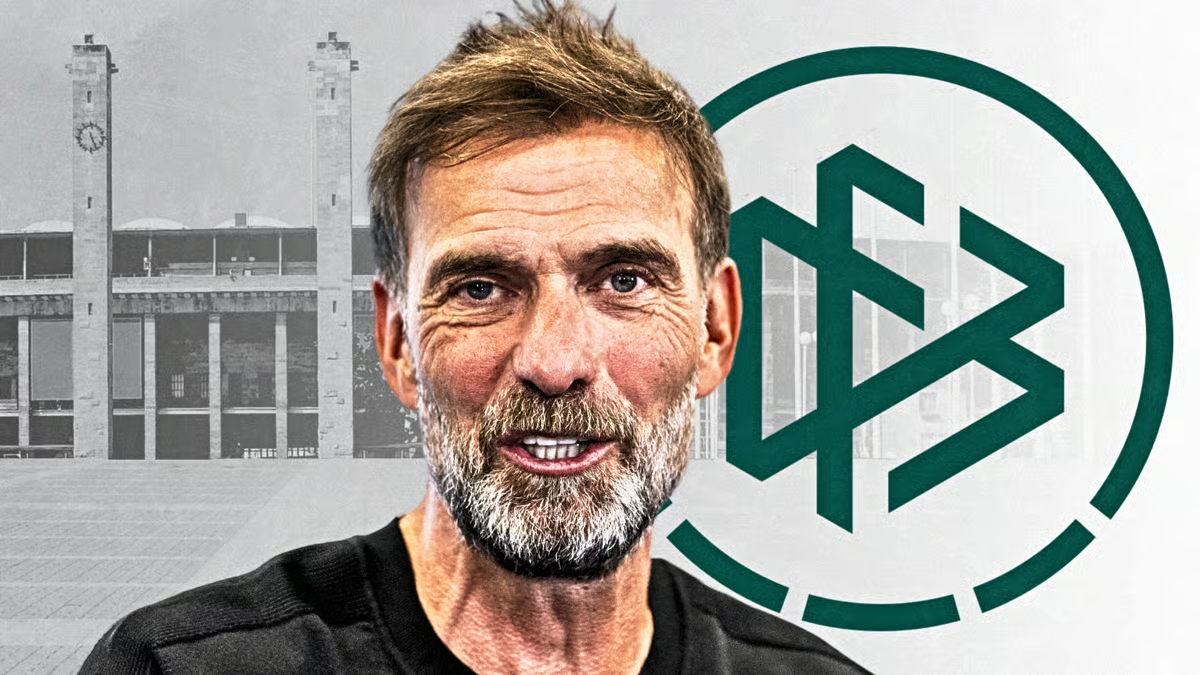
Jurgen Klopp announced his second Germany squad on Thursday, and it elicited a bizarre reaction.
Even before the new roster was revealed, it was clear that it would be markedly different from the one that featured during the extended September break. Back then, the 59-year-old called up a whopping 44 players in order to get a look at as many options as possible.
That was Klopp’s first squad since replacing Julian Nagelsmann off the back of Germany’s latest World Cup humiliation, and it was understandable that he wanted to see first-hand who was available, even if it was obvious that many players were unlikely to return anytime soon – or perhaps ever.
With all due respect to the players, it was a squad filled with mostly average Bundesliga stars and young prospects who could perhaps play a major role in the future, but who shouldn’t be near the senior team right now. Results reflected this: Klopp only won one of his first four games.
For the upcoming break, it will be business as usual. There will only be two games and, as such, the manager has called up just 24 players. The reaction to Klopp’s second squad was a surprisingly positive one.
Germany’s problem isn’t the manager
Some eyebrows were raised at the omissions of Karim Adeyemi and Nick Woltemade and the inclusions of 17-year-old Wael Mohya and 33-year-old Niclas Fullkrug, whom Klopp said he wouldn’t call up just a couple of weeks ago.
Overall, however, there were no major gripes with the 24 players. In theory, that’s not a bad thing. There’s finally a manager who makes sensible decisions after some of Nagelsmann’s bizarre personnel choices!
But the positive reaction obfuscates the key problem with the German national team: it actually isn’t a very good squad. Obviously, that is not Klopp’s fault; he can only call up the players available to him.
And exactly that is the point: Germany doesn’t have a manager problem; it has a player problem. Even Nagelsmann, for all his flaws, wasn’t the reason why Germany laid an egg at the World Cup (again).
The reality is that Germany simply doesn’t consistently produce elite players anymore. The reasons for this are manifold and beyond the scope of this article. The only thing that is important for this piece is the objective fact that Germany is no longer among Europe’s best national teams.
The gulf in raw player quality between the DFB team and the likes of Spain, France and England is enormous, and it seems to be widening. Good coaching can only get you so far. If you don’t have the players capable of competing at the highest level, you won’t win anything.
Right now, Germany do not have those players. You would struggle to name five players in Klopp’s squad who would get into the starting eleven of Spain or France or of elite club teams like PSG and Arsenal.
Now, part of this is just an unfortunate coincidence. Jamal Musiala, when fit, is one of the best players in the world and an absolute joy to watch, but he didn’t get called up because his body has just given up on him.
Florian Wirtz, who did get called up, still has the potential to be a world-beater, but he has been atrocious for Liverpool and is completely devoid of confidence. You could easily dispense with this version of him if you were Luis de la Fuente or Zinedine Zidane, but you can’t if you’re Klopp.
Lennart Karl and Aleksandar Pavlovic have elite potential, but aren’t there yet. The former can’t consistently get into Bayern’s team, while the latter’s performance levels have fluctuated quite dramatically this season.
All the others are average-to-good Bundesliga-level players, with a few outliers like Kai Havertz, Joshua Kimmich and Nico Schlotterbeck, who are world-class on their day. Beyond that, there isn’t much to work with in the Germany pool.
Player values are not always an accurate reflection of actual quality, but they can be instructive, and this is particularly true when comparing Germany to the likes of Spain, France and England.

As per the November update of FootballTransfers’ Estimated Transfer Value (ETV) algorithm, there are 24 players valued at €100 million or more in the world. Not a single one of them is German.
The country’s highest-valued player is Pavlovic, with an ETV of €93.8m. He is the only one who even cracks the €90m mark following the collapse of the values of Wirtz (€138.1m at his peak to €79.3m) and Musiala (€150.7m at his peak to €87.7m) in light of their struggles.
Spain, by comparison, have Lamine Yamal, the most valuable player in the world at €220.6m, and Pau Cubarsi with an ETV of €159.7m, while Fermin Lopez (€97.2m) and Pedri (€90.9m) exceed €90m – both previously had values north of €100m.
France have the second most valuable player in the world in €178.4m-rated Michael Olise. Kylian Mbappe (€120.7m), William Saliba (€112.6m), Desire Doue (€103.1m) and Bradley Barcola (€100.4m) are all valued at more than €100m, while Rayan Cherki sits at €99.3m.
England also have five players valued in excess of that mythical €100m mark, with Jude Bellingham (€147.5m), Declan Rice (€109.6m), Elliot Anderson (€101.6m), Morgan Rogers (€100.4m) and Cole Palmer (€100m) putting their German counterparts to shame.
Klopp is a very good coach, but he’s not a miracle worker. He might get a tune out of this team, but unless young players like Karl and Pavlovic are the heralds of a golden generation we don’t know about, don’t expect the 59-year-old to have any tangible success during this World Cup cycle.
View full bio