Michaela Nicholas had sketched out a simple Sunday: she would wander into Central Park with her fiancé and cheer on a friend who was running the New York City Marathon.
‘We were planning to just stay for a short while,’ Nicholas, a hospital social worker, told the Daily Mail. They found a spot beside the barrier, near a marker that told 61,000 runners they were only 2.2 miles from home. ‘But then [we] got drawn in by the energy of New York City.’
So before long, Nicholas was screaming for strangers, too. Around 1.30pm, she and her fiancé noticed a young girl pass by. She was decked out in green, her name printed across her bib. ‘So we both cheered,’ Nicholas said. ‘”Let’s go, Rachel! You got this!”‘
But a few moments later, she glanced up the road. ‘About 15 yards ahead. And she was collapsed on the floor.’ Rachel Apa, 24, was taking on her first marathon in memory of her grandfather. Two other runners – both young women – had stopped with her; one was on the phone with 911.
So Nicholas wedged open the barrier and rushed over to find Apa unresponsive. She could not locate a pulse; her fiancé screamed for a doctor. Two answered the call and began to perform CPR. ‘I held Rachel’s hand and just told her that she wasn’t alone, that she had so many people who loved her,’ Nicholas recalled. ‘I just wanted to make sure she wasn’t scared.’
She said a prayer and rubbed the cross on Apa’s bracelet. ‘I work in palliative care and I unfortunately have seen a lot of people at end of life,’ Nicholas said. ‘And I knew it was serious.’
Rachel Apa was running in Manhattan’s Central Park when she collapsed around 1:30pm

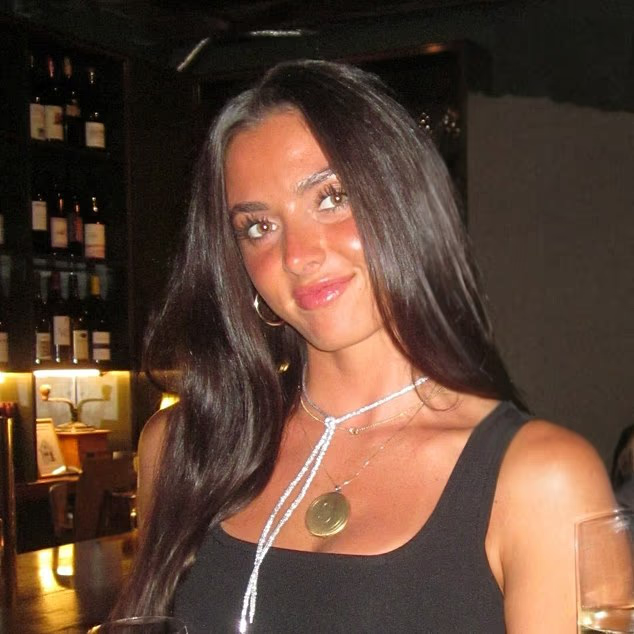
Michaela Nicholas
Later that night, after more than six hours spent trying to save Apa’s life, doctors at Mount Sinai Medical Center confirmed she had died. According to her father, she was killed by rhabdomyolysis, a rare muscle condition. ‘It is unfathomable,’ Steve Apa told the New York Times.
Some of the finer details of Sunday have been lost in the fog. ‘Honestly, it’s hard to say what happened when,’ Nicholas admitted. ‘I didn’t have any concept of time.’ She isn’t sure how many people rushed to Apa’s aid or what they did to help. ‘I just focused on what I knew I had to do.’
But in a poignant interview on Tuesday, the social worker pieced together a scene that encapsulated the darkness and light of the New York City Marathon.
‘It’s so devastating that Rachel passed away,’ she said. But? ‘I’m so grateful and so proud to be a New Yorker. So proud to be a healthcare worker, and to be among amazing doctors and nurses and humans who just [react] when their help is needed… they did everything they could.’
Few did more than Nicholas, who stayed with Apa until medics from the marathon arrived. After the 24-year-old was placed on a stretcher and lifted into an ambulance, Nicholas left Central Park. ‘I just thought about what else I could do,’ she said.
So the hospital social worker trawled through every Rachel in the 61,000-strong field until she landed on Apa. ‘I found her parents’ names and phone numbers, and I called Lenox Hill and Mount Sinai – the two closest hospitals to where the incident happened – and just asked that they write down her parents’ phone numbers in case they hadn’t already been able to contact [them].’
Then she waited. News of Apa’s death didn’t arrive until Monday morning, when Nicholas picked up the phone and called the 24-year-old’s parents. Steve Apa had been tracking his daughter from home in Pennsylvania, sending her messages of support; Michelle Apa was waiting at Mile 25 when the former college field hockey player collapsed.
‘I was debating reaching out to her family or not,’ Nicholas recalled. ‘And my gut was just telling me that I wanted to relay that people were with Rachel and that she wasn’t alone, that she was surrounded by a team of people trying to help… that I was there holding her hand and speaking to her even if she couldn’t hear me, that there was a group of really amazing physicians who did what they could to try to save her.’

The 24-year-old former Bucknell field hockey player was pronounced dead on Sunday night

Runners pass through Central Park as they compete in the 2026 TCS New York City Marathon
How did they respond? ‘They were just so loving and kind and so appreciative,’ she said. ‘To be able to thank someone while you’re grieving like that is remarkable. And they were grateful and wanting to hear what Rachel was like in the last moments.’
Nicholas continued: ‘I’m just so heartbroken for Rachel’s family… I let them know that I’m here and here to support however I can.’
But she is back to her day job this week, working as a pediatric palliative care social worker at NewYork-Presbyterian Hospital.
‘I’ll be back to the marathon,’ Nicholas said. ‘I hope that this maybe brings awareness for more medical attention at marathons… I just hope if this ever happens again that the outcome is different.’