
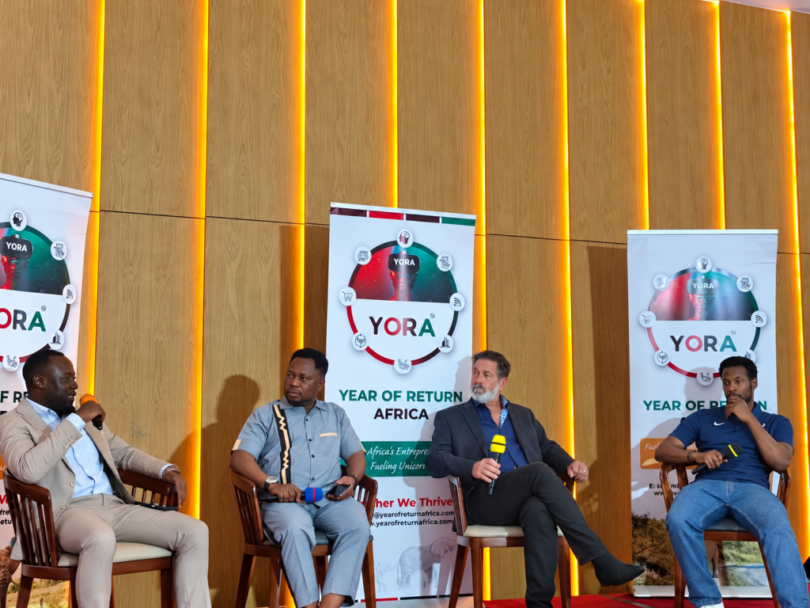
Sports247 Chief Executive Officer, Jide-Ojo Olusola, has called on African nations to build sustainable sports businesses capable of retaining talent, attracting investment and generating wealth, insisting that the continent must move beyond producing outstanding athletes to owning the commercial opportunities their success creates.
Speaking during the sports development and creative economy discussions at the Year of Return Africa (YORA) Summit & Expo 2026 in Nairobi, Kenya, Jide-Ojo said Africa’s biggest sporting challenge was not a shortage of talent but the absence of strong structures to develop, promote and commercialise its sporting assets.
Jide-Ojo, who also serves as Media Aide to the Senior Special Assistant to the President on Grassroots Sports Development, Hon. Adeboye Anthony Adeyinka, emphasised the need for stronger domestic leagues and viable professional opportunities for African athletes.
“Africa must own it because we have it,” he declared, urging governments, investors and sports administrators to take greater responsibility for developing the continent’s sporting economy.
Drawing from over three decades of experience in the sports industry, Jide-Ojo explained that sports must be recognised beyond entertainment, recreation and physical fitness as a major economic sector capable of creating employment and attracting substantial investment.
He argued that African sports could achieve commercial success comparable to the continent’s music and film industries if stakeholders deliberately invested in professional competitions, broadcasting rights, sponsorship and digital platforms.
The Sports247 CEO also stressed the importance of creating competitive domestic leagues that would encourage athletes to build successful careers at home rather than depend entirely on opportunities abroad.
Highlighting emerging sporting properties, he cited Nigeria’s Showtime Flag Football as an example of how developing sports can create opportunities for athletes, sponsors, media organisations and entrepreneurs when supported by sustainable business structures.
Jide-Ojo further identified storytelling as a powerful instrument for transforming African sports into commercially attractive products.
He explained that compelling stories about athletes’ backgrounds, struggles, achievements and ambitions could build emotional connections with fans, increase stadium attendance and attract corporate sponsorship.
Using global football stars Lionel Messi and Cristiano Ronaldo as examples, he noted that consistent media exposure plays an important role in developing athletes’ public profiles and commercial appeal.
He consequently challenged African sports journalists and broadcasters to devote greater attention to grassroots competitions, emerging athletes and lesser-known sporting disciplines instead of focusing almost exclusively on established international stars.
Jide-Ojo also referenced projections suggesting that Africa’s sports business market could reach $20 billion by 2032 or 2033, although the estimate was not independently verified.
He maintained that the continent must establish stronger partnerships among governments, private investors, sports administrators and media organisations to unlock the economic opportunities within its sporting ecosystem.
His presentation reinforced YORA Summit 2026’s emphasis on African ownership, entrepreneurship and sustainable investment, with a clear message that the continent must not only develop sporting talent but also build the businesses that benefit from it.