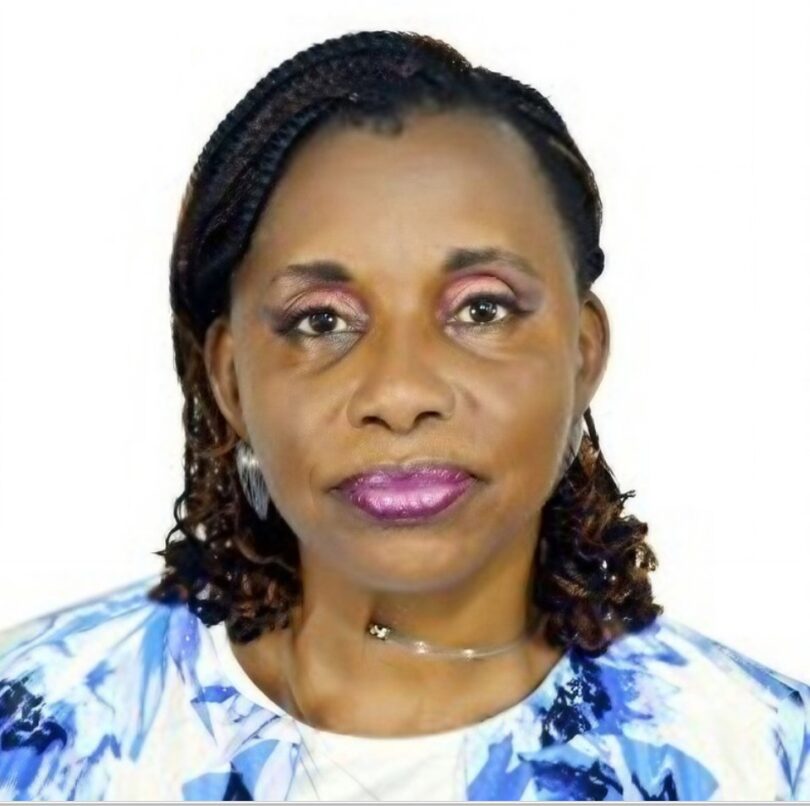
Newly elected Nigeria Triathlon Union President Ize Matebese has outlined an ambitious plan to revive the sport’s profile in the country, placing a national championship, grassroots development and school participation at the centre of her new administration.
Matebese emerged as president following the union’s elective congress and general assembly held on September 30 at the Nigeria Olympic Committee headquarters inside the National Stadium, Surulere, Lagos, succeeding Prince Wale Oladunjoye, who had led the organisation since 2018.
Her election represents a significant leadership transition for an organisation approaching two decades since its establishment in November 2006.
For Matebese, however, the immediate priority is giving Nigerian triathlon renewed visibility.
“We need to come up now with a higher profile,” she said following her election, identifying the return of a major domestic competition as one of her administration’s first objectives.
The new president believes staging a national tournament or championship would provide athletes with meaningful competition while giving Nigerians a clearer opportunity to understand a sport combining swimming, cycling and running.
“We haven’t had that for a while, so we need to do that,” Matebese said. “People will see that awareness will be created.”
Grassroots development will form another major part of the programme.
Matebese intends to take triathlon deeper into Nigerian schools, arguing that identifying athletes at a younger age offers the strongest foundation for building a sustainable national programme.
The strategy is not entirely new to Nigerian triathlon. The union has previously organised school-based programmes, including a holiday clinic that attracted more than 120 students and eventually awarded certificates to 62 participants after training in swimming, cycling and running disciplines.
There have also been recent signs of renewed private-sector interest. Earlier this year, the maiden PitStop Lagos triathlon offered a N1.5 million top prize, with the then NTU leadership describing such initiatives as important to building a sustainable talent pipeline.
Matebese now wants to turn those individual initiatives into a more consistent development structure.
She will work with a new executive that includes Abiona Babarinde as first vice-president, Olukayode Oguntayo as second vice-president and Priscilla Iroaganachi as secretary-general.
Nigeria has yet to field a triathlete at the Olympic Games, making the development of athletes capable of reaching international qualification standards another long-term challenge for the new leadership.
For Matebese, though, the rebuilding process begins at home: restore regular competition, take triathlon into the schools and make the sport visible enough for a new generation of Nigerians to discover it.