28 Sept 2026 20:32 BST |
5 min read

Make us your Google favourite
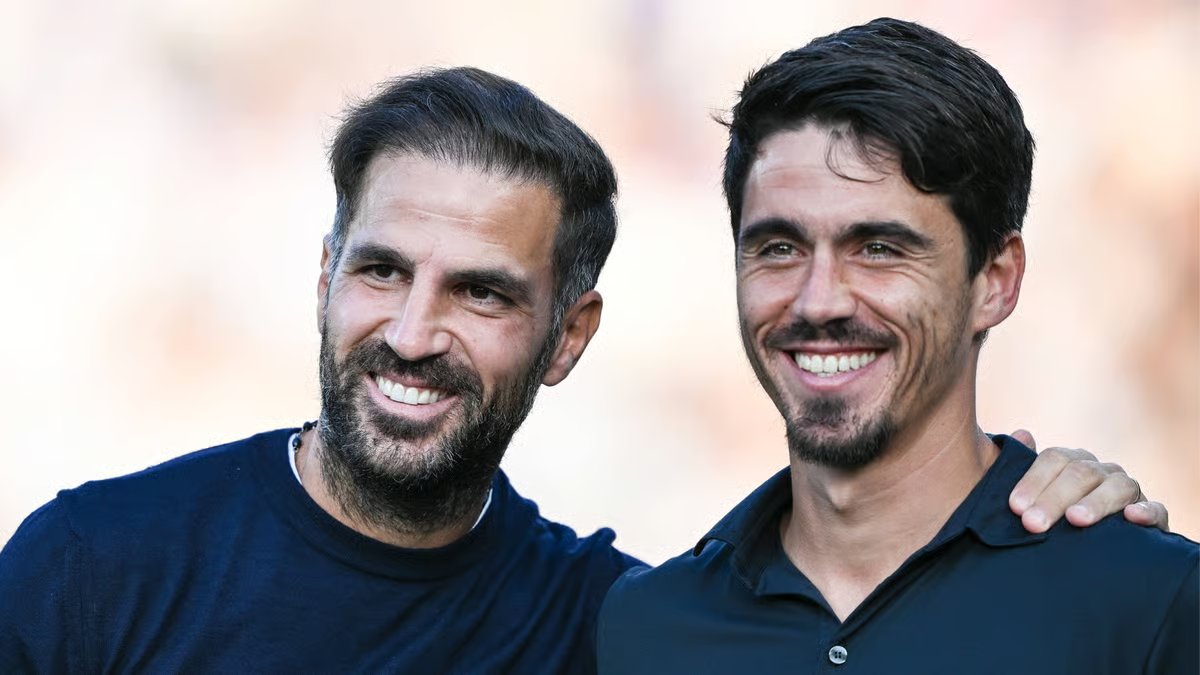
Serie A side Parma have parted ways with former Arsenal assistant Carlos Cuesta in a shocking turn of events.
On Sunday, the club announced – completely out of the blue – that they had parted ways with their head coach, just seven games into the new season. Incredibly, Cuesta has already become the third Serie A manager to lose his job this month.
However, the manner in which the separation took place was highly unusual. In fact, it is not even entirely clear how things went down. Parma’s English statement speaks of a “mutual agreement,” yet it also states that Cuesta had been “relieved of his duties,” which implies a sacking.
Whatever the case, the Spaniard is no longer in charge of the iconic club, with this decision sending shockwaves through Serie A. To be sure, results this season have been far from satisfactory, but Cuesta remains highly rated and well respected.
Ahead of the international break, Parma recorded their first win of the league campaign, beating Genoa 2-1. They had previously lost to Como, Juventus and Cagliari and drawn with Monza. They also crashed out of the Coppa Italia against relegated Cremonese.
Cuesta axed over lack of alignment
The reason behind Cuesta’s exit is a lack of alignment over the future of the club. Parma announced that the decision to part ways had been made after “an internal discussion between the Club and Coach.”
The two parties “agreed that the conditions to continue this working relationship and the advancement of the sporting project” were no longer present. According to Gazzetta dello Sport, a rift had already emerged in the summer.
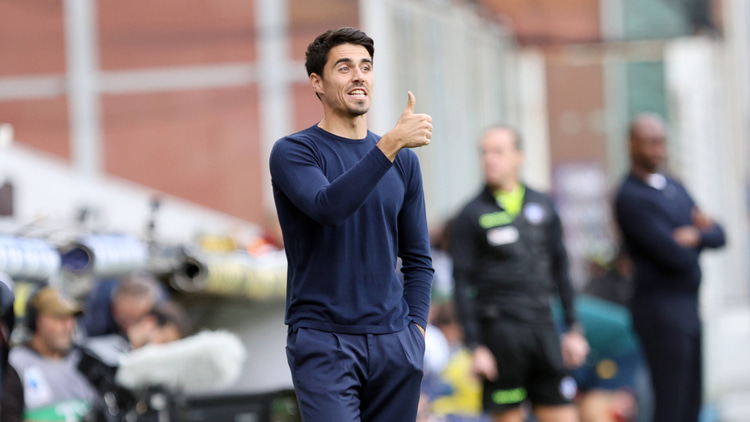
Cuesta was reportedly unhappy with Parma’s recruitment, with his grievances dating back to last season. When he left Arsenal in the summer of 2025 to become the youngest head coach in Serie A at just 29, Cuesta arrived with the desire to emulate Mikel Arteta.
Artetaball, of course, revolves around the idea of being defensively solid, and Cuesta managed to implement that style of play to the point where his approach was described as being too “negative” by an Italian journalist last October.
In truth, however, Cuesta felt that his hand was forced. Parma simply didn’t have enough quality attacking pieces to play free-flowing, exciting football. Striker Mateo Pellegrino was the only standout performer. He finished the season on nine goals; no other player scored more than three.
Despite this, Cuesta led Parma to a comfortable mid-table finish. This summer, there was an understandable desire on his part to evolve his style of play and become more attack-minded. The club hierarchy had other ideas.
Parma sold Pellegrino and indeed several other key players, raking in close to €80 million in sales. They reinvested €30m, but the players they brought in have failed to prove adequate replacements, nor did they allow Cuesta to change his approach.
The frustration ultimately boiled over. While his exit is perhaps not as shocking as Dino Toppmoller’s ridiculous axing at RC Lens earlier this month, this is likely to go down as one of the more eyebrow-raising coaching departures in Europe’s top-five leagues this season.
Parma frugality raises ownership questions
Parma’s decision to only reinvest €30m of their €80m sales revenue has faced criticism from supporters. On the one hand, though, it makes sense for a mid-sized Serie A team to try to be fiscally responsible.
Balancing the books is incredibly difficult in elite football. Parma lost more than €100m in the first 17 months after the acquisition by American businessman Kyle Krause, whose wealth stems from inheriting the Midwestern retail chain Kum & Go.
The entrepreneur has invested in various sports and real estate projects via his Krause Group. The fact that Parma are trying to do the responsible thing and not spend above their means could, however, also be indicative of the struggles Krause has faced with his other football project.
Based in Iowa, Krause has been in charge of lower-league team Des Moines Menace since 1998. The Menace currently play in USL League Two, a summer league for college players and semi-pros.
Because of the fractured and unstable nature of American soccer, the Menace are quite an iconic, well-supported team simply because, well, they have been around for 30 years, which can’t be said of many clubs in the US.
In recent years, they have made headlines by recruiting high-profile former MLS players for their US Open Cup matches. The Menace most recently won USL League Two in 2021.
Despite the Menace’s existence, Krause has been trying to put a fully professional team in Des Moines for ages. There is certainly an appetite for high-quality soccer in the city, but the finances have always proved problematic.
Krause has been trying to get funding to build a downtown arena for pretty much a decade now. As is almost customary in the US, the stadium project is part of a larger scheme to acquire prime real estate with public funding.
There has been plenty of sabre-rattling between Krause and the city of Des Moines over this stadium. In August, the city announced that it had stopped negotiations, which appeared to be the death knell of Krause’s “USL Pro Iowa” project, but the city has since backtracked, and discussions are believed to remain ongoing.
The most recent reporting suggests that there might still be a $22m budget shortfall. Construction on the stadium was initially supposed to start in 2024, but it has repeatedly been pushed back because the funding goal of $95m has still not been reached.
Krause seems to be close to exhausting all possible options. Last week, he heavily promoted the proposed women’s team that would be part of his project to garner more support for the stadium, which would be home to both the men and women.
“I feel that equity for men’s and women’s sports is necessary,” Krause said. “Equity is the opportunity, and I think that’s what should happen. There should be equity in all kinds of ways for men and women, and certainly in sports. I believe that Krause Group believes that.”
He remains optimistic that construction on the stadium could begin as early as this year, so the project does not appear to be dead just yet. Nevertheless, this situation could possibly raise alarm bells for Parma and soccer fans in Iowa.
If Krause is unwilling to put in an additional $22m for his stadium in Des Moines, does that mean that Parma may have to continue pinching pennies going forward? Can he even finance multiple professional teams? Time will tell.
Related stories:
Wrexham’s €40m bid rejected: Lyon star snubs ‘Hollywood fairytale’
Trent Alexander-Arnold is destined to return to Liverpool
Transfer Rumours: Barcelona chase Chelsea ace Estevao as €25m release clause revealed
View full bio