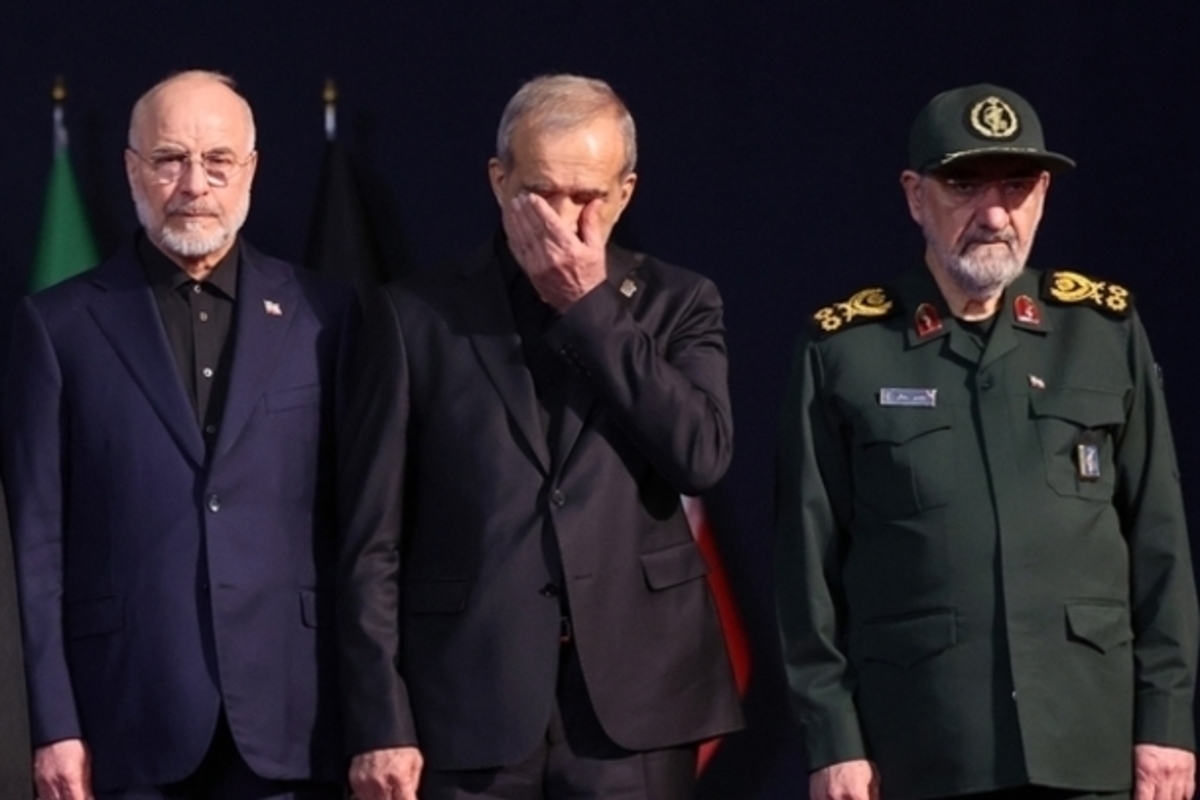
Iran has appointed veteran Revolutionary Guards commander Mohsen Rezaei as secretary of the Supreme National Security Council (SNSC), replacing Mohammad Bagher Zolghadr at a critical stage in negotiations over reopening the Strait of Hormuz.
Iranian state media announced the change late on Sunday. Rezaei, who also serves as an adviser to Iran’s supreme leader, Ayatollah Mojtaba Khamenei, will become Khamenei’s representative on the council. Zolghadr, meanwhile, will take up a new position as political adviser to the supreme leader. An air strike killed Zolghadr’s predecessor, Ali Larijani, in March.
The reshuffle comes as Tehran and Muscat seek to finalise an arrangement governing maritime traffic through the Strait of Hormuz. Any agreement to reopen the waterway requires approval from both the security council and Khamenei.
Both Rezaei and Zolghadr previously commanded the Revolutionary Guards and advocate a firm approach towards Washington. Vali Nasr, professor at Johns Hopkins University, told the Financial Times that he expected little difference between the two men over Iran’s approach to the US, although Rezaei’s seniority and extensive military background could give him greater authority within the armed forces. Nasr suggested the appointment could strengthen Khamenei’s control over military and security decision-making.
READ: Tehran says Strait of Hormuz will remain closed until Washington accepts all its demands
Zolghadr had outlined tougher conditions for reopening the strait just a day before news of his departure emerged. He insisted that Washington must withdraw its forces from the vicinity of Iran, compensate Tehran for damage caused during the war and lift US sanctions. Foreign Minister Abbas Araghchi, who has led negotiations with Oman, subsequently backed those demands.
The dispute follows the breakdown of a memorandum of understanding (MoU) agreed between Iran and the US in June. The arrangement aimed to extend a ceasefire and gradually restore toll-free shipping to pre-war levels. It collapsed after Iran attacked vessels travelling through a channel along Oman’s coast, arguing that they had used an unauthorised route. The incident triggered renewed exchanges of strikes between Tehran and Washington.
Subsequent negotiations between Iran and Oman have focused on establishing a temporary maritime route in an effort to end the stand-off. Iranian and Omani officials have indicated in recent days that the discussions were approaching an agreement, although Tehran has maintained that a shipping arrangement with Muscat does not automatically mean the strait will reopen without Washington meeting its demands.
Rezaei commanded the Revolutionary Guards during the Iran-Iraq war and has held several senior political and military posts. Following the US-Israeli air strikes that killed former supreme leader Ayatollah Ali Khamenei in February, Rezaei became a military adviser to Mojtaba Khamenei after he succeeded his father.
The change in leadership also comes amid apparent differences within Tehran over how quickly to pursue a diplomatic settlement.
Iranian President Masoud Pezeshkian, who chairs the security council, has publicly supported reaching an agreement. “We cannot fight forever. It has to be brought to an end at some point,” he said on Saturday, according to the report in the FT.
READ: Iran releases rare video of Mojtaba Khamenei after reports of deteriorating health