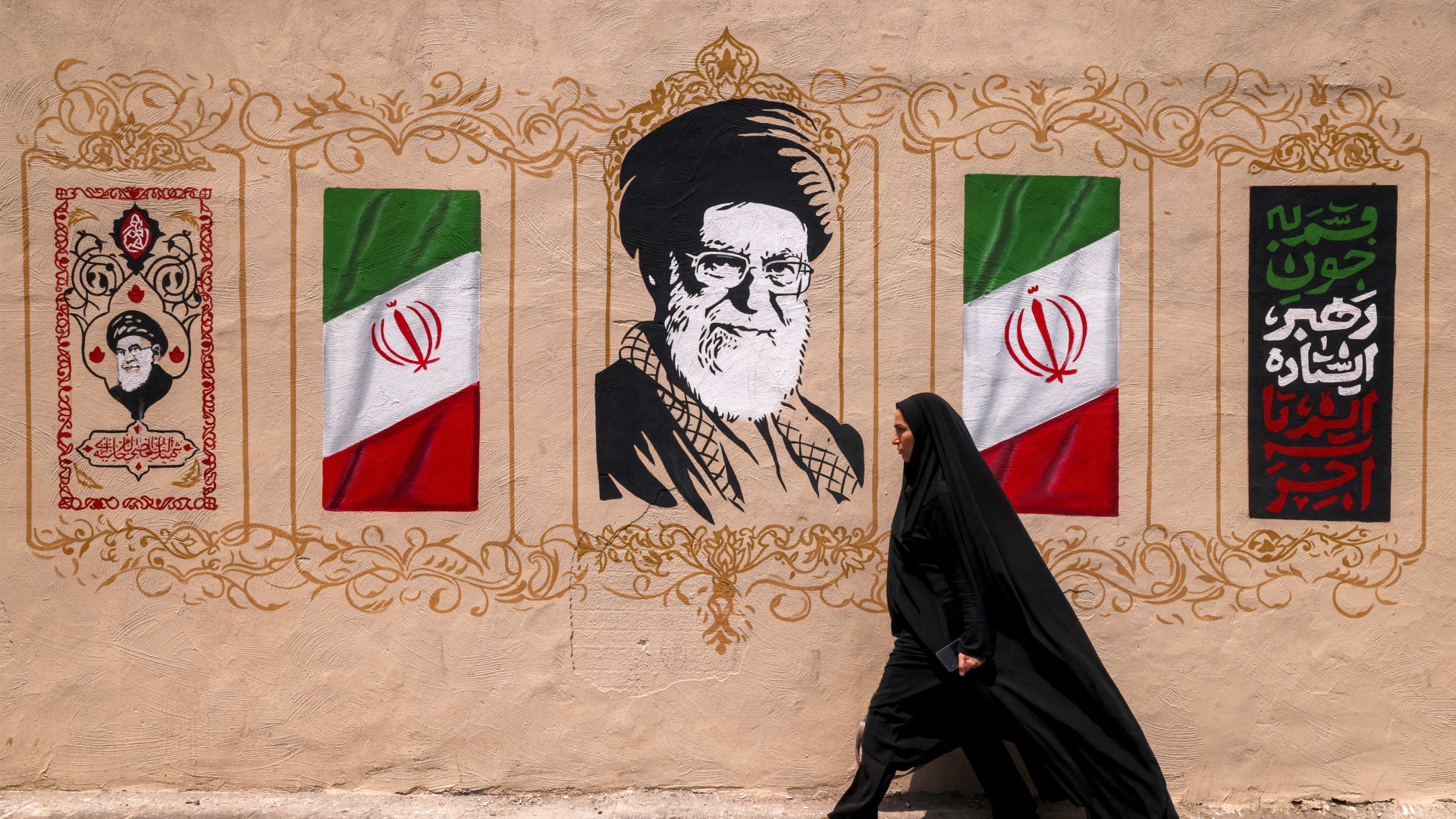
Tehran has described Iranians as “professional chess players” in their dealings with the US, as it insisted that Washington must meet its demands for the re-opening of the Strait of Hormuz.
US President Donald Trump on Sunday indicated that he was prepared to let economic pressure mount against Iran, appearing to back away from more military strikes after Tehran issued a list of demands for opening the Strait of Hormuz.
Trump was quoted by Axios as saying he was “low-keying it” with Iran.
“We are only semi-negotiating with them. We are just watching Iran with its huge inflation and the fact they have no money,” he said.
“It will work out. It always works out. It’s like a chess game,” Trump added.
CLICK FOLLOW: TO FOLLOW US
Sign up to get the latest insights and analysis on
Israel-Palestine, alongside Turkey Unpacked and other eSPORTY
Responding directly to Trump’s remarks, Iran’s foreign ministry spokesman Esmail Baghaei said: “Lights out or lights on, Iranians showed they are professional chess players.”
Trump’s remarks came after Iran issued over the weekend a list of conditions to reopen the Strait of Hormuz.
The strategic waterway, through which a fifth of the world’s oil and liquefied natural gas passes, has largely been kept closed by Iran since the US and Israel launched its war on the country in late February.
Iranian official Mohammad Bagher Zolghadr on Saturday laid out Tehran’s demands, including an end to the “war and aggression against Iran and its allies in Lebanon, Palestine, Yemen and Iraq”.
He also called for the lifting of a US counterblockade of Iranian ports, the end of sanctions, the release of frozen Iranian assets and compensation for wartime damage, Iran’s Tasnim news agency reported.
Baghaei on Monday said that “as long as the US naval blockade continues… as long as other violations by the United States continue, the necessary conditions for saying that the Strait of Hormuz has become a safe waterway will not exist”.

Iran: Trump says he’d rather make deal than ‘kill people’ amid reports of weapons shortages
Read More »
Iran has said it was nearing a final pact with Oman defining new shipping lanes between them through the Strait of Hormuz.
Iranian Foreign Minister Abbas Araghchi said an agreement with Oman on the strait was in its “final stages” but reiterated that Tehran would not reopen the channel unless the US met its demands.
The Oman-Iran deal would set out the new shipping lanes to be used once the US fulfils those conditions and the strait is reopened, Iran’s Mehr news agency quoted Araghchi as saying.
Iran and the US are not engaged in direct talks, and Tehran will not start them as long as Washington breaches the interim deal signed in June, Araghchi said.
He added that messages were being exchanged through intermediaries.
The US military said on Monday it had rerouted 55 commercial vessels sailing towards Iran as part of its operations to enforce restrictions on Iranian ports.
The US Central Command (Centcom), which coordinates US operations in the Middle East, said in a statement published on X that it had rerouted the vessels, disabled two others and inspected two additional ships to ensure compliance with the restrictions.
Iran not worried by ‘Mecca agreement’
Also on Monday, foreign ministry spokesperson Baghaei said that Tehran saw no indication that a new security pact between Pakistan, Turkey and Saudi Arabia was meant to be directed against Iran.
Baghaei said the pact showed a “change in perception” towards the US, as well as a shift in regional countries’ approach to security, with greater reliance on their own capabilities rather than outside powers.
“Any plan that is based on the geopolitical and historical realities of the region, is comprehensive and inclusive, and correctly identifies the enemy and the threat, has a chance of helping to strengthen security and prevent instability and abuses by the Zionist enemy and its allies,” he added.

What Pakistan’s defence pact with Saudi Arabia and Turkey means for the Middle East
Read More »
Meanwhile, tensions between Israel and the US are growing amid Washington’s efforts to wind down fighting in Gaza, Lebanon and Iran, according to a report from Israel’s Channel 13.
Centcom chief Brad Cooper conveyed the message of Washington wanting to shift toward “closing the three fronts” during a visit to Israel over the weekend, the broadcaster indicated, citing a military source.
It came after Israeli Prime Minister Benjamin Netanyahu rejected on Sunday Trump’s 15-point plan for Gaza and said Israel would not withdraw until Hamas fully disarms.
The Board of Peace, spearheaded by Trump, announced last month that it had made a breakthrough in a plan to end the war.
Israel and Hamas had agreed to an initial ceasefire last October. However, the Israeli army has continued to carry out near-daily strikes on Gaza and violations of the agreement since then.
Trump said that Hamas had agreed to lay down its weapons.
“Israel rejects the 15-point document,” Netanyahu said at a cabinet meeting on Sunday.