The birth place of the Bramley apple in Northern Ireland is set to be celebrated as part of an upcoming festival.
There are some 6,000 acres of apple orchards, and 250 growers in Armagh continuing the long tradition of growing the fruit in Ireland which can be traced back to the Celts in 3000BC
Those ancient people are believe to have used crab apples and venerated apple trees, levelling fines to those who would cut one down.
The county continues to celebrate apples with the annual Armagh Food and Cider Festival every September with a programme of events which this year includes a sensory orchard tour, cooking workshops, supper clubs, cider tastings, and artisan markets.
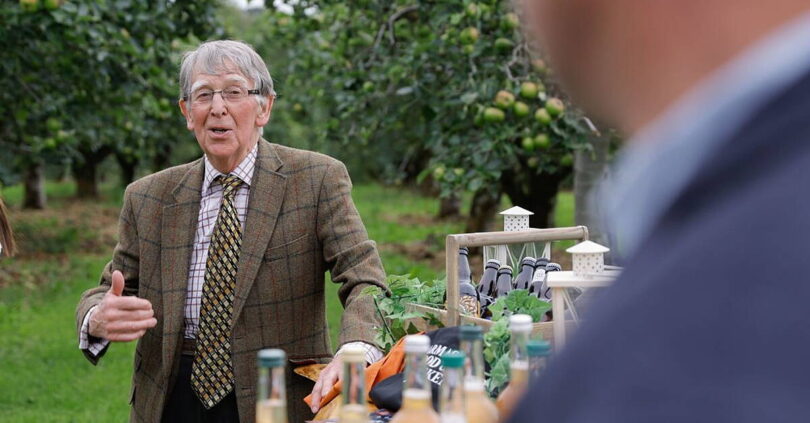
A lynchpin of the event is John Nicholson of Crannagael House, whose ancestor brought the first Bramley seedling across the Irish Sea.
The Bramley is thought to have first emerged in 1809 and started to become renowned because of Henry Merryweather in Southwell, Nottinghamshire.
Nicholson’s great grandfather Henry Joseph Nicholson got to hear of this and in 1884 brought 60 seedlings home to plant in his native Armagh, starting a tradition which would go on to see protected geographical indication (PGI) status for the Armagh Bramley granted in March 2012.
He described Armagh as “well suited” to growing apples with its wet weather and heavy soils, and native breeds such as Widow’s Whelp, Ladyfingers and Strawberry Cheeks flourishing before the arrival of the Bramley.
But he said the Bramley grew in popularity because it suited home catering and industrial catering with products such as apple pies and sauce, as well as cider businesses.
Apple blossom time is very special, and then we have the food and cider festival every September, it’s a great celebratory time
He said they get visitors to see the apple blossom every April across the most prolific growing areas from Portadown, Richhill to The Birches.
“Apple blossom time is very special, and then we have the food and cider festival every September, it’s a great celebratory time,” he said.
“It’s very special to us, it really is, and one of the reasons that we’re one of the hosts for the food and cider festival is that we have this wonderful heritage which I hope to pass down.”
He added while Armagh had been “quite notorious” during the Troubles, with that period now in the past, he is delighted to see the county become better known again for its orchards.
Megan O’Hare, a tour guide at Navan Centre and Fort prehistoric ceremonial site said apples have long been celebrated in the North.
“Celts here believed that all trees were sacred and the apple tree was the ‘tree of life’,” she said.
“Apples were central to celebrations, and they were often used for divination practices. In fact, cutting down an apple tree was punishable by heavy fine under Brehon Law.”
Helen Troughton at Long Meadow Cider, one of Armagh’s longest established family-run orchards, said securing European protected geographical indication (PGI) status in 2012 transformed the export potential, and the economic impact cider delivers for the region.
“The designation recognises that only apples grown, picked and packed within Armagh can be sold under that name, helping to protect provenance, safeguard our heritage, and ensure that cider fans everywhere can trust in Armagh for quality,” she said.
To book tickets to Armagh Food & Cider Festival 2026 visit visitarmagh.com/festivals/food-cider/