Bahraini pro-democracy campaigners have hailed a decision by the UK Supreme Court not to grant state immunity to Bahrain over a hacking case.
Two Bahraini dissidents in the UK say their laptops were targeted by spyware installed by Manama in 2011 which allowed them to monitor their activities abroad as well as those of other critics of the ruling Khalifa family.
Saeed Shehabi and Moosa Mohammed launched the case at London’s High Court in 2020, seeking damages for “psychiatric harm”.
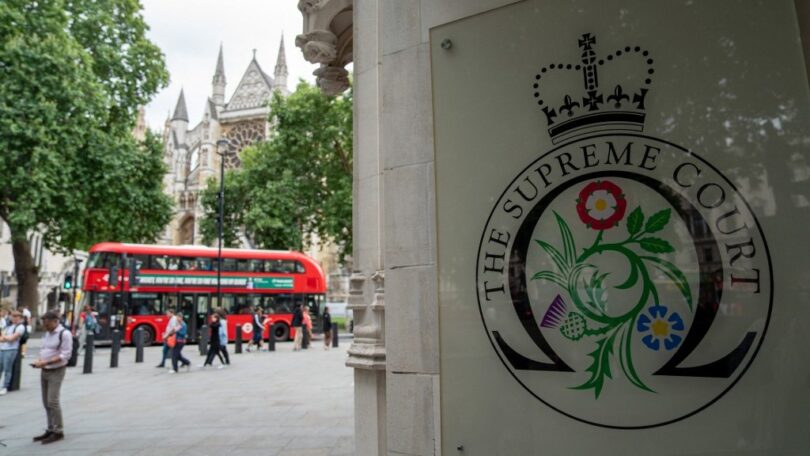
On Monday, the Supreme Court dismissed Bahrain’s appeal for state immunity by a three to two majority, saying that since the surveillance took place on British soil the case could proceed.
“It has taken many long and difficult years to reach this moment. The hardest part of being targeted by state-sponsored hacking is the feeling that nowhere is safe,” Shehabi said in a statement.
CLICK FOLLOW: TO FOLLOW US
Sign up to get the latest insights and analysis on
Israel-Palestine, alongside Turkey Unpacked and other eSPORTY
Shehabi, who has lived in exile for decades over his opposition to Bahrain’s royal family, said the ruling was a victory for “everyone targeted by authoritarian states beyond their own borders”.
“I dedicate this victory to the people of Bahrain and the families of Bahrain’s martyrs, who lost their lives under torture and repression simply for daring to dream of justice and an end to authoritarian rule,” he added.
Since the 2011 Arab Spring, the Bahraini authorities have instituted a crackdown on dissent that has seen thousands of pro-democracy activists arrested, while dissidents abroad have been pursued by the security services.
Bahrain has denied the charges brought by the claimants.
Mohammed also praised the court’s decision.
“Since I was a teenager, the Bahraini regime has tortured, imprisoned and hunted me,” he said.
“I dedicate this victory to those still suffering torture and abuse in Bahrain’s prisons. Today should give them hope that accountability is possible.”