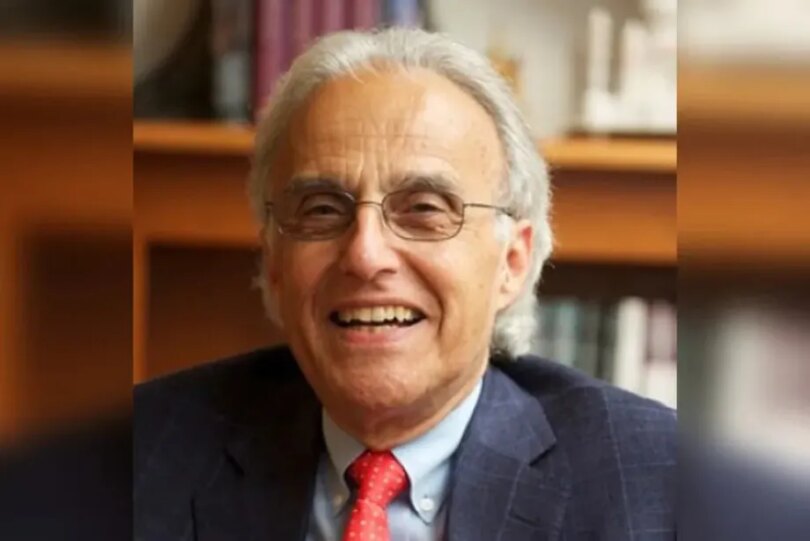
John L Esposito, one of the West’s most influential scholars of Islam and the Middle East and a longstanding supporter of Palestinian, has died aged 86.
The Georgetown University professor was widely known for confronting Islamophobia and rejecting portrayals of Muslims as an inherent political or security threat. In the final years of his life, he also spoke forcefully about Israel’s genocide in Gaza and the role of Western politicians, media outlets and pro-Israel organisations in marginalising Palestinian voices.
In a 2024 report co-authored for Georgetown’s Bridge Initiative, Esposito examined almost 300 Facebook posts about Palestine and Israel by US presidential candidates. The study accused politicians from both major parties of devaluing Palestinian lives, reproducing anti-Muslim stereotypes and offering Israel unconditional support despite evidence of apartheid, occupation and genocide.
The report also warned that critics of Israel were routinely portrayed as either anti-Semitic or supporters of Hamas, accusations that were used to silence discussion of Palestinian rights and Israel’s violations of international law.
Palestinian-American academic Hatem Bazian described Esposito as a “true companion to our Palestinian struggle when it was not popular”, saying that he identified Israel’s assault on Gaza as genocide without qualification and continued to support Palestinian advocacy despite the personal and professional consequences.
Bazian said that Esposito had challenged the pro-Israel lobby both within and outside academia and had continued to sign petitions, organise initiatives and speak publicly about Palestine after coming under pressure.
In his tribute, Bazian also alleged that he, Esposito and several others had been targeted by an extensive pro-Israel spying operation which accessed their banking and financial information and mapped their homes. He said the surveillance and intimidation did not alter Esposito’s position. Bazian did not identify those allegedly responsible or provide further documentation about the operation in his tribute.
READ: Rights group report spike in FBI interrogation of pro-Palestine activists
Esposito had also faced years of public attacks from pro-Israel organisations opposed to his scholarship and engagement with Muslim communities. In 2023, the Middle East Forum published a series branding him “a terrorist’s best friend” and accusing him of defending political Islam, language his supporters viewed as part of a wider effort to discredit academics who rejected dominant US narratives about Muslims and the Middle East.
Born in Brooklyn in 1940, Esposito became university professor of religion and international affairs and professor of Islamic studies at Georgetown University. He founded the Center for Muslim-Christian Understanding in 1993, which later became the Prince Alwaleed Bin Talal Center for Muslim-Christian Understanding. He also established and directed the Bridge Initiative, a research project documenting Islamophobia and its influence on politics, public policy and the media.
His work gained particular importance after the attacks of 11 September, 2001, when Muslims in the US and Europe faced expanding surveillance, discrimination and collective suspicion. At a time when much public discussion presented Islam primarily through terrorism and national security, Esposito challenged the hateful narrative vilifying Muslims and Islam.
The Bridge Initiative later documented the effect of the so-called War on Terror on Muslim communities, including surveillance, discriminatory prosecutions, the use of counter-extremism policies and efforts by Zionist organisations to obstruct scholarship and activism supporting Palestinian rights.
Following the start of Israel’s Gaza offensive, Esposito warned that Western news coverage had helped drive a sharp rise in anti-Muslim hostility. He described the media as “hugely responsible for the rise in Islamophobia”, criticising outlets which repeated unverified Israeli claims while giving insufficient attention to Palestinian deaths and suffering.
Over a career spanning more than five decades, Esposito authored or edited more than 50 books on Islam, Muslim politics, democratisation, interfaith relations and the Middle East. His best-known works included Islam: The Straight Path, The Islamic Threat: Myth or Reality?, Unholy War: Terror in the Name of Islam, What Everyone Needs to Know About Islam and Who Speaks for Islam? What a Billion Muslims Really Think, written with Dalia Mogahed.
He also served as editor-in-chief of major Oxford reference works on Islam and was a former president of the Middle East Studies Association of North America. His scholarship challenged the idea that Islamic political movements could be understood through a single framework, arguing instead that they should be assessed according to their political circumstances, popular support and conduct.
Esposito’s engagement extended beyond academic writing. He appeared at government hearings, advised policymakers and supported academics, activists and political prisoners facing repression. MEMO interviewed him in 2021 about the legacy of the Arab Spring and previously published his condemnation of the killing of demonstrators in Egypt following the 2013 military coup.
Watch: MEMO in conversation with John Esposito and Maha Azzam
Esposito also defended scholars targeted under counter-terrorism measures. Speaking about the Austrian authorities’ raid on Islamophobia researcher Farid Hafez, Esposito warned that the targeting of a prominent mainstream academic raised serious questions about the treatment of Muslims in Europe.
The Council on American-Islamic Relations said Esposito had helped generations of students, journalists, religious leaders and policymakers develop a more accurate understanding of Islam while promoting religious freedom, interfaith cooperation and human dignity.
In his tribute, Bazian said Esposito’s influence would remain visible in the institutions he founded and among the Muslim scholars and community figures whom he supported, particularly during the years after 9/11.
Esposito is survived by his wife, Jean, and leaves behind students, colleagues and friends across the world.