The World Cup match ball will look slightly different when the semi-finals begin.
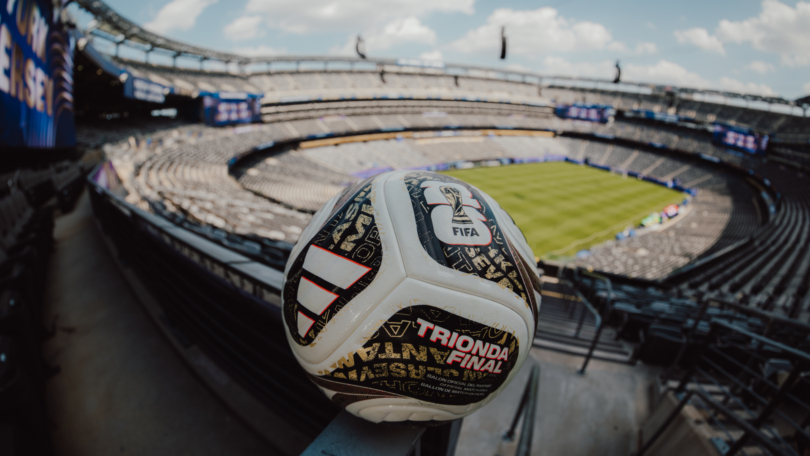
Fans have been used to seeing the multi-coloured Trionda, with adidas now introducing a sleek gold, white, and black edition for the last four clashes as well as the bronze match and the World Cup final.
3
It marks the first time in FIFA history that a completely new ball has been introduced specifically for the final stages.
Kylian Mbappe will be vying for the Golden Boot using the golden looking ball before England take on Argentina in their semi-final where Harry Kane and Lionel Messi are chasing him down.
What is on the new ball?
Beyond the colours, there’s graphics and typography to celebrate the final four host cities – Atlanta – where Messi will play England for the first time ever – Miami, Dallas, and New York.
Additionally, it incorporates the name of every city that hosted a game during the tournament across the United States, Canada, and Mexico, with each location woven into the ball.
“The design of Trionda Final is inspired by the journey towards football’s ultimate prize,” adidas explained.
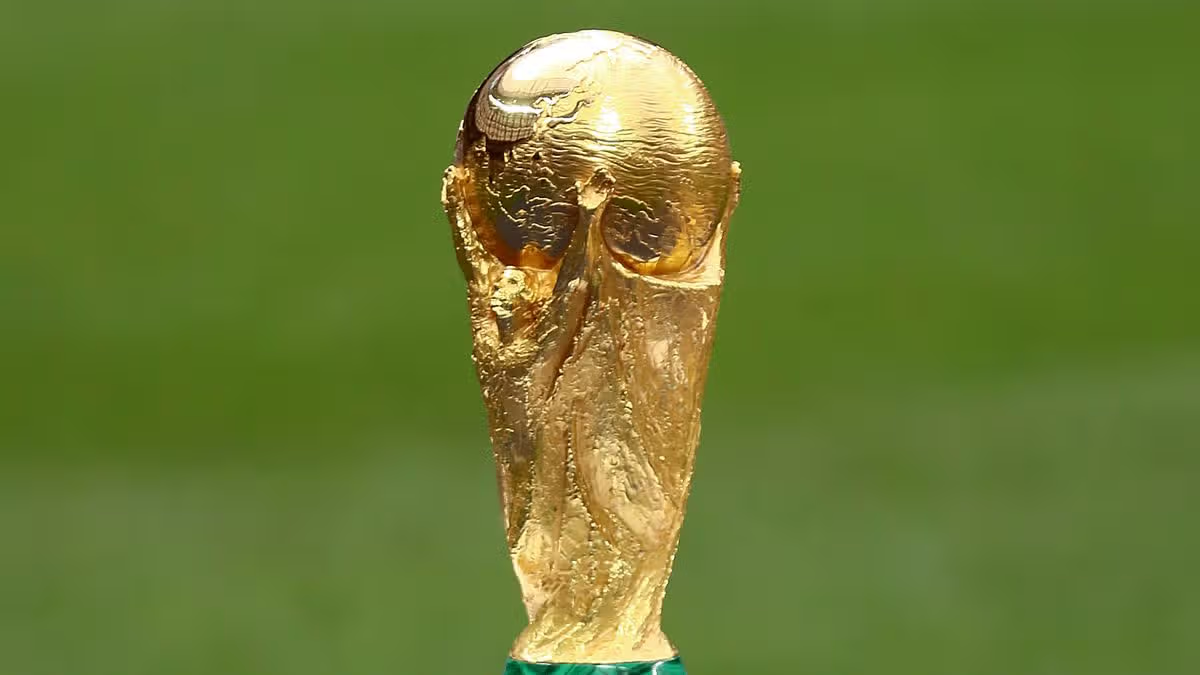
“A premium gold finish references the FIFA World Cup™ trophy, set against a black base to elevate the ball’s look and feel, creating a bold and refined visual identity for the final stages of the competition.
“This is complemented by dynamic accents of pink and red, injecting energy into the design while creating a visual link to the footwear worn on pitch.”
“While the remaining host cities are incorporated within the triangular graphic elements, creating a layered storytelling approach across the surface of the ball.”
Smart ball
Crucially, while the visuals have changed, the aerodynamics remain identical as squads prepare for their tournament-defining matches.
The Trionda still has the same four-panel construction, shape, and texture as the previous model.

3

3
Additionally, the ball uses AI to collect real-time data about each match, and the new model will continue to utilise this innovation.
When players kick it, data is gathered from sensors all around the stadium to record every movement.
The internal sensor can track at rate of 500 times per second, allowing referees to be able to make faster, more accurate decisions regarding VAR.
It also means fans can see advanced statistics, like which goal was kicked the hardest, or travelled the fastest.
The technology has made headlines with its embedded chip, which can detect if the ball has touched an external object.
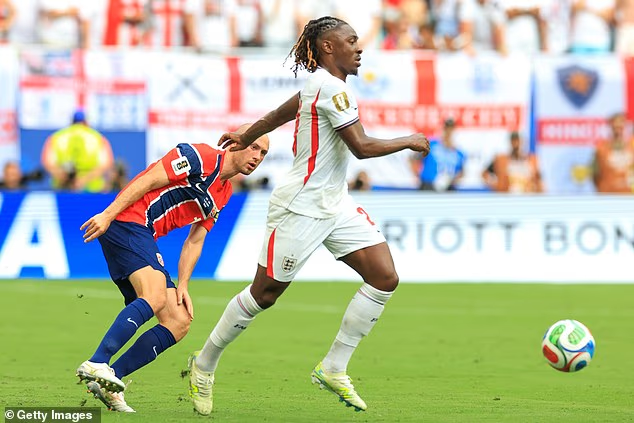
For example, during England vs Norway, people suggested the ball hit camera cables during the build-up to Jude Bellingham’s first goal, which under FIFA rules means it should have been disallowed.
However, FIFA reviewed the data and confirmed there was no peak on the graph of the ball’s internal heartbeat sensor, to prove the goal was legitimate.