US President Donald Trump has abandoned his plan to impose a 20 per cent charge on cargo passing through the Strait of Hormuz, only hours before it was due to take effect, while maintaining a naval blockade of Iranian ports and ordering further attacks on Iran.
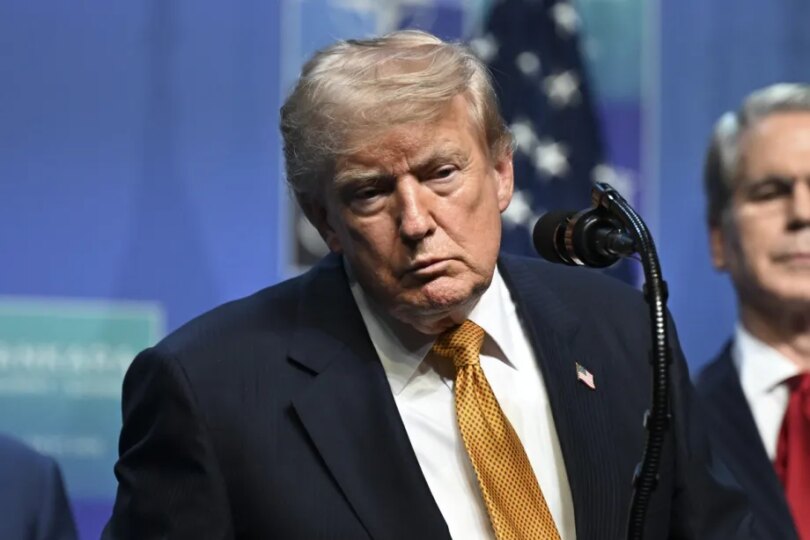
Trump announced on Tuesday that he had withdrawn the proposed fee following what he described as “highly productive conversations” with Middle Eastern leaders. He appeared to portray the apparent U-turn not as a retreat but as a negotiated victory, claiming that Gulf Arab states had offered trade and investment commitments in place of the proposed toll.
No details, however, were given about the countries involved, the value of the agreements or when they would take effect.
The decision represented an abrupt reversal of his earlier threat. Trump had declared that the US would become the “guardian” of the Strait of Hormuz and collect a 20 per cent charge on cargo in return for providing security. Five hours before the measure was scheduled to take effect, he conceded that nobody should charge ships for using the international waterway.
Trump’s proposal also contradicted the stated position of his own administration. Last month, the US secretary of state, Marco Rubio, insisted: “No country is allowed to charge tolls or fees on an international waterway.” Rubio said that international law required the Strait of Hormuz to remain free from such charges.
The reversal exposed the absence of an agreed mechanism through which Washington could collect or enforce the proposed levy. It also followed criticism from governments and shipping interests. Brazilian President Luiz Inácio Lula da Silva described the proposed charge as “piracy”, while the UN’s maritime agency expressed opposition to the plan.
Trump described the US blockade of Iranian shipping as “a very profitable business”, boasting that American forces had seized Iranian cargo and oil. “We’re sort of like pirates,” he remarked at an event in Florida in May. His later insistence that tolls through an international waterway should be prohibited marked another shift in the administration’s justification for its military presence in the strait.
Washington’s wider strategy has followed a similarly erratic course. Trump requested assistance from NATO members, China, Japan and South Korea to reopen the strait in March, but they declined to participate. He subsequently claimed that the US did not require their support. In May, he announced an American escort mission called “Project Freedom”, only to pause it two days later. A planned US attack on Iran on 19 May was also halted following opposition from Arab Gulf governments.
READ: Iran threatens to close Bab al-Mandab Strait
Despite months of US and Israeli military attacks, Washington has struggled to restore normal commercial traffic. UK parliamentary research found that the conflict produced a 95 per cent reduction in ships carrying crude oil to and from Gulf ports and a 99 per cent fall in liquefied natural gas traffic. Military analysts have warned that reopening the strait by force could require a much larger naval deployment and tens of thousands of US troops.
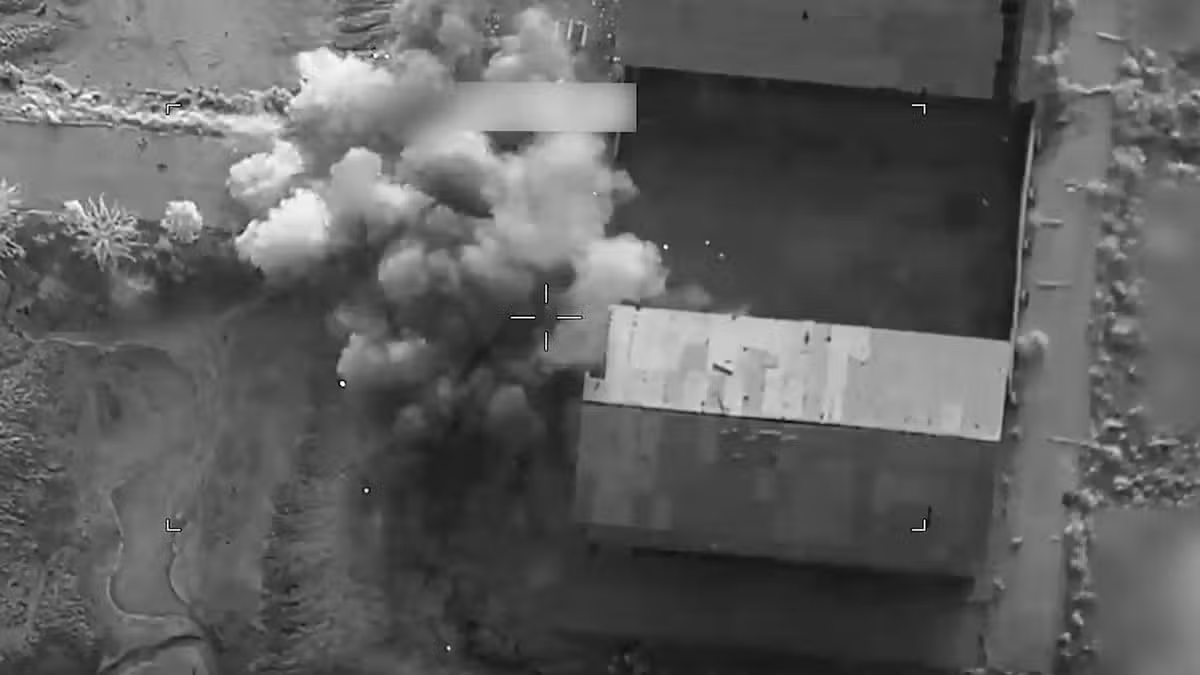
The latest round of hostilities began on 7 July after Iran attacked commercial vessels using the southern channel through Omani waters, a route promoted by Washington as an alternative to the northern channel favoured by Tehran. Iran’s Islamic Revolutionary Guard Corps claimed that the vessels had ignored repeated warnings and used an “illegal route”. US Central Command said that it struck more than 80 Iranian targets in response, including air defence systems, radar installations, anti-ship missile sites and small boats. Further attacks followed over the subsequent days.
On Tuesday, US forces attacked targets in the port cities of Bushehr and Bandar Abbas, as well as locations on Qeshm and Kish islands. Iran said that it targeted US-linked military sites in Bahrain, Jordan and Kuwait, while authorities in those countries reported intercepting Iranian missiles and drones.
Under the 14-point Islamabad Memorandum of Understanding signed in June, Iran undertook to use its best efforts to arrange the safe passage of commercial vessels without charge for 60 days. The agreement also established a maximum 60-day period for negotiating a final settlement.
READ: IRGC says Strait of Hormuz will remain closed until US operations stop