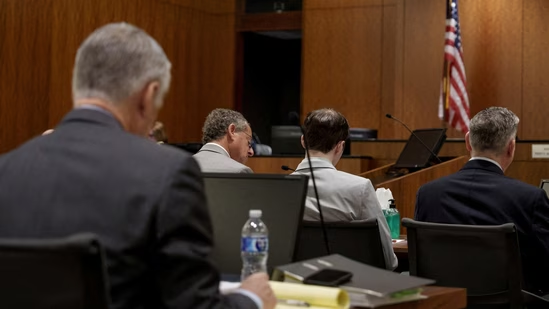
Both Erika Kirk and Candace Owens have spoken out after “devastating” evidence, including DNA on a rifle and a text confession, showed that Tyler Robinson should be tried for Charlie Kirk’s murder. This is what prosecutors told a court this week, while the defense team attempted to poke holes in the case.
After the conclusion of the trial, Erika posted a statement on X on behalf of the Kirk family, while Candace slammed the case against Robinson as “non-existent.”
What Erika Kirk and Candace Owens said
The Kirk family statement, posted by Erika, reads, “The conclusion of the preliminary hearing marks an important step forward in the pursuit of justice for Charlie. Our family is grateful for the prayers, support, and kindness that has been extended to us, especially through these unimaginably painful and emotionally demanding proceedings. As difficult as these last few days have been, it brings our family comfort to know that the world has witnessed the overwhelming evidence of what occurred to Charlie that day.”
Also Read | Tyler Robinson seen grinning in court ‘just feet away from Erika Kirk’ as hearing begins | Video
“Nothing will ever undo the loss of our beloved Charlie. As this case moves into its next phase, we pray that truth will continue to be heard through a process that is fair, transparent, and grounded in the facts,” it added.
Candace, who previously mocked Erika’s “tears” while talking about the hearing, slammed the case, writing on X, “The “evidence is overwhelming” campaign has begun! This is all so pathetic. And obvious. And utter disaster of a non-existent case. Cannot WAIT to be back on air on Monday.”
Prosecutors previously revealed that Lance Twiggs, the roommate and romantic partner of Robinson, was given immunity in exchange for providing recorded video statements to investigators about the case.
Charlie, 31, was allegedly shot dead by Robinson on September 10, 2025, during an appearance at a campus event in Utah. The shooting happened around 12:20 pm local time during a student Q&A at UVU in Orem, per a statement from Utah Valley University (UVU).