WE LEAD TWO countries that do not have the luxury of relying on old orders of geography. Finland shares a border with a Russia that is waging a war of aggression against Ukraine and actively interfering in other societies instead of reforming its own. Canada shares the world’s longest land border with a United States that is reassessing its priorities and transforming all its commercial relationships.
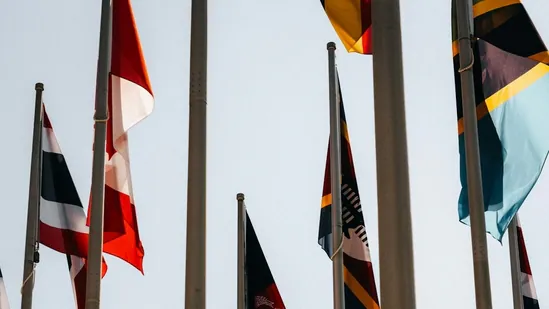
The answer to shifting orders of geography, trade and commerce—and the anxieties which they understandably cause for citizens—is not to mourn the world that was; it is to build for the world as it is. (Unsplash)
At the same time, we are striking closer relations with powers like India and, while avoiding strategic dependencies, China, as well as with countries of the Global South, because power no longer exclusively sits at a single Western centre. Power is spread across three groupings: a Global West, a Global East and a Global South, each increasingly autonomous. Truly global trends, including power over compute, data and artificial-intelligence models, are spawning a fourth, technology-driven grouping, shaping how we live, work and connect—unconstrained by borders and accountable to few rules.
The world order built after 1945 is unravelling. Institutions as they stand are ill-prepared to avert this decline. This is a moment that comes once in a century, in which our collective prosperity is defined by what we choose to build, and how we build it.
The work ahead requires neither wishful multilateralism, which only defends the status quo, nor cold realpolitik that dismantles it altogether. The alternative is values-based realism. A new approach that is both principled and pragmatic. Principled in its commitment to fundamental values of freedom, human rights, sustainability and solidarity. Pragmatic in recognising that not every partner will share all of our values. Put simply, we must form calibrated alliances, integrating deeply with those countries that share our values, and remain open-eyed with those that do not.
At its core, this means actively taking on the world as it is, not passively waiting for a world we wish to be. It means engaging with the reality that progress is incremental and that interests diverge. It requires recognising the inevitable differences between our countries and others, and then focusing our efforts to work together where we are aligned and where we can make the greatest impact. Progress can be signalled through monologue, but it will be achieved only through dialogue.
Another reality is that the world is moving from a more multilateral stance to a more multipolar one. Multilateral order, despite its shortcomings, is governed by co-operation and a clear set of rules and norms. A multipolar world, conversely, is one characterised by deals, transactions and chaos. Yet instead of a binary choice between multilateral and multipolar, there is another scenario, one that revolves around plurilateralism. We must strive for a revival of multilateralism with better representation and reformed institutions. At the same time, we should develop plurilateral arrangements.
This approach, a form of variable geometry, will build a dense web of connections—ad hoc coalitions that work, issue by issue. In many cases it will be most effective when dealing with countries with which we disagree on many issues but share enough common ground to act on some. Dynamic, purpose-built coalitions will be increasingly formed around shared interests, rather than a single shared institution. The coalition of the willing now planning Ukraine’s post-war security has become a premier forum for like-minded nations and NATO to co-ordinate efforts. The European Union’s instruments, including the SAFE pact, enable partners to cut through bureaucracy and to build and partner on defence capabilities, at speed. The G7’s critical-minerals alliance is securing and diversifying the supply chains on which every modern economy depends. In AI we could build coalitions to enhance safety and accessibility by leveraging our expertise and capabilities in critical areas such as quantum computing and energy. The question is no longer whether to partner, but how fast we can build successful coalitions that scale across every region.
The answer to shifting orders of geography, trade and commerce—and the anxieties which they understandably cause for citizens—is not to mourn the world that was; it is to build for the world as it is. To build with code, concrete and steel; with institutions that work and strong alliances that protect them. To deepen our countries’ partnerships with as much of the world as we can, clear-eyed and with confidence.
Middle powers of the world, unite!
In this effort Canada and Finland can be pivotal, because we are among the most connected economies on Earth through our enviable trade access; powerful, in our capabilities as nations increasing our defence spending to record levels; and purposeful, in our shared commitment to territorial integrity, human rights and pluralism. In a rapidly changing world, we have the grit and the sisu to chart the path ahead—and we know that so have many others whom we invite to join us on this quest.
Mark Carney is the prime minister of Canada. Alexander Stubb is the president of Finland.