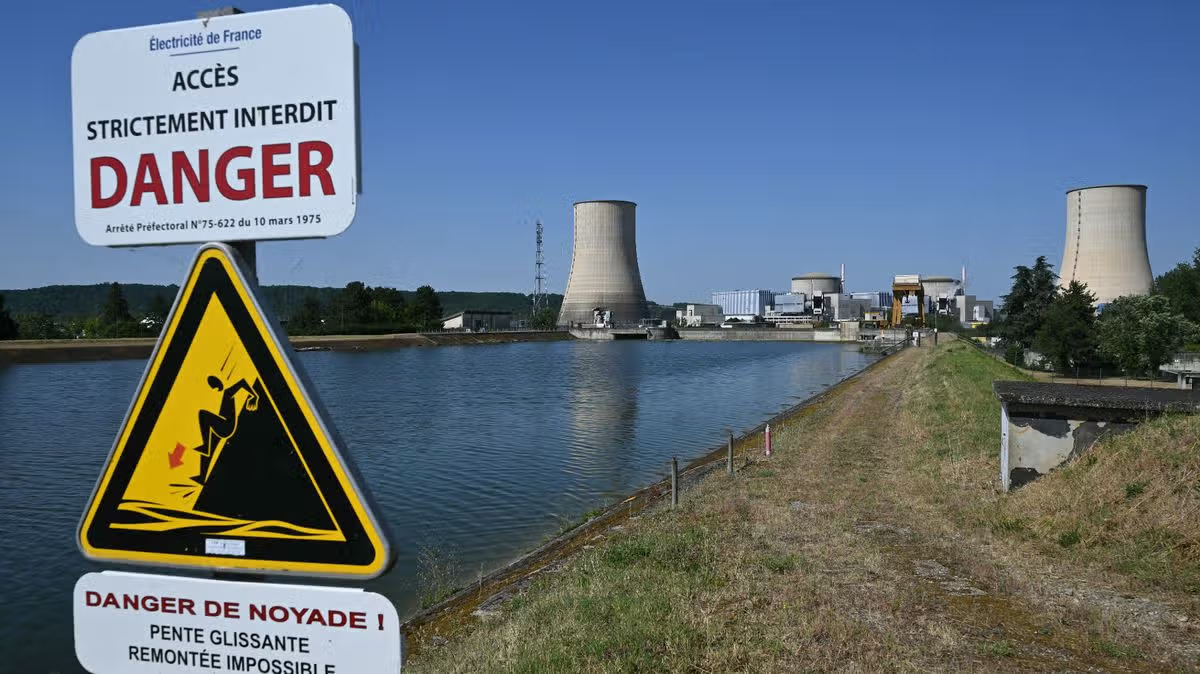
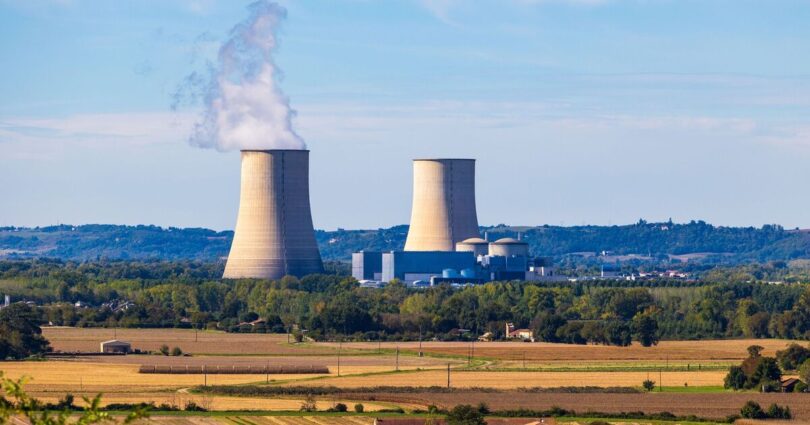
A nuclear power plant was forced to shut down one of its reactors as Europe remains in the midst of a scorching heatwave. Production at reactor two of the Golfech nuclear power plant was halted today due to high temperatures recorded in the Garonne basin, French utility EDF announced.
Located 55 miles from Toulouse, unit two was the only reactor operating at the Tarn-et-Garonne site, as unit one had been offline for maintenance since May. EDF said the Garonne River, which flows through southwest France and northern Spain, is expected to reach 28C this Friday July 10. That temperature is the maximum threshold which the river can reach, according to a 2006 decree. EDF had already been forced to suspend operations at the Golfech nuclear power plant on June 23 to prevent excessive warming of the river, which receives the reactor’s cooling water discharges.
The plant resumed operations on July 3.
A spokesperson for EDF said: “Weather conditions over the last few days have led to a significant rise in the temperature of the Garonne (river), which is expected to reach 28C this Friday July 10.
“As a precautionary measure, production unit No. 2 at EDF’s Golfech nuclear power station was shut down on Thursday July 9 at 11:30 a.m.”
During the late-June heatwave, EDF temporarily shut down two additional reactors at the Bugey nuclear power plant in Ain, located along the Rhône River, and at the Nogent-sur-Seine plant in Aube, situated on the Seine River.
This news comes after it was announced that Western Europe has endured its hottest June on record, as wildfires ravage France and Spain.
Average temperatures exceeded the 1991–2020 norm by more than 3C, according to the EU’s Copernicus climate monitoring service.
Worldwide, June 2026 was 0.56C hotter than the 1991-2020 average and 1.39C hotter than preindustrial levels, making it the second-warmest June on record.
The world’s oceans were also hotter than scientists had ever seen before.
“Together, these records reflect a climate system continuing to accumulate heat,” said Samantha Burgess, a climate scientist at Copernicus. “The result is increasingly intense heatwaves, a persistently warm ocean, and growing risks for people, ecosystems and infrastructure.”