
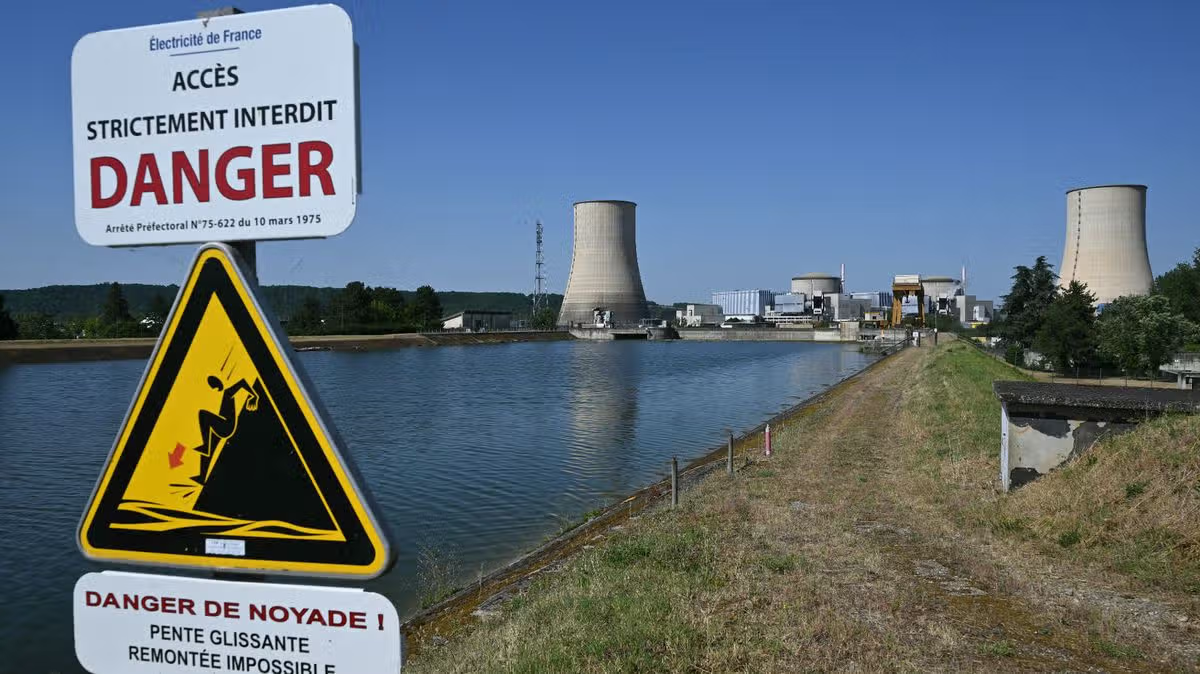
French officials have been forced to shut down another reactor at Golfech nuclear power plant as a scorching heatwave continues to grip Europe
A nuclear reactor has been forced to shut down as a scorching heatwave continues to grip Europe.
Reactor 2 at the Golfech nuclear power plant, located in south-west’s France Tarn-et-Garonne department, was taken offline on Thursday after high temperatures in the River Garonne, from which the plant draws cooling water, approached the site’s regulatory limit, state-owned energy company EDF said.
It comes as France’s national weather service placed nine departments on the highest-level red heatwave alert for Friday. EDF said the temperature of the Garonne is expected to reach 28C on Friday.
A 2006 decree stipulates that the temperature of the river must not exceed 28C after discharges from the power plant. The discharged water is typically around 0.2C warmer than the river.
Reactor 2 was the only unit operating at the site, which is around 55 miles from Toulouse, as Reactor 1 has been offline for maintenance since May. Both pressurised water reactors have a generating capacity of 1.3GW.
EDF had already suspended operations at Golfech on June 23 for the same reason before restarting the reactor on July 3, the Express reports.
A spokesperson for the company said: “Weather conditions over the last few days have led to a significant rise in the temperature of the Garonne (river), which is expected to reach 28C this Friday July 10.
“As a precautionary measure, production unit No. 2 at EDF’s Golfech nuclear power station was shut down on Thursday July 9 at 11:30 a.m.”
During the previous heatwave at the end of June, EDF also shut down two other nuclear reactors – at the Bugey nuclear power station on the River Rhône and at the Nogent-sur-Seine plant on the River Seine – to comply with environmental limits on river temperatures, Le Parisien reports.
The EU’s Copernicus Climate Change Service said on Thursday that western Europe experienced its hottest June on record this year. The average temperature reached 20.74C – more than 3C above the average between 1991 and 2020, the climate monitor said.
“We will see more heatwaves in a warmer world,” said Samantha Burgess, strategic climate lead at the European Centre for Medium-Range Weather Forecasts (ECMWF), which operates Copernicus.
“They will be more intense and they will last longer, and they will impact more geographical areas.”